Why storage matters for exchange spares
Used crusher spares often move from one site to another before they are fitted, so the way they are stored has a direct effect on condition and value. A clean, dry and clearly marked yard helps prevent pitting, bent edges, missing fixings and the kind of confusion that slows down a shutdown.
In Mpumalanga and along the coast, moisture and dust are the main risks. In winter, condensation can build inside open bins and wrap around machined faces. In the wet season, pallets left on bare ground can wick up water and stain steel. Good storage is not complicated, but it does need a routine and someone responsible for it.
For exchange spares, storage also affects traceability. If a jaw die, mantle, shaft or bearing housing is moved without a label, it becomes hard to match it to the right machine size, wear profile or condition report. That can lead to delays, rework and scrap instead of exchange.
Start with inspection and condition notes
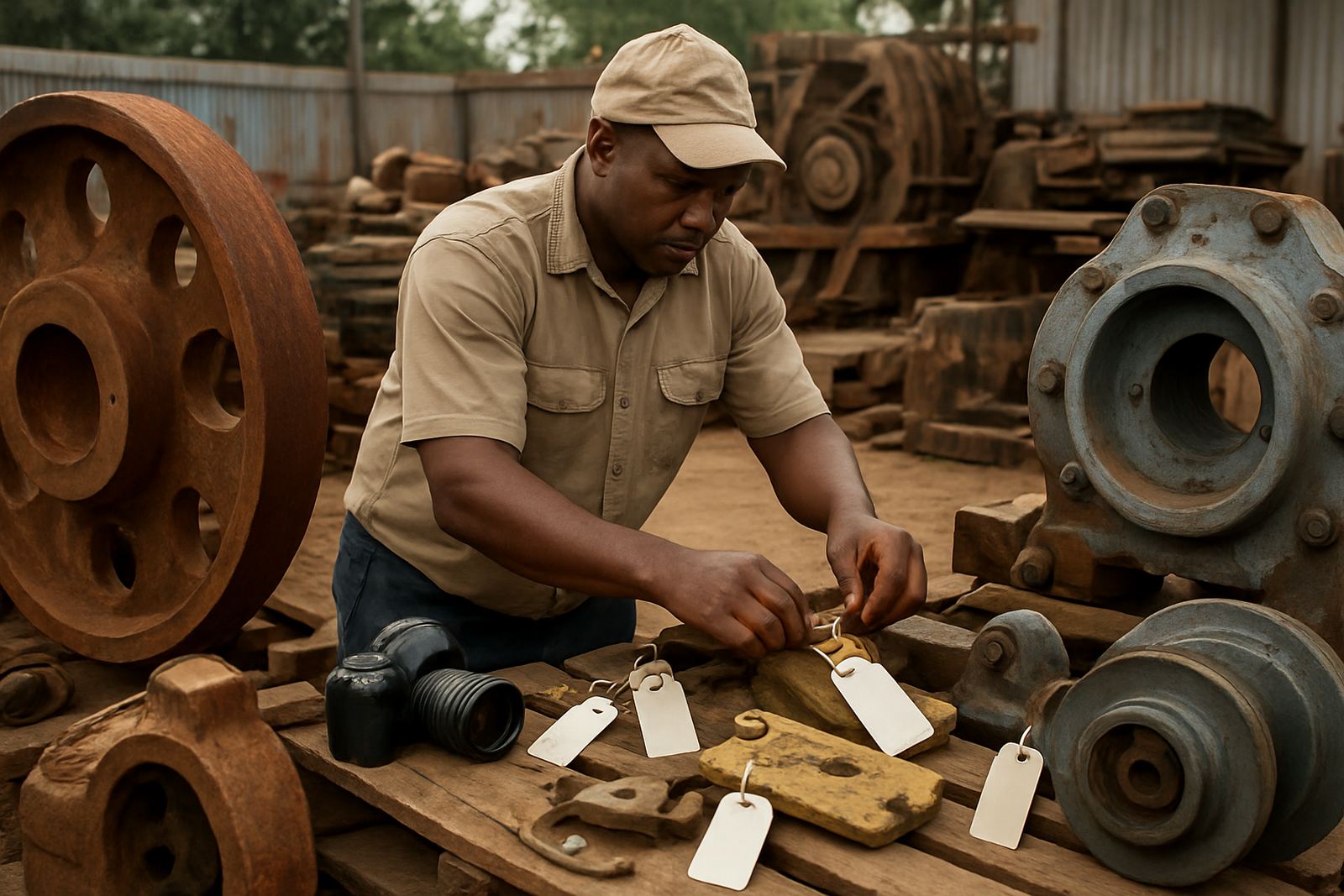
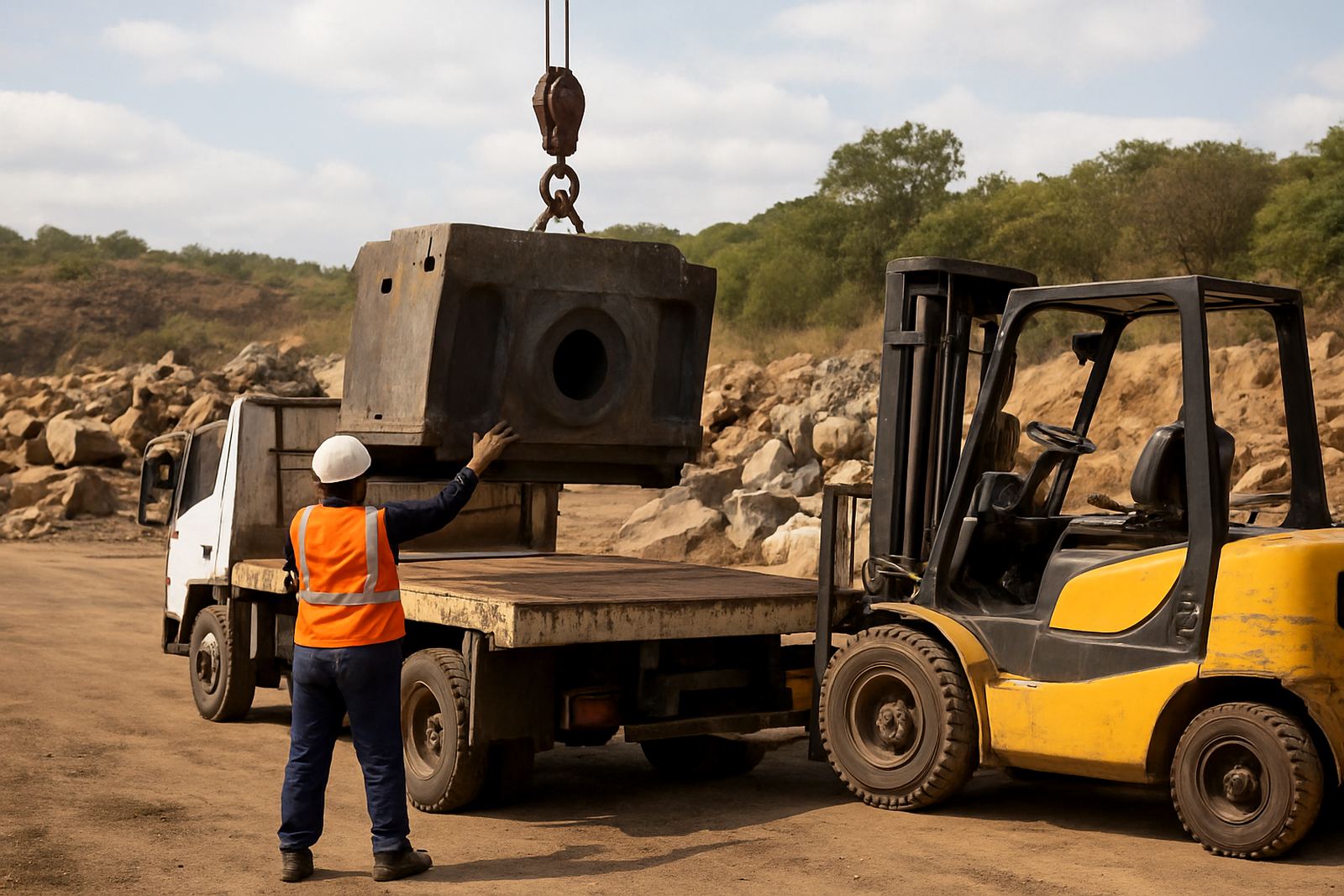
Every part should be inspected before it goes into storage. A quick visual check is not enough. Look for cracks, worn seating faces, stripped threads, bent lugs, broken studs and signs of heat or oil contamination. If the item is heavy, use lifting gear and do not drag it across the yard.
Record what you see straight away. A storage tag should show the part name, machine type where known, condition, date received, and whether it is for exchange, consignment, or scrap review. Keep the note simple and legible. If the item has been pressure washed or cleaned, mention that too.
- Check for rust, scoring and deformation
- Confirm all loose fittings are bagged and labelled
- Record photos from more than one angle
- Note any repairs already done
- Separate exchange stock from scrap and unverified items
Do not stack uninspected spares with ready-to-go stock. It only takes one missing spacer or cracked bracket to hold up a fitment check later.
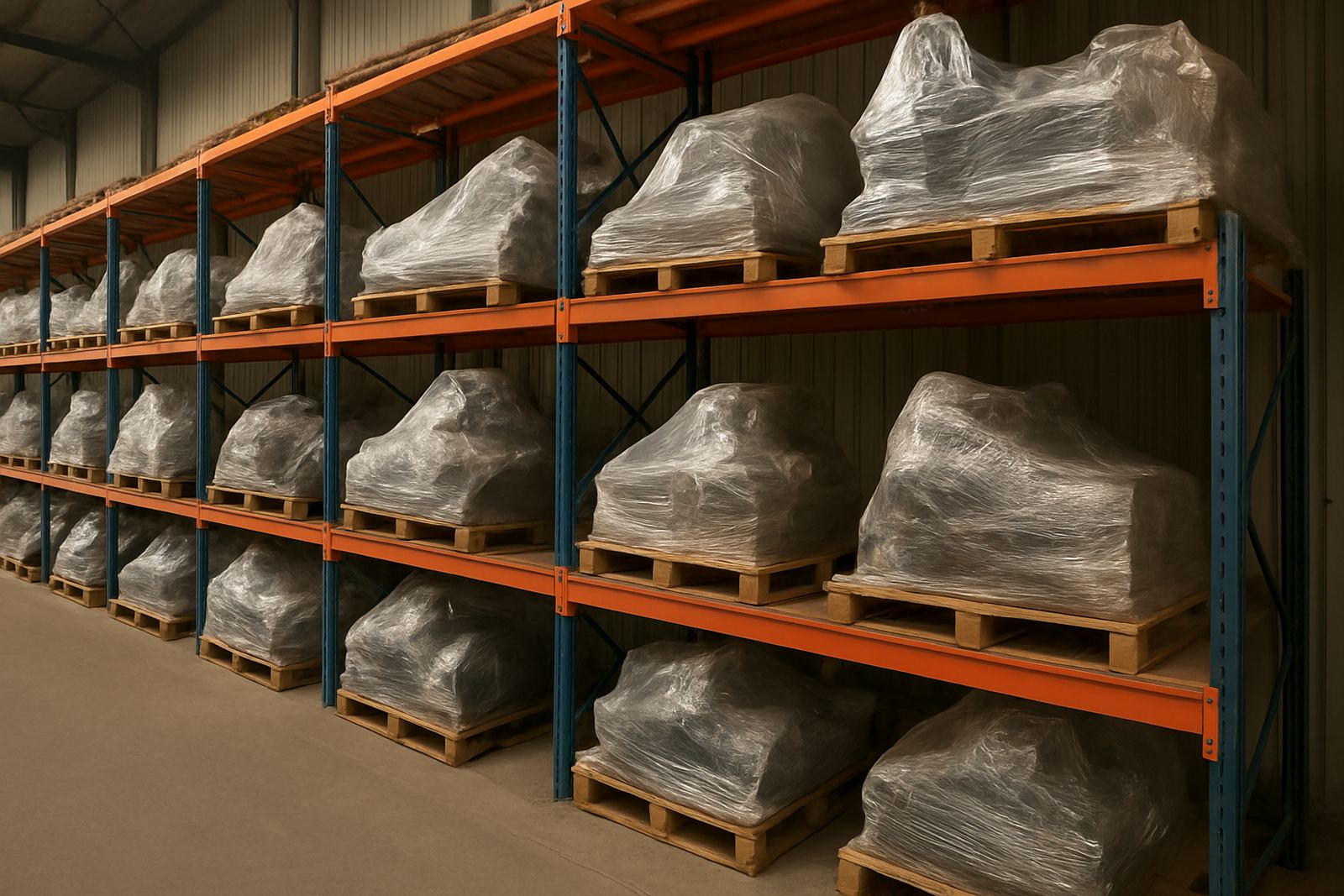
Use dry, covered storage with enough spacing
Crusher spares should be stored under cover wherever possible, especially items with machined surfaces or bearings. If you are using a yard in Middelburg, eMalahleni or Secunda, allow for dust and sudden rain. In coastal areas such as Pietermaritzburg routes that pass through humid conditions, cover becomes even more important. A simple roof, sheeted bay or enclosed store is better than an open stand.
Keep parts off the ground on pallets, sleepers or steel stands. The aim is to stop water splash and make it easy to move items with a forklift or crane truck. Leave enough space between rows for inspection and picking. When stock is packed too tightly, people lift from the middle and damage the item behind it.
- Store on level ground only
- Keep walkways clear for forklifts and pallet jacks
- Do not place heavy parts directly on wet concrete
- Use drip trays or absorbent material under oily items
- Cover machined faces with wrap, caps or grease where suitable
If a part is likely to sit for more than a few weeks, check it again after the first cold morning. Rust spots often start where nobody can see them, especially on edges and bolt holes.
Packing methods that prevent damage in transit
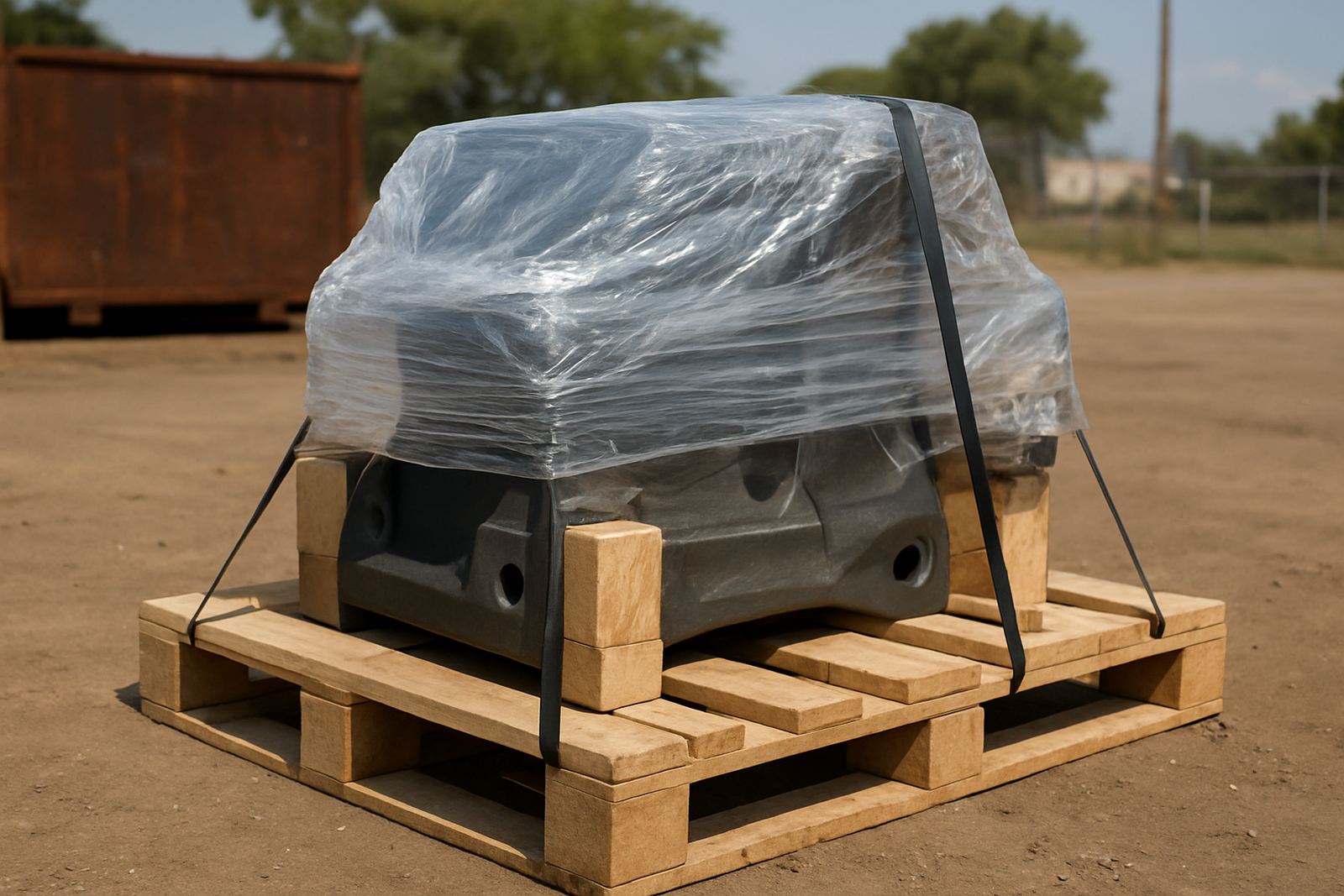
Good packing makes the difference between a part arriving ready for fitment and arriving with a bent corner or chipped edge. Use palletising and packing methods that suit the weight and shape of the spare. Large castings need stable bearers and proper strapping. Smaller items should be boxed or bagged in sets, with fixings attached to the main part wherever possible.
When preparing loads for local collections or nationwide delivery, think about movement inside the truck. If a part can slide, it will. Use timber blocks, corner protectors, steel banding or shrink wrap where practical. Heavy loads should be balanced and marked so the lifting points are clear. A load that looks neat but shifts on the road is a problem for everyone.
Keep the packing list with the load and a copy in the yard file. That way the receiving team can confirm the contents before the truck leaves or when it arrives on site. This saves time during shutdown work when crews are under pressure and lighting may be limited because of load-shedding.
Control stock rotation and yard movement
Parts should not sit in the same place for years without review. Set a simple rotation process so older stock is checked first and the most urgent spares stay easy to reach. A well-run yard makes it clear which parts are ready for issue, which are awaiting inspection, and which are being held for exchange or consignment sales.
Yard movement should always be logged. If a cone liner is moved from one bay to another, the new location must be recorded. The same applies to shafts, frames, toggles and smaller wear items. Without that control, a team can spend half a day searching for a part that is already on the property.
- Use a bay number or row code for every stored item
- Review slow-moving stock monthly
- Move high-value items into locked storage
- Separate scrap from reusable spares immediately
- Check stock after heavy rain, wind or yard cleaning
In a busy exchange yard, simple location control matters as much as the physical storage itself. It keeps the process tidy and reduces handling, which lowers the risk of accidental damage.
Special care for shutdown and urgent spares
Shutdown sourcing usually means tight timelines and no room for mistakes. If a part is being held for an urgent job, store it where it can be found quickly and inspected again before dispatch. Keep the condition report with it and make sure any fitment notes are easy to read.
For urgent spares, it helps to pre-plan the collection point, lifting gear and delivery route. A part that needs a crane truck should not be buried behind lighter stock. If the item has known wear or a minor repair, mark it clearly so the receiving site can plan around it.
During shutdown periods, people are often working long hours and the yard can be busy before sunrise or after dark. Clear labels, good stacking and secure packaging reduce errors when visibility is poor or power is unstable. That is especially useful in towns where plant crews are moving quickly between sites.
Final storage checklist before release
Before any crusher spare leaves storage, run one final check. The part should match the order, the condition notes should be current, and the packaging should still be sound. If anything has changed since the last inspection, update the record before dispatch.
This last review should be done by someone who is not rushing. A quick check often misses a loose bolt, open crack or torn wrap. Taking a few minutes here prevents damage in transit and avoids the sort of dispute that wastes time on both sides.
- Confirm part identity and quantity
- Check that labels and photos match the load
- Inspect for new rust, chips or loose fittings
- Verify lifting points and packing are secure
- Sign off the release note before loading
At Crusher Spare Exchange, good storage is part of the exchange process, not an afterthought. When spares are inspected, packed and stored properly, quarries and mines can exchange value with far less waste and far fewer delays.