
Start With a Load Plan Before the Forklift Moves
Every loading job should begin with a simple plan. Know what part is moving, how much it weighs, where it is going, and what lifting point or sling method will be used. A jaw die, cheek plate, mantle, bowl liner or shaft sleeve can look manageable on the floor but become awkward as soon as it is lifted, swung or placed on a trailer. In our Middelburg yard and at quarry sites in eMalahleni, Rustenburg, Polokwane, Kathu and Pietermaritzburg, the safest jobs are the ones where the crew takes two minutes to agree the steps first.
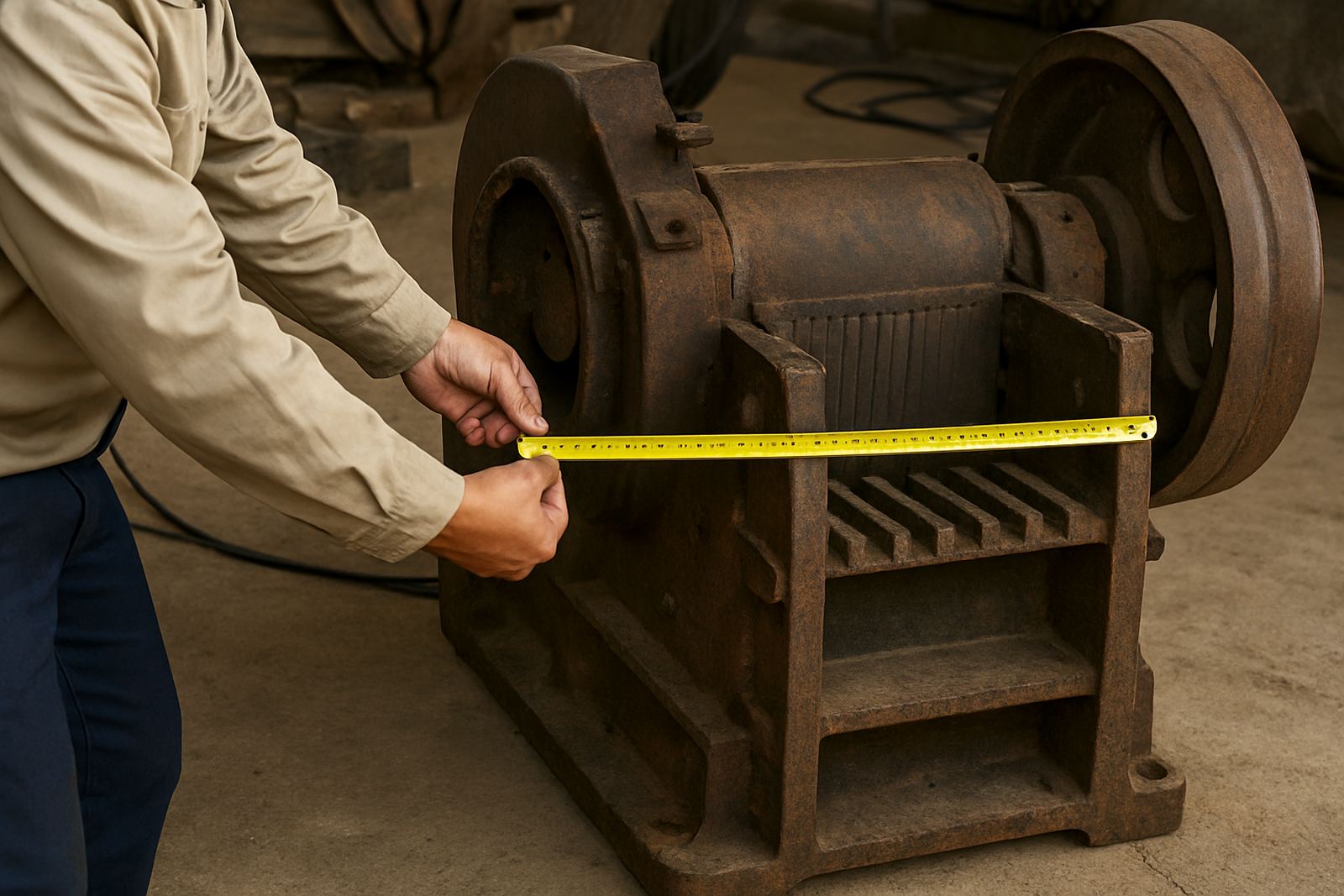
Check the part against its paperwork or condition report. If the weight is not confirmed, treat it as heavy until verified. Do not guess the centre of gravity. Many crusher components sit unevenly because of wear, residue or broken lugs, and that changes how they hang. If a part is oily, caked with dust, or still carries rust scale, clean the handling points before lifting. A small amount of preparation avoids damage and keeps people out of the line of fire.
Inspect the Yard, Route and Truck Before Loading
Safe loading starts on the ground. The route from storage bay to vehicle must be clear, level and able to take the load. Loose gravel, spilled oil, broken pallets and scrap offcuts can turn a normal move into a slip or a tyre puncture. In load-shedding conditions, make sure there is enough light from fixed fittings or temporary lighting before you begin. At coastal or humid sites, wipe down wet steel and check for slippery surfaces on the tray and ramp.
Before a truck enters the loading point, confirm that the bed height, side gates, lashing points and axle limits suit the consignment. A part that is too long, too tall or too concentrated in one spot can shift during travel. If the load is heading to a mine site with strict induction rules, check the receiving site requirements first so there are no delays at the gate. One missing chain, or one bad tyre on the trailer can hold up the whole dispatch.
- Clear the travel path and remove loose material
- Check lighting, ground level and drainage
- Confirm trailer capacity, bed size and tie-down points
- Inspect ramps, slings, shackles and spreader bars before use
- Keep non-essential people out of the loading zone
Use the Right Lifting Method for the Part Shape
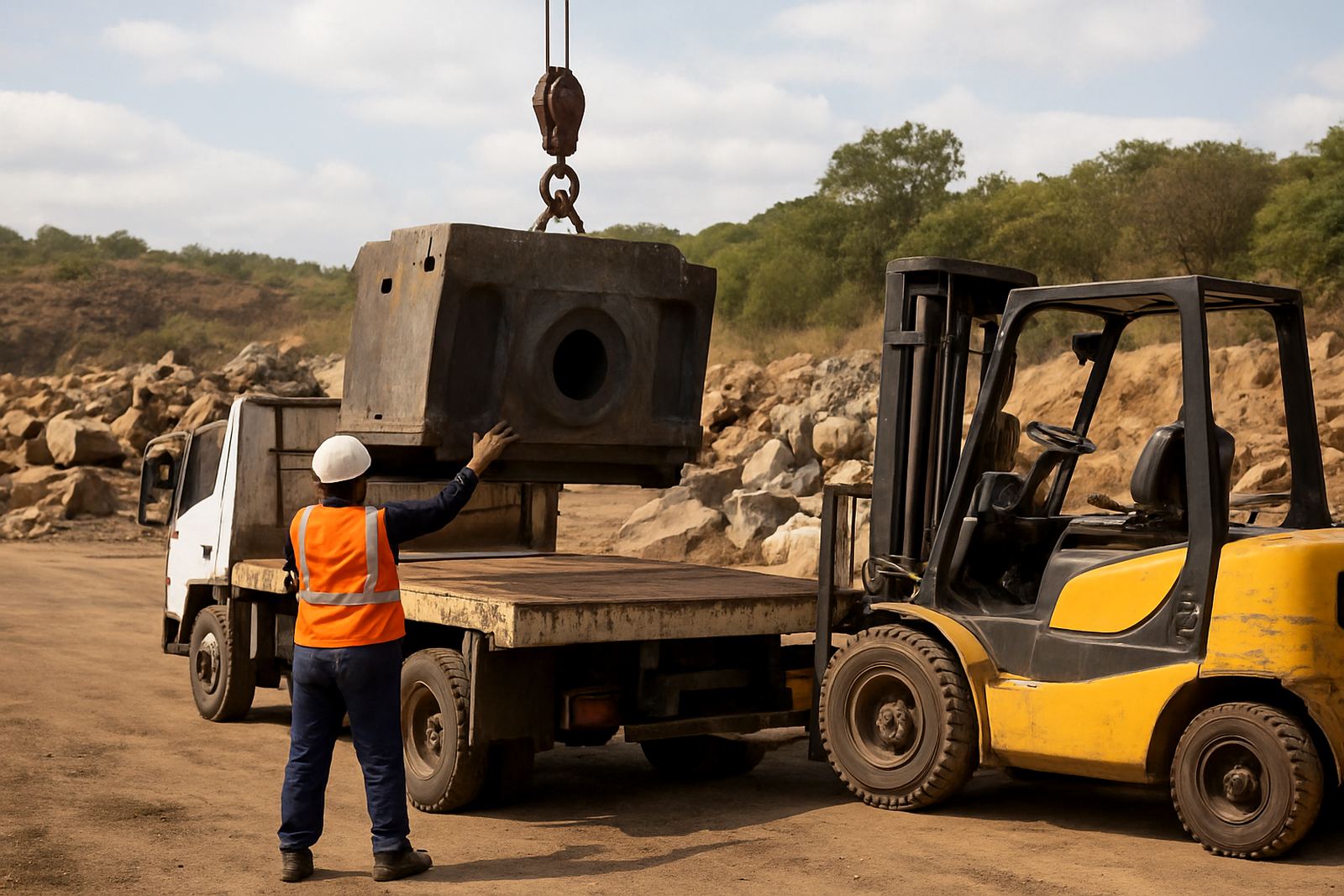
Not all crusher spares should be lifted the same way. Straight, boxed or flat parts may suit a forklift with a proper attachment, while long or uneven items need slings and a crane plan. Never lift from a worn edge, cracked lug or random hole that was not designed for lifting. If the item must be rotated or turned, plan the movement before it leaves the ground. Sudden twists put stress on the steel and can knock the load into a worker or vehicle side.
Use certified lifting gear where required, and only if it is rated for the mass involved. Slings should be positioned so the part stays balanced and does not tip once airborne. If the load needs tag lines, use them to control swing without standing under the part. Keep hands clear of pinch points between the component and pallet, trailer rail or stacking blocks. If the part is too awkward to move safely, stop and get a better method, not more labour. Safe handling is slower for a minute and faster by the end of the day.
- Match the lifting gear to the part weight and shape
- Do not use damaged slings, chains or hooks
- Keep workers clear of suspended loads
- Guide the load with tag lines where needed
- Lower onto blocks or packing that will not crush or roll
Pack, Palletise and Secure the Load for Travel
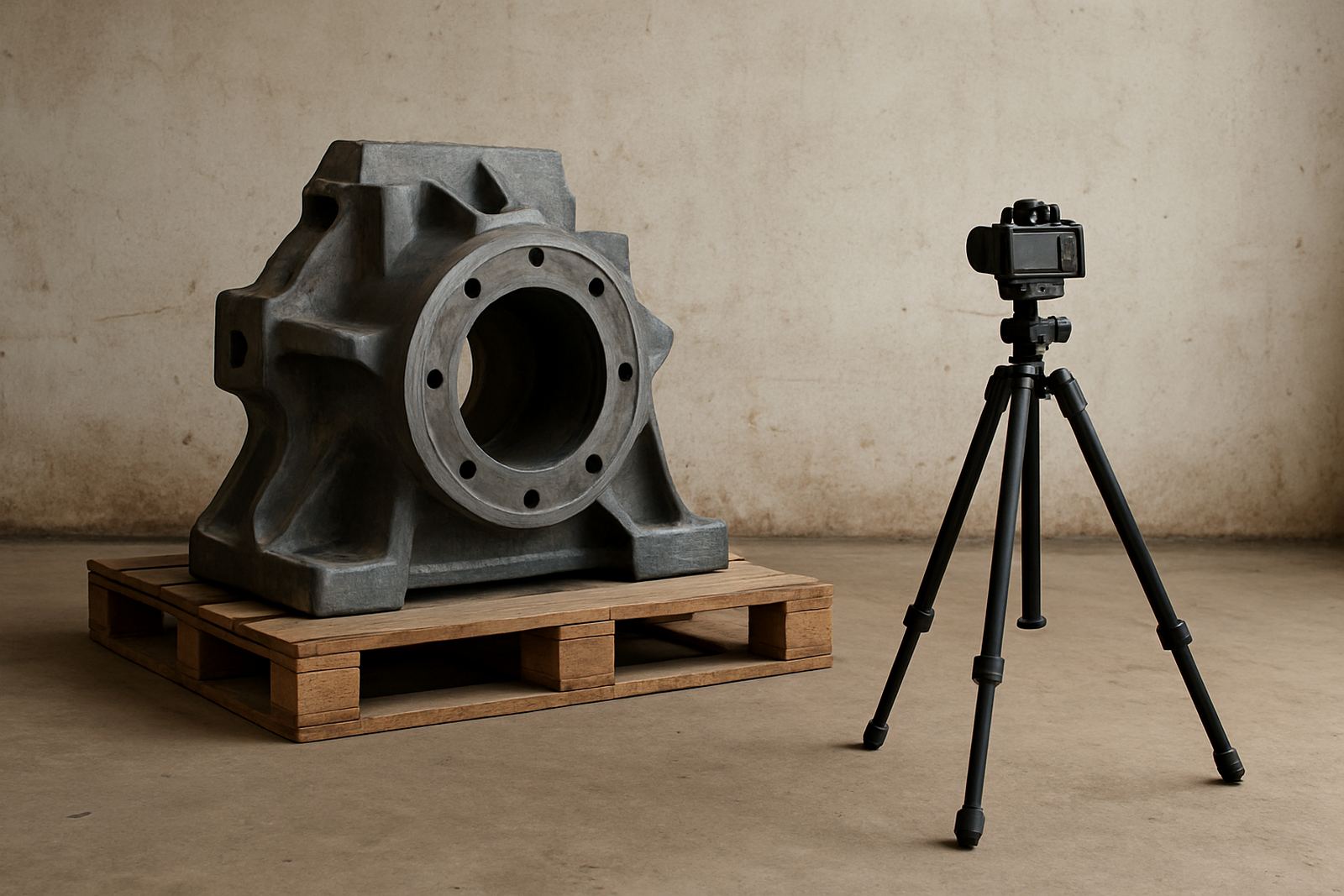
Once the part is on the ground or pallet, it still needs to be secured properly. Heavy crusher spares should be packed so they cannot shift, rock or drop through the deck boards during transport. Use timber blocks, steel stillages, pallets of suitable strength and edge protection where straps could bite into machined surfaces. If a component has a wear face, seal surface or bearing area, protect it from dirt and steel-on-steel contact.
Strapping should hold the load down and back, not just around the middle. Use enough restraint for braking, cornering and rough haul roads between quarries and mines. On long-distance trips to places like Kathu or Pietermaritzburg, the load can settle after the first few kilometres. Recheck the straps after the initial movement and again at rest stops. If the part sits in a mixed load, separate it from smaller items that could be crushed or knocked loose.
Mark the consignment clearly so everyone knows what is inside, where it came from and where it should be received. Good labels help with sorting, exchange control and condition checks at the other end. It also saves time when the receiving yard is working under pressure or during a shutdown window.
Check People, Paperwork and Site Rules Before Release
Before any vehicle leaves, confirm who signed off the load, what condition it was in, and whether any damage was noted during handling. For exchange spares, that record matters. It helps the seller, the buyer and the inspection team if there is a query later. If a part was loaded as scrap rather than for reuse, make that clear on the documentation so it does not go to the wrong yard. A clean handover avoids disputes and wasted trips.
Each site should have one person in charge of the move, one person signalling and one person controlling access. Nobody should stand between the truck and a fixed object while the load is being positioned. If the job is happening in rain, strong wind or low light, pause and reassess. Dust, wind and wet steel are common in quarry work and they all change how a load behaves. A few extra minutes of caution is better than damaged stock or an injury claim.
- Confirm the load description and destination
- Record visible condition before dispatch
- Assign one person to direct the movement
- Stop work if weather or visibility makes the lift unsafe
- Lock in the final sign-off before the truck leaves
Practical Loading Checklist for Quarry and Mine Yards
Use this short checklist before every heavy loading job. It helps keep the team consistent whether the part is going from Middelburg Yard to a nearby plant or moving nationwide for a shutdown. It also suits sites that work around municipal access times, security gates or restricted traffic hours.
Before the lift: confirm weight, shape, lifting points and destination. During the lift: keep the area clear, lift slowly and stop if the load swings. After the lift: pack the part correctly, secure it, check straps and sign off the paperwork. If there is any doubt about the condition of the component, set it aside for a fresh inspection and condition report. That is better than forcing a poor load into service.
- Part identified and checked
- Yard route clear and lit
- Lifting gear inspected
- Load packed and restrained
- Driver and site contact briefed
- Release note completed