
What a spray bar does on site
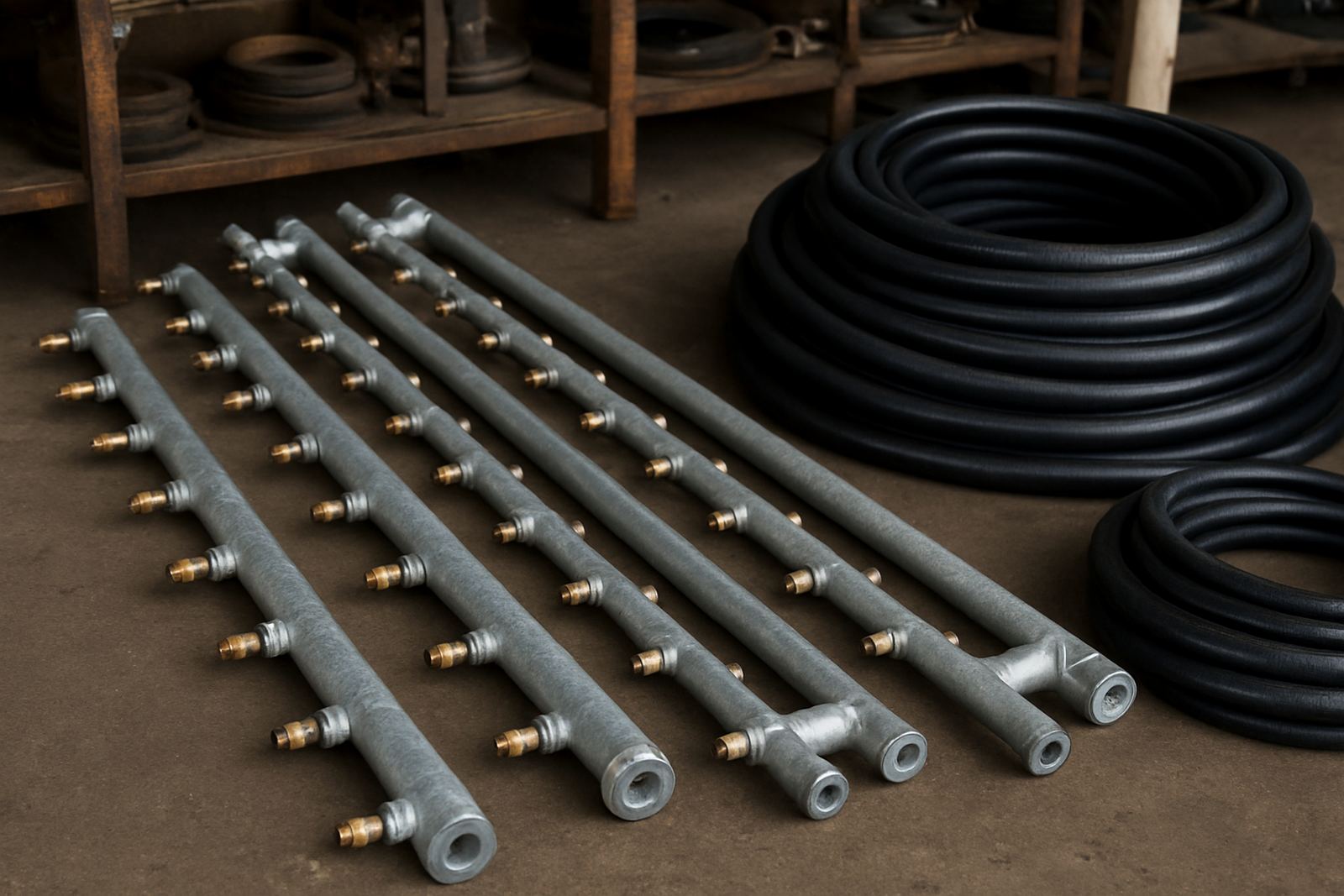
A spray bar is a header pipe fitted with nozzles, slots or drilled outlets that spreads water in a controlled pattern over a conveyor transfer, screening section or wash plant line. In quarry work it is usually used to knock down dust, keep product moving through a wash process, or wet material before screening so fines are carried away more evenly. On dry inland sites around Middelburg, eMalahleni and Rustenburg, it can make a noticeable difference during the windy months. On coastal or humid sites, it also helps keep airborne dust under control without overspraying the whole yard.
We list surplus spray bars that suit fixed plant, mobile screens and wash plant sections where a simple, serviceable water delivery setup is needed. The main aim is steady coverage, not wasteful flow. If the bar is set up well, you should get even spray across the full working width with minimal dribble at the ends.
Sizes and layout options to match your plant
Spray bars are available in different lengths and outlet layouts, so the right unit depends on your screen width, water pressure and how far the bar sits from the material. Common lengths include 1.2 m, 1.5 m, 2.4 m, 3.0 m and longer built-up sections joined to suit wider screening decks. Pipe diameter is often 25 mm, 32 mm or 50 mm depending on flow required. Mounting can be straight, angled or fitted with adjustable brackets for cleaning and maintenance access.
- Single-row bars for light dust suppression and small wash sections
- Multi-nozzle bars for wider screening lines and stronger coverage
- End-capped bars for neat flow control and reduced pressure loss
- Modular sections for easy transport, storage and replacement on shutdowns
- Heavy-duty pipework for abrasive areas where stones and slurry can cause wear
When we inspect surplus units, we look at straightness, weld condition, nozzle seating and signs of corrosion or blockage. A bar can be perfectly usable even if it needs new nozzles or end fittings, but bent or badly pitted pipework should be treated with caution.
Where spray bars are most useful
These units suit wash plants, jaw crusher feed areas, vibrating screens, conveyor transfer points and stockpile recovery lines. They are also used in shutdown work where a site needs a temporary dust control setup while another section is being serviced. At mines and quarries around Polokwane, Kathu and Pietermaritzburg, spray bars often support dust management where road conditions, wind and dry material create extra fallout. They are also useful where municipal dust expectations or site conditions mean you need to keep nuisance dust under tighter control.
For wash plants, the bar must match the screening area and the water supply available. If the plant is running with a low-pressure line, a fine mist style bar may work better than a high-flow setup. If the site has heavy clay or sticky feed, a stronger spray pattern may be needed to keep material moving. It is worth checking the screen deck opening and the clearance above the deck before ordering, because a bar that sits too low can catch debris and wear fast.
- Dust suppression at crusher feed and discharge points
- Screen washing on coarse and fine screening lines
- Transfer point wetting where fines become airborne
- Temporary shutdown water control and plant changes
Installation details, water supply and power needs
Most spray bars need a reliable water supply, correct pipe connection and secure mounting. They do not normally need an electric motor of their own, but they do depend on the site pump system or water line supplying the correct pressure. In some plants, the spray bar is fitted with a control valve, solenoid valve or manual isolation valve so the operator can start and stop flow as needed. If the system is linked to a pump set, that pump may run on diesel, electric power or a generator during load-shedding, so it helps to know the site arrangement before fitting the bar.
Installation should allow for easy removal during clean-outs and screen changes. Leave enough clearance so a fitter can reach the nozzles, remove scale and inspect the line without stripping half the plant. On dusty sites, clamps and brackets should be checked often because vibration can work fastenings loose. If the bar is outdoors, protect the fittings from rust and make sure the line is drained where freezing is a risk in highveld winter conditions.
Care, servicing and spare parts that matter
A spray bar works best when the nozzles stay open and the pipe stays straight. Scale, grit and rust can reduce spray quality very quickly, so routine cleaning is important. If the site uses borehole water or recycled plant water, strainers and filters should be checked regularly. Where slurry is involved, blockages can build up inside the pipe and cause uneven spray or dead zones across the screen.
Good servicing practice is simple and practical:
- Flush the line after heavy use or after a dirty shutdown
- Check for blocked nozzles and worn outlet tips
- Inspect clamps, brackets and end caps for movement
- Look for pinhole leaks, cracking or rust at welded joints
- Replace damaged fittings before the pattern gets uneven
If a bar has been in storage, ask whether it was kept under cover or in the open yard. Coastal humidity can affect mild steel faster, while inland dust can fill open ends and nozzles. A quick inspection before fitment can save a lot of downtime.
What to check before you order
Before placing an enquiry, measure the working width, note the number and type of outlets, and confirm where the bar will mount. The right choice depends on your water pressure, pipe size and whether the application is dust control or wash duty. It also helps to know if you need a complete bar with fittings, or just the pipe section for rebuilding. If the part will go to a mine or quarry in another province, make sure the transport size is practical for delivery and offloading.
Useful details to include are the following:
- Overall length required in millimetres or metres
- Pipe diameter and inlet size
- Nozzle count, spacing and spray direction
- Material type, such as mild steel or stainless steel if required
- Operating pressure and water source
- Mounting style and available clearance at the plant
Crusher Spare Exchange lists surplus spray bars for buyers who want a practical, cost-conscious option with proper condition checks and delivery support from Middelburg across South Africa. If you need a bar for a shutdown, a replacement section or a spare to keep on site, we can help match the part to the work.
Key facts
| Product type | Spray bars for dust suppression and wash plant screening lines |
|---|---|
| Typical lengths | 1.2 m, 1.5 m, 2.4 m, 3.0 m and built-up sectional lengths |
| Common pipe sizes | 25 mm, 32 mm and 50 mm diameter |
| Outlet styles | Drilled holes, nozzles or slot-type outlets |
| Material options | Mild steel or stainless steel, depending on duty and availability |
| Typical use | Screen washing, transfer point dust control and temporary shutdown water lines |