
What an anvil does in an impact chamber
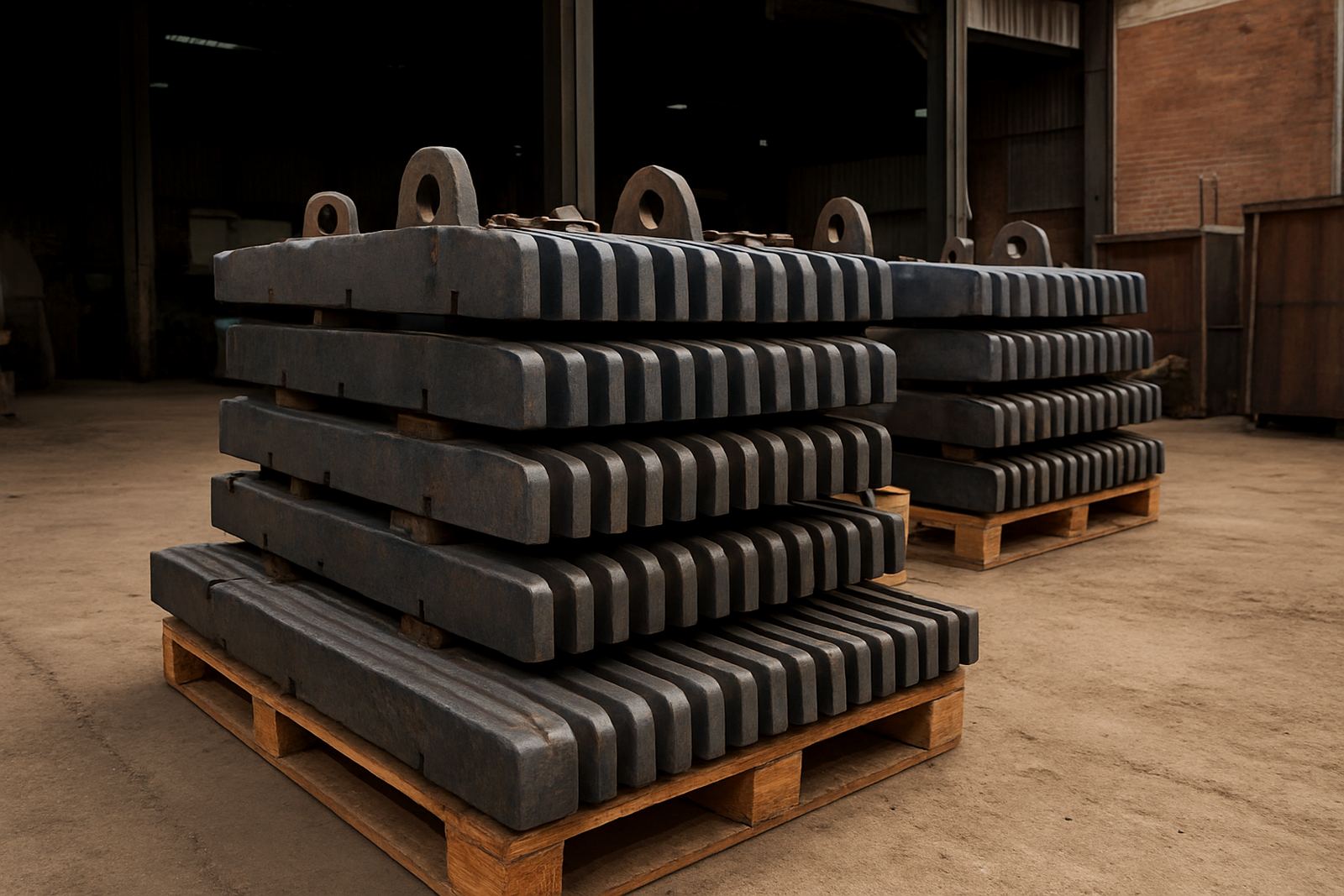
Anvils are fixed wear blocks used inside impact crushers where incoming rock is broken by high speed impact. In many plants the anvil sits opposite the rotor or in the impact zone, taking repeated strikes from feed material and helping shape the final product size. When an anvil wears unevenly or cracks, you can lose reduction efficiency, see more fines than expected, and put extra strain on the chamber during a shutdown restart.
For quarries around eMalahleni, Rustenburg, Polokwane, Kathu and Pietermaritzburg, an anvil is usually a scheduled wear item rather than an emergency surprise. The right replacement needs to match the chamber profile, fixing points and wear face dimensions, not just the machine size on its own.
- Used in impact chambers, secondary and tertiary crushing stages
- Helps shape product and control the wear pattern inside the chamber
- Commonly replaced during planned shutdowns and liner changeouts
Sizes, profiles and exchange options available
Anvils are listed in different lengths, widths and thicknesses depending on the crusher chamber and the wear life required. We handle surplus anvils from quarries and mines that need to move stock efficiently, whether the part is a single block, a matched set, or a full chamber allocation. Some units are reversible, some have one working face, and others are supplied with drilled holes, slotted fixing points or machined contact surfaces.
Because impact chamber parts are not all interchangeable, our team checks the physical condition and key dimensions before a listing is accepted. That helps reduce the risk of a mismatch on site, especially where the plant is working under a tight shutdown window and spare availability is limited.
- Single anvils and matched pairs or sets
- Different wear faces and fixing arrangements
- Options for exchange, consignment sale or direct purchase
Typical stock can include cast or fabricated wear parts, depending on what is being exchanged between sites. If you are moving stock between a Middelburg yard and a mine in Secunda or Lydenburg, we can assist with collection, storage and dispatch once the part has been checked and measured.
Where these parts suit plant work
Anvils suit fixed impact chambers in quarry crushing lines, mine reprocessing plants and contractor sites doing roadstone, ballast or aggregate production. They are often used where feed is controlled and the chamber is expected to keep a steady reduction rate through long shifts. In wet coastal conditions, or dusty inland yards, the condition of the seating faces and fasteners matters just as much as the wear face itself.
These parts are especially useful during shutdown sourcing when the plant manager has to balance wear life, budget and delivery timing. We regularly support plants that need urgent spares search across South Africa, including collection from a source site, inspection at our yard, and onward delivery to the next destination.
- Quarry production lines with impact style reduction chambers
- Mine sites doing secondary or tertiary crushing
- Shutdown teams needing fast exchange parts for planned maintenance
Installation checks and site requirements
An anvil must be installed to the correct chamber position and seated properly against its mounting surface. Before fitment, check the fixing holes, support faces, bolt grade and wear pad contact points. If the part is too proud, too short, or sitting on damaged shims, the chamber can run unevenly and the wear pattern will go wrong very quickly.
No special power or gas supply is needed for the anvil itself, but lifting gear, torque tools and safe access are required for handling and fitment. Most sites will use a crane, chain block or overhead lifting plan, especially where the part is heavy or the installation is inside a confined chamber. In load-shedding periods, it helps to have the shutdown sequence planned so the crew can work safely without rushing the changeover.
- Confirm chamber model and fixing layout before dispatch
- Check bolt size, seating faces and any required shims
- Use proper lifting equipment and plant lockout procedures
Care, storage and service life
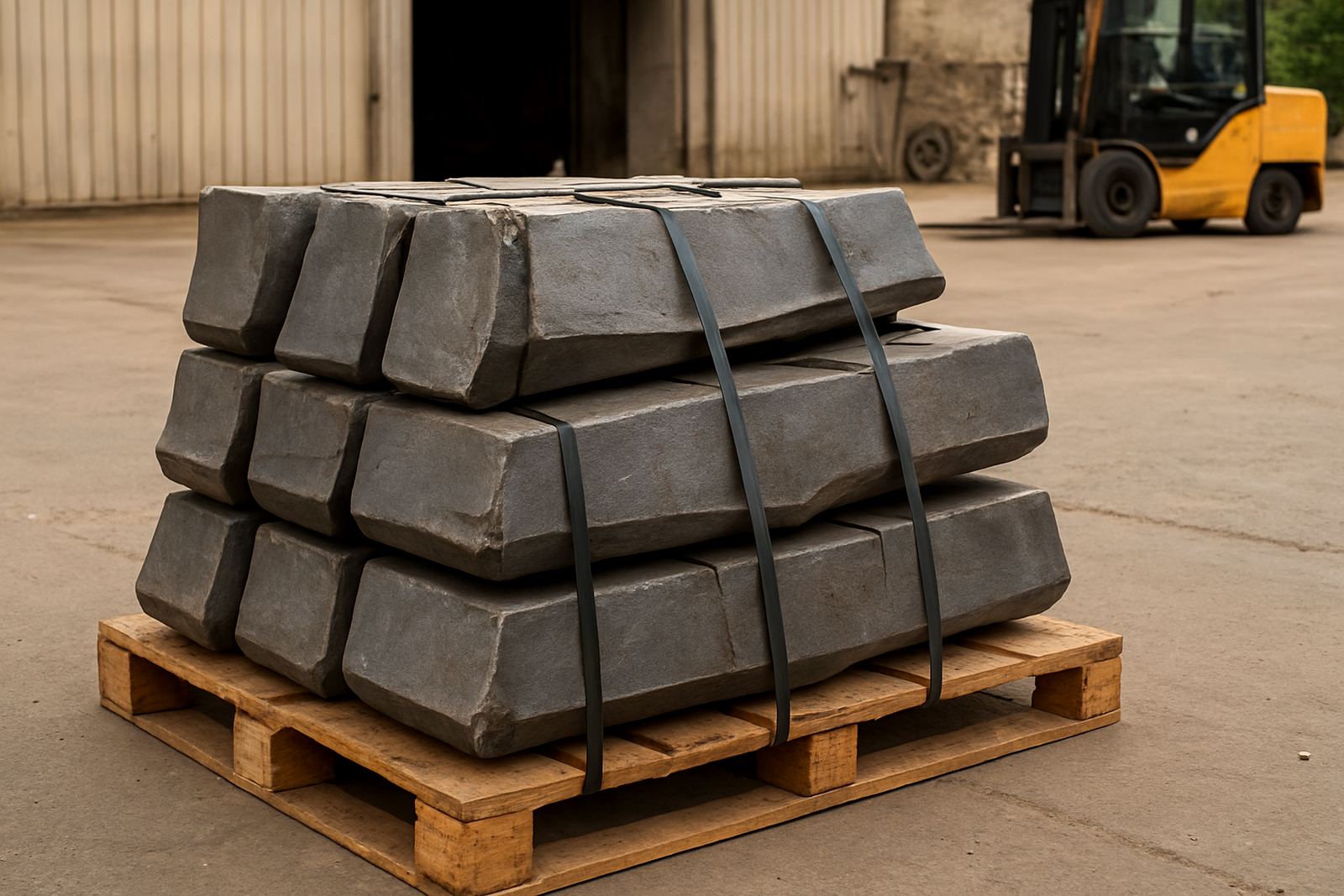
Anvils should be stored on level timber or palletised supports, off the ground and protected from standing water. In areas with coastal humidity or exposed outdoor yards, surface rust on the mounting faces can cause trouble during fitment, so the part should be kept dry and inspected before release. Our Middelburg storage yard is set up for palletising, packing and controlled stock holding between collections and deliveries.
During service, inspect for cracking, edge loss, uneven wear and movement at the fixing points. A worn anvil can sometimes be turned or re-used if the design allows it, but only after condition reporting and a proper fitment check. If a unit is near the end of life, it is better to move it through scrap vs exchange assessment early rather than wait for the shutdown crew to find it unusable on site.
- Keep dry and off bare ground
- Inspect wear face, bolt holes and support contact points
- Record wear pattern after each shutdown for better planning
What to check when ordering an anvil
When you send an enquiry through our contact page, include the chamber make and model if you have it, plus photos, measurements and any existing part numbers. The more detail you can give, the easier it is to match the right anvil for the machine. If the old part has broken away at the fixing points, send close photos of the seat and remaining bolt layout so our inspection team can confirm the exchange option.
Useful details include the full length, width, thickness, fixing hole centres, wear face profile, and whether the part is handed or symmetrical. If the delivery is going to Rustenburg, Polokwane or Kathu, tell us the site access rules, loading hours and whether the truck must offload inside the mine gate or at a public yard. That avoids delay and extra handling costs.
- Crusher model, chamber type and any existing reference numbers
- Measurements, photos and fixing details
- Delivery town, access rules and shutdown date
From our Middelburg base, the Crusher Spare Exchange team can list, inspect, store and deliver surplus anvils between quarry and mine operations across South Africa. For teams running tight maintenance windows, that practical turnaround can make a real difference.
Key facts
| Part type | Anvil for impact chamber wear replacement |
|---|---|
| Typical material | High wear cast or fabricated wear part |
| Common supply format | Single piece, matched pair or set |
| Fitment | Chamber specific, verify fixing layout and seat |
| Service use | Secondary and tertiary impact crushing |
| Handling | Requires lifting gear, palletising and safe shutdown access |