What Jaw Plates Do In A Crushing Circuit
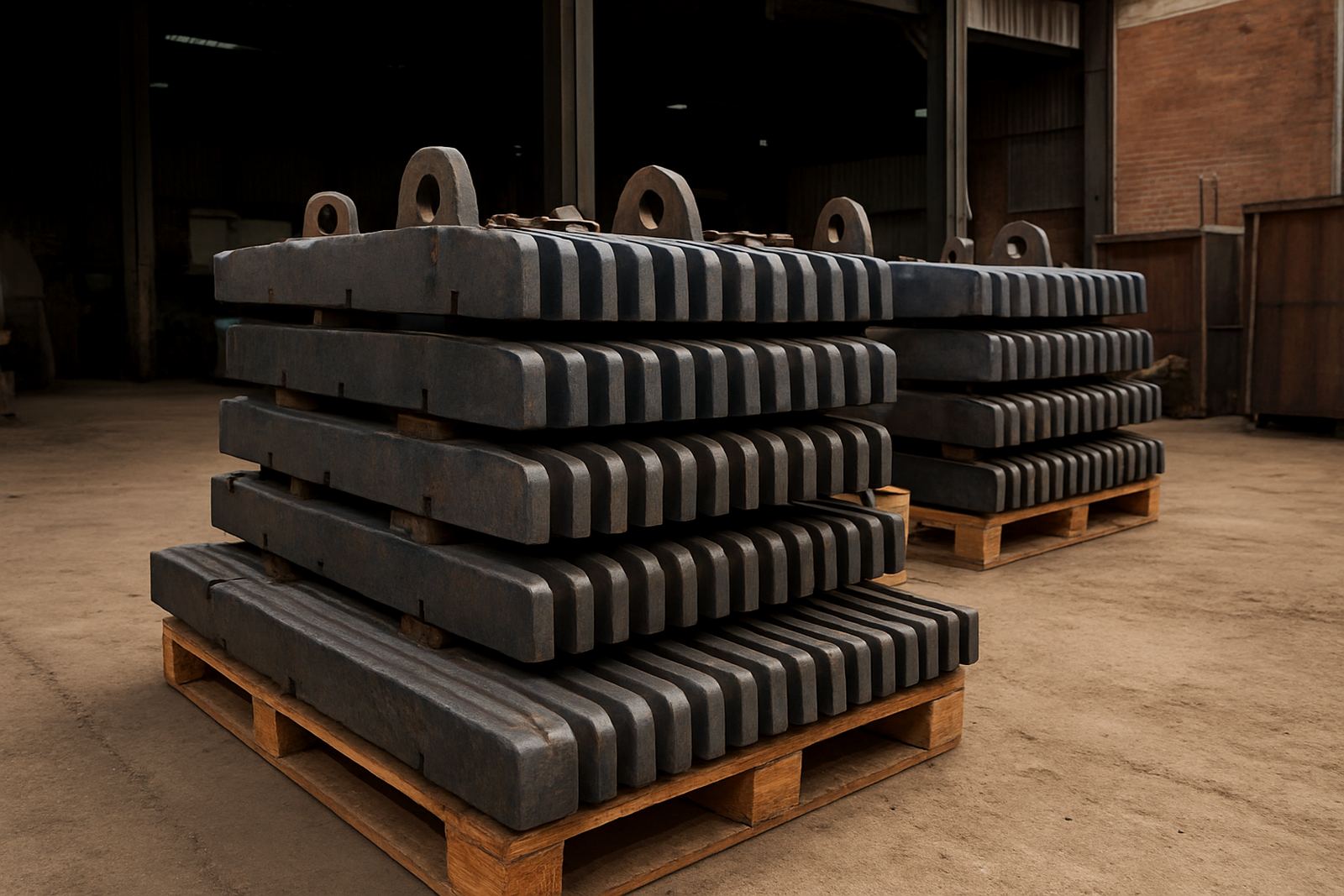
Jaw plates are the main wear parts inside a jaw crusher. They grip, crush and break feed material as the moving jaw closes against the fixed jaw, so the condition of the plate has a direct effect on product size, throughput and power draw. When the profile becomes too shallow or the face wears unevenly, the crusher can start producing more oversize, lose bite on hard rock and pull through extra wear on other components.
At Crusher Spare Exchange, used jaw plates are inspected before exchange so buyers can assess whether the plate still has useful service life left for their application. That matters where plants in Middelburg, eMalahleni, Rustenburg or Kathu need practical options that reduce downtime and keep budgets under control, especially during shutdowns when time is tight and labour is already on site.
Jaw plates can be supplied as single pieces or matched sets, depending on the crusher and the wear pattern required. We handle parts for quarry and mine operators working in dusty inland conditions, as well as sites near the coast where humidity can cause rust, stuck fixings and storage issues if plates are left exposed too long.
Sizes, Profiles And Fitment Options
Jaw plates are not one-size-fits-all. The correct plate depends on crusher model, feed size, rock hardness and the output target. Some plates are supplied with coarse corrugations for larger feed and high bite, while others have a finer profile for more controlled crushing. We also see differences in thickness, length, bolt hole spacing and the shape of the seating face, so measurements must be checked before any exchange or collection is arranged.
Common ordering details include the nominal jaw opening, overall plate length, plate width, thickness at the centre and the fixing pattern. If the crusher uses reversible plates, both sides should be checked because one side may still have serviceable life while the other has already thinned out. If a plant is running an older unit or a machine with prior repairs, a physical inspection helps avoid a costly mismatch.
- Plate length and width in millimetres
- Thickness at the thickest and thinnest points
- Tooth profile or corrugation style
- Bolt hole number, pitch and spacing
- Left hand or right hand orientation where relevant
- Crusher make, model and chamber size
Where Used Jaw Plates Suit Best
Used jaw plates are a practical option where the machine is not working at full capacity every hour of the day, or where the operator wants a lower-cost alternative for secondary duty, standby equipment or short term production. They can suit quarries handling aggregates, road stone, ballast, dolerite, granite and other hard rock materials, provided the wear profile still matches the feed and the remaining thickness is acceptable.
They are also useful during shutdown sourcing when a plant needs to get back online quickly and a new plate is not immediately available. In places like Polokwane Region, Secunda Region and Lydenburg Region, where supply timing can affect production planning, a checked used plate can bridge the gap and keep stockpile levels moving. For inland sites, storage is usually simpler, but coastal humidity around transport routes can still affect unprotected steel if packing is poor.
We recommend confirming whether the plate will be used in primary crushing, where feed is more irregular, or in a less demanding duty cycle. That affects the acceptable wear remaining and the level of inspection needed before fitment.
Installation, Power And Site Requirements
Jaw plates are mechanical wear parts and do not need gas connections or special utilities. Installation does, however, require the crusher to be isolated, locked out and made safe before any lifting or bolt removal takes place. Because plates are heavy and awkward to handle, the correct lifting gear, rigging and support blocks should be ready before the machine is opened.
Power requirements depend on the crusher itself, not the plate. But once plates are fitted, the operator should check that the jaw cavity closes correctly and that the motor load remains within normal range. If the wear face is badly uneven, the machine can labour under load and use more power than expected. On sites with load-shedding, a properly planned fitment during a scheduled outage can save repeat stoppages later.
- Isolate and lock out the crusher before work starts
- Check seating faces for damage, trapped fines and rust build-up
- Confirm torque on all fasteners after fitment
- Run a short trial and check for rubbing, noise or uneven nip
- Inspect the discharge pattern after the first few loads
Care, Storage And Service Life Checks
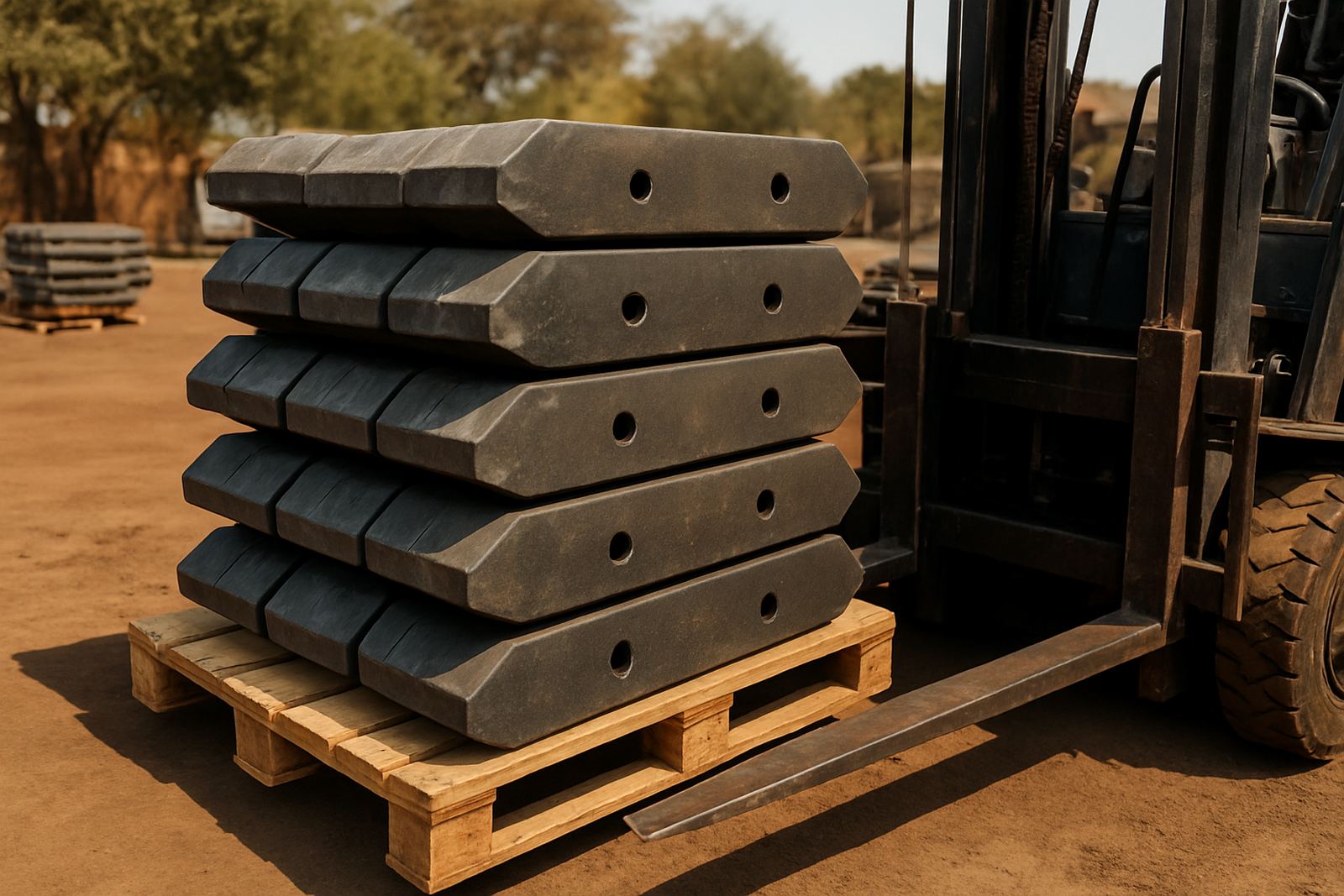
Used jaw plates last longer when they are stored correctly and handled without knocking the wear face against concrete, steel or other spares. Our Middelburg yard keeps parts organised for collection and delivery, and we also offer palletising and packing where customers need plates moved between quarries, mines or shutdown stores. In storage, keep the plate off the ground, dry and clearly marked so the side, size and condition are easy to identify later.
Before putting a plate back into service, check for cracks at the mounting holes, deep gouges, uneven wear and any loss of thickness that could reduce remaining life. A plate that still has good profile but poor edge condition may work for a short run, while a plate with thin sections near the centre can fail too early and cause more downtime than it saves. For coastal or humid areas, surface rust should be cleaned and the seating area checked again before fitment.
Regular inspection also helps with consignment sales and exchange planning. If a plate is still serviceable but no longer suitable for your feed, it can often be listed as surplus rather than scrapped immediately.
What To Check When Ordering Jaw Plates
The fastest way to avoid delays is to send full crusher details and clear measurements before the exchange is confirmed. We inspect jaw plates for wear profile, thickness and remaining service life, but the more accurate the initial information, the easier it is to match the part to your plant. If you are comparing a current plate with a replacement, photos from both sides and a straight edge across the wear face help us assess whether the part will perform as expected.
Ordering mistakes usually happen when the model is close but not exact, or when the seller has not measured the plate after wear. A plate may look usable from a distance but still be too thin at the centre or too worn at the ends. That is why we ask for proper identification before arranging local collections or nationwide delivery to sites in Rustenburg, Kathu, Pietermaritzburg and beyond.
- Crusher make, model and chamber size
- Old plate photos and measurements in millimetres
- Wear pattern, cracks, chips or broken fixing points
- Required quantity and whether matching pairs are needed
- Collection or delivery point and site access details
- Whether the part is for immediate fitment or stock holding
Key facts
| Product type | Used jaw plates for crusher exchange and resale |
|---|---|
| Inspection points | Wear profile, thickness, crack check and remaining service life |
| Typical material | Manganese wear steel or similar crusher wear alloy |
| Common sizes | Model specific, measured by length, width and thickness |
| Fitment use | Primary crushing, secondary duty, standby stock or shutdown replacement |
| Service area | Middelburg, eMalahleni, Rustenburg, Polokwane, Kathu and Pietermaritzburg |