What a main shaft does in a crusher
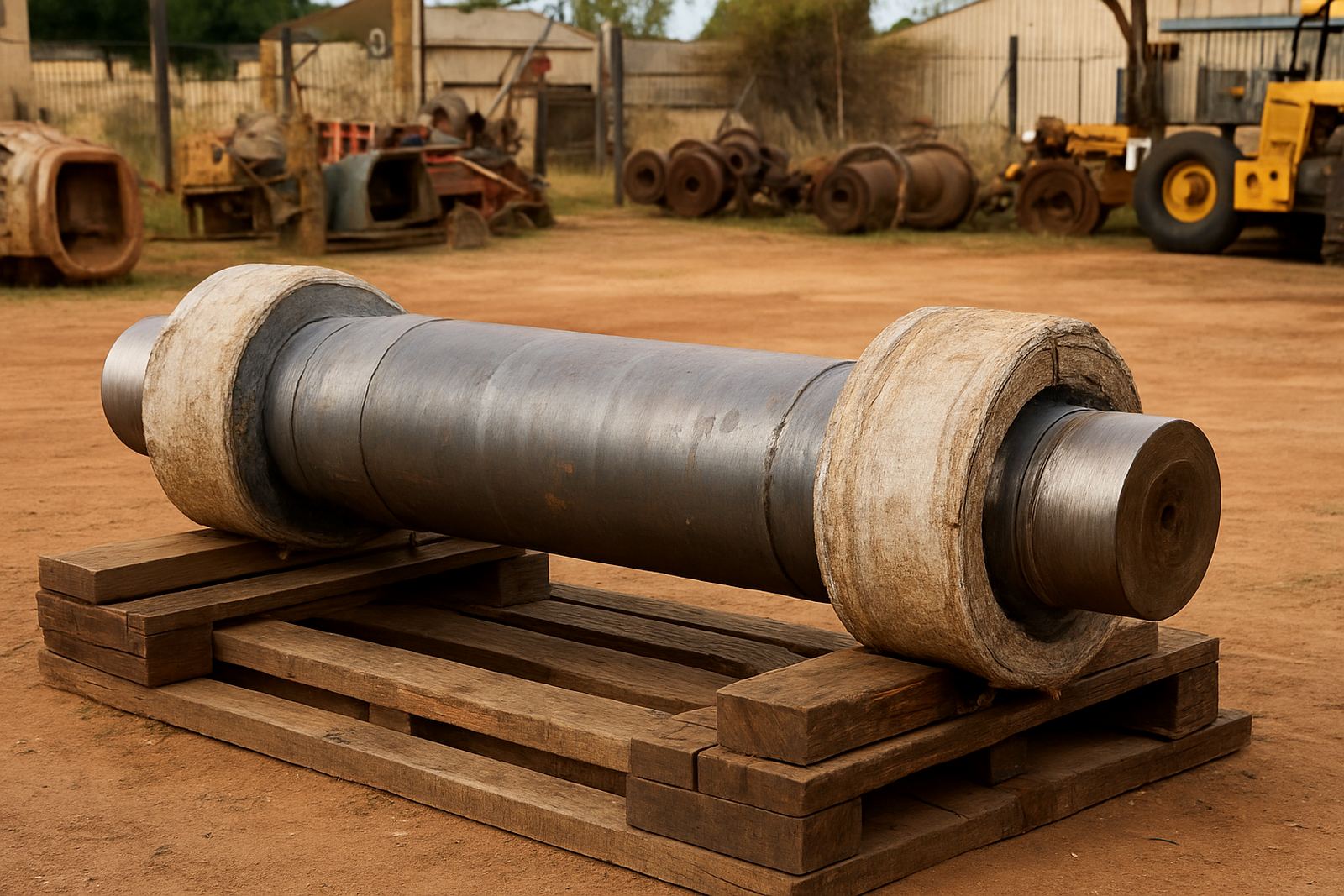
The main shaft is the central rotating member that carries load, holds alignment and transfers motion through the crusher assembly. In most plants it works under high shock loading, dust, vibration and uneven feed, so wear on journals, seating faces and key areas can stop a machine long before the rest of the unit is due for replacement.
Our main shafts come from decommissioned units that are suitable for rebuild work, spares recovery and rotating plant repairs. These parts are usually considered where the original machine is being returned to service after a shutdown, or where a site wants to rebuild rather than buy every component new. For quarries in Middelburg, eMalahleni, Rustenburg and the wider Mpumalanga belt, that can save days of waiting time and reduce scrap that still has useful life left.
Because each shaft is removed from a specific unit, we record the visible condition, measuring points and any signs of wear before it is listed. That makes it easier to match a shaft to the right repair plan, whether the job is a straight swap, machining, or a full rebuild with new bearings and seals.
Sizes, diameters and build options we list
Main shafts vary by crusher type, frame size and duty cycle. We list the actual dimensions where available, including overall length, journal diameter, seating diameter and keyway details. On some units the shaft is supplied as a bare component, while others are offered with retained fittings still in place for strip and inspection work.
- Overall length: typically 900 mm to 3 200 mm, depending on crusher size
- Shaft diameter: commonly 120 mm to 450 mm on listed units
- Journal and seat measurements: recorded in millimetres where accessible
- Keyway, thread and groove details: noted during inspection
- Condition status: serviceable, repairable or for machining recovery
For mines and quarries near Kathu, Polokwane and Pietermaritzburg, the main point is matching the physical dimensions to the existing housing, bearings and drive arrangement. If the fit is wrong by even a few millimetres, the machine can run hot or fail early. That is why we encourage clients to send their current measurements before collection or dispatch.
Where these shafts suit in the plant
These shafts suit rebuilds on crusher plants, rotating equipment repairs and shutdown work where the team needs a usable core component without waiting for a long procurement cycle. They are commonly requested for fixed plant, mobile crushing spreads and maintenance yards that keep standby parts for breakdowns.
Main shafts are often selected for work in dusty quarry conditions, coastal humidity, and sites with heavy stop-start operation. We also see demand where load-shedding has pushed sites to run harder during available power windows, which can put more stress on drive systems and bearings. A sound shaft helps keep alignment steady when the plant is under pressure.
- Primary and secondary crusher rebuilds
- Rotating plant repairs and overhaul work
- Shutdown maintenance projects
- Standby spares for critical production units
- Recovered parts for exchange or consignment sales
If your site needs fitment checks before a planned shutdown, our inspection team can assist from the Middelburg Yard and regional storage points in Secunda, Lydenburg and the Rustenburg Region.
Installation points, power needs and site readiness
Most main shaft replacements are done during a planned shutdown with lifting gear, correct rigging and a clean working area. The shaft itself does not need a power supply, but the crusher assembly, lubrication system and drive package must be isolated, locked out and verified before any strip down starts. On many sites a 3 phase supply is already in place for the plant, yet the actual job depends more on safe isolation than electrical load.
Before installation, check that the housing is clean, the bearing seats are within tolerance and the drive alignment is correct. If the unit is going into a mine near a coastal or high-humidity area, stored shafts should be kept off the ground and protected from surface corrosion. In Middelburg winters and during long shutdowns, condensation can mark a bare steel shaft if it is left uncovered.
We recommend that the installation crew confirm lifting points, sling angles and transport clearances before delivery arrives. If the shaft is being moved between quarries, our logistics team can arrange palletising and packing for safer handling on route.
How to care for a used main shaft before and after fitment
A used shaft can give good service if it is checked carefully and protected properly. Keep it off bare soil, out of standing water and away from grit that can score machined surfaces. For long storage, apply a light protective coating and inspect the part before moving it again. If the shaft has been sitting in a yard through rain or dust storms, wipe and remeasure the critical areas before fitting.
After fitment, bearing temperature, vibration and lubrication condition should be monitored during the first hours of operation. A shaft that is slightly out of line can show up as heat, noise or uneven wear very quickly. It is better to stop and recheck than to push the plant through a shift and damage the housing as well.
- Store on timber or pallets, never directly on concrete
- Cover the machined ends and keyway areas
- Check for scoring, rust pitting and oval wear before assembly
- Record bearing temperatures after start-up
- Reinspect after the first production run
What to send us when requesting a shaft
To match the right main shaft, send the crusher type if known, the measurements from your current unit and any photos of the damaged part. Include overall length, diameter at the bearing journals, seat widths, thread details and whether the shaft must work with existing couplings or pulley arrangements. If you are unsure, our inspection coordinator can help you identify the critical points from the old component.
We also need to know whether the shaft is for direct replacement, rebuilding or scrap versus exchange assessment. Some parts are worth storing for a later fitment, while others are better treated as exchange stock if the wear pattern is too advanced. That decision can save time and keep the yard moving through a busy shutdown season.
Our team in Middelburg handles surplus listing, condition reporting, local collections and nationwide delivery, with support from the Sales and Exchange Lead and the Logistics Supervisor. That lets clients from eMalahleni to Kathu get a practical answer on what is available, what needs machining and what should be set aside for exchange.
Key facts
| Product type | Main shafts from decommissioned crusher units |
|---|---|
| Typical length range | 900 mm to 3 200 mm |
| Typical diameter range | 120 mm to 450 mm |
| Supply condition | Serviceable, repairable or machining recovery |
| Handling format | Bare shaft or fitted with retained components |
| Service area | South Africa, including Mpumalanga, North West, Limpopo and Northern Cape |