Feed Hopper Purpose in Quarry and Mine Plant Layouts
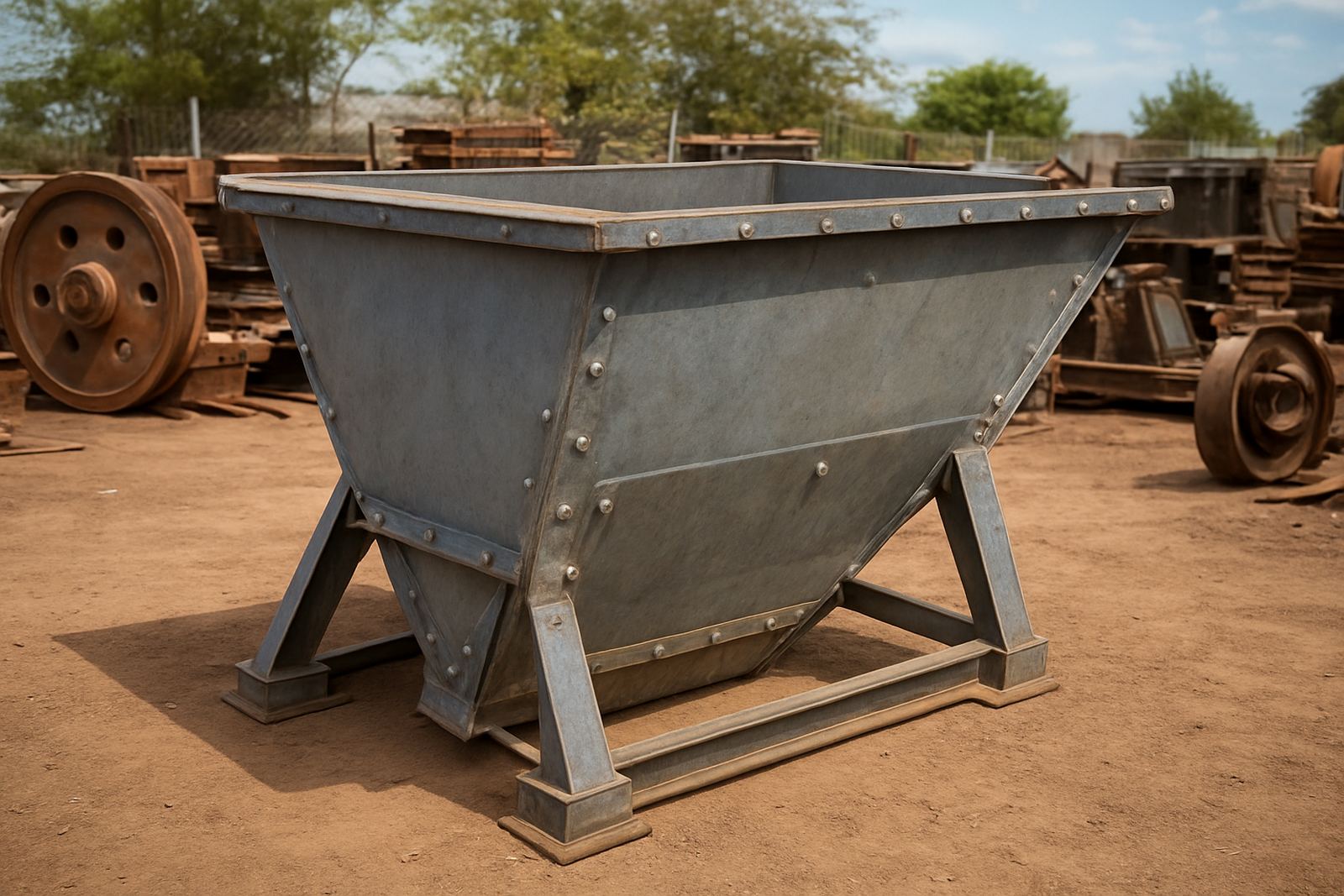
Feed hoppers come in many sizes, from compact units for smaller plants to heavy sections built for higher throughput. When you are matching a surplus hopper to your site, check the opening size, wall height, discharge arrangement and the material thickness. In our market, many hoppers are supplied as standalone units, while others are part of a frame, chute or feeder assembly.
Common options include lined wear areas, bolt-on discharge lips, support legs, hand rails and access platforms. Some units are built for manual loading with a front-end loader, while others are designed for truck tip feed or direct transfer from an overland conveyor. In humid coastal conditions, and at inland sites where dust is high, lining choices and coatings matter because corrosion and wear can move quickly if the unit is left unprotected.
- Typical capacities range from small surge hoppers to large plant bins
- Open top or hooded styles available depending on dust and splash control needs
- Liners may be fitted in high-wear zones, depending on previous use
- Support structures can be fixed or modular for easier transport
Where Feed Hoppers Suit Best
These hoppers suit quarries, mines, mobile plant setups and fixed crushing plants where feed needs to be controlled and kept moving. They are especially useful where the site has mixed material sizes, variable truck timing or a narrow shutdown window and you need the plant to start quickly after maintenance. If a crusher is running below design rate because the feed is uneven, a correctly sized hopper can make a real difference.
We see demand from Middelburg and Secunda where plants often need practical replacement parts for existing layouts, and from Rustenburg, Kathu and Polokwane where operations need equipment that can be moved, inspected and put into service without long delays. Feed hoppers also suit screening plants, rehandle yards and stockpile recovery areas where material must be buffered before it goes into the next process.
- Quarries with variable truck deliveries
- Mine plants needing buffer capacity between stages
- Shutdown replacements where an old hopper is worn through
- Modifications where the feed point has changed
Installation, Power Needs and Site Preparation
Most feed hoppers do not need a direct power supply on their own, but they must be matched to the feeder, conveyor, vibrating equipment or discharge system below them. If the hopper sits with a mechanical feeder, check the motor size, control panel needs and start-up sequence before delivery. If it feeds by gravity only, the main focus is structure, support and access for loading.
Before installation, confirm the bearing points, floor loading, foundation dimensions and any lifting requirements. Some hoppers need a crane or telehandler for offloading, especially where the unit is over 3 metres high or fitted with a support frame. On many South African sites, municipal dust and noise rules also apply, so access points, splash curtains and dust suppression may need to be planned in early. A tidy layout reduces rework and keeps the set-up safer for operators.
- Check foundation size and anchor positions before dispatch
- Confirm whether the hopper feeds by gravity, feeder or conveyor transition
- Allow clear access for lifting gear, maintenance and washdown
- Plan for dust control where stockpiles and truck tipping create fine material
Care, Cleaning and Routine Servicing
A feed hopper gives better service when it is cleaned out regularly and the high-wear zones are watched closely. Ore and crusher feed can bridge, cake or build up on side walls, especially when the material is damp after rain. If the hopper is holding sticky fines or clay, it may need more regular clearing to avoid blockages and uneven discharge.
Look for cracks around welds, thinning in the discharge area, bent support members and loose liner plates. On used units, ask for the condition of the bottom plate, side walls, skirt areas and any previous repair patches. A hopper that has already been repaired once can still be serviceable, but only if the repair is sound and the remaining plate thickness is acceptable. Keep the service area dry where possible, and touch up exposed steel to slow rust in inland dust or coastal humidity.
- Inspect welds, liners and discharge corners after each shutdown
- Clear build-up before it hardens and affects flow
- Check for corrosion where water, fines and fines sit together
- Replace worn liners early to avoid full plate failure
What to Check Before You Order a Surplus Hopper
When you order a surplus feed hopper, the most important thing is fit. Confirm the opening size, overall height, width, discharge size and how the unit will connect to your existing feeder or conveyor. If the hopper needs to match an older plant, photos and measurements from site help us check compatibility before collection or delivery. If you are planning a shutdown changeout, allow time for inspection, packing and transport from our Middelburg yard.
Ask for the material condition report and check whether the hopper is complete with legs, brackets, guard rails, chute sections or transition pieces. If the unit was removed from a live plant, it may be suitable for reuse as-is, or it may need minor repairs before installation. We also help clients compare scrap vs exchange value where a worn hopper can be traded out in a practical way instead of sitting in the yard unused.
- Exact opening and discharge dimensions
- Whether the hopper includes support steel or only the shell
- Liner condition and plate thickness at wear points
- Transport size, lifting points and access for offloading
Inspection, Storage and Delivery from Middelburg
Crusher Spare Exchange lists surplus feed hoppers for clients across South Africa from our Middelburg, Mpumalanga base. Each unit can be inspected, condition reported, stored in yard and prepared for collection or nationwide delivery. We work with quarry and mine teams in eMalahleni, Rustenburg, Polokwane, Kathu, Pietermaritzburg, Lydenburg and Secunda, including sites that need urgent spares during shutdowns or after unplanned wear.
Our team handles inspections, palletising or packing where needed, and logistics for direct site delivery. The aim is simple: help you source the right hopper for the job, keep the exchange process clear, and reduce waste where a surplus unit still has useful service life left. If you need a feed hopper for a plant modification or replacement project, send the measurements and service details through the enquiry form and we will check what is available.
- Inspection and condition reporting before dispatch
- Yard storage until your collection date or shutdown window
- Local collections and nationwide delivery from Middelburg
- Support for exchange, consignment and urgent sourcing
Key facts
| Product type | Surplus feed hopper for quarry and mine plant feed systems |
|---|---|
| Typical use | Buffering and controlled feed into crushers, screens, conveyors or feeders |
| Material condition | Used surplus units, inspected and listed with condition notes |
| Size range | Compact to large plant hoppers, subject to current stock |
| Installation needs | Foundation, support steel and discharge matching to existing plant |
| Service areas | Middelburg, eMalahleni, Rustenburg, Polokwane, Kathu, Pietermaritzburg and nationwide |