What a crusher mantle does in cone crushing
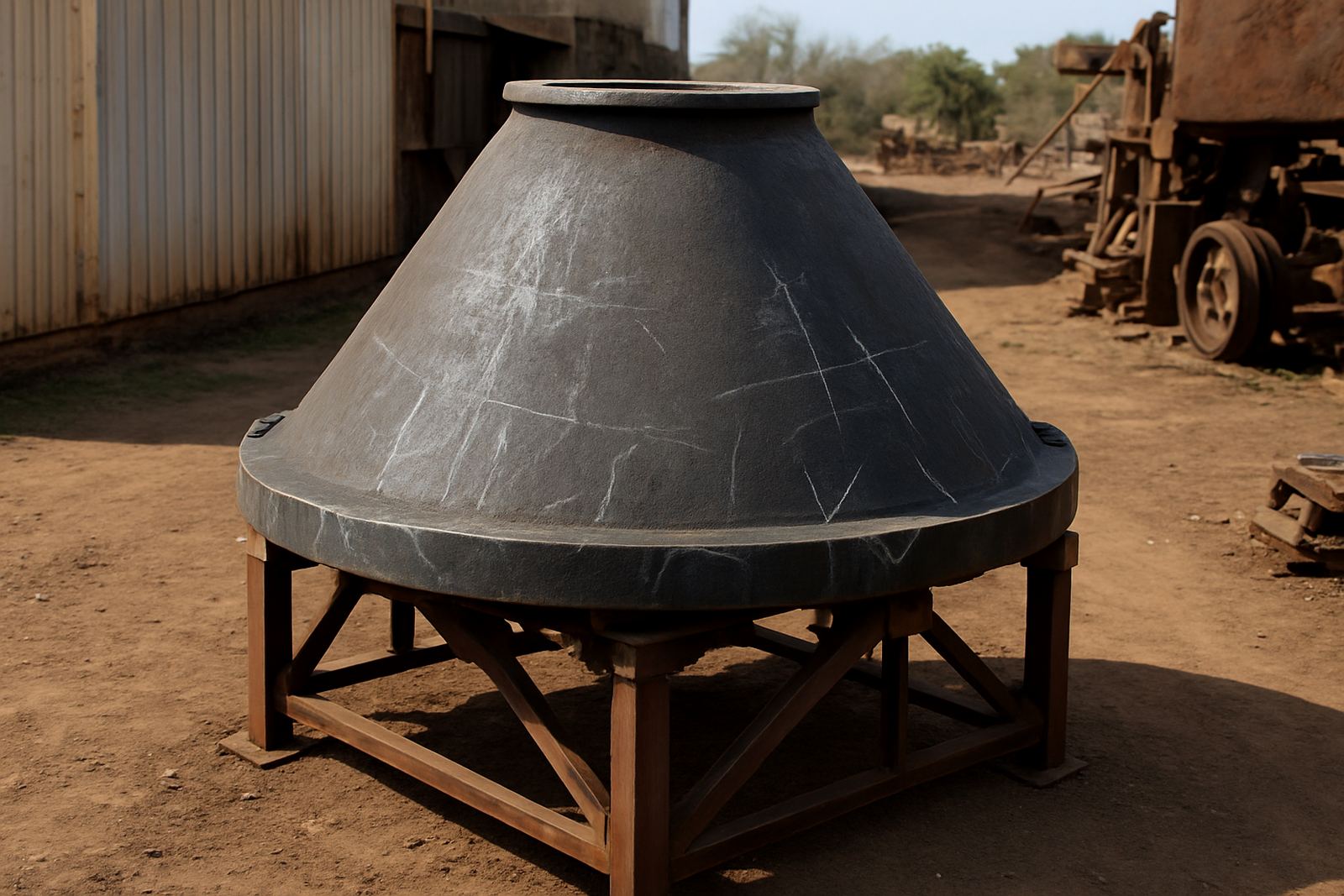
The mantle is the moving wearing cone inside a cone crusher. As the unit runs, the mantle works against the concave to break rock down to size, so it wears over time and needs replacing before product size and output suffer. In many plants the mantle is one of the first parts to show visible wear after long shifts, sticky feed, or hard abrasive stone.
For quarries handling granite, dolerite, quartzite and similar hard material, a sound mantle helps keep a steady reduction ratio and better control over top size. If the mantle profile is worn unevenly, the crusher can start pulling more power for less output and the chamber can lose its bite. That is why many sites in Mpumalanga, North West and Limpopo keep a spare on hand, especially before shutdown season or after a run of load-shedding interruptions that make production planning tighter.
We exchange used mantles that still have useful service life left after inspection, which gives buyers a practical option when a new part is not the only route. It is a straightforward way to keep the plant moving without paying full replacement cost, and it also keeps usable steel in circulation instead of sending it straight to scrap.
Sizes, profiles and fitment options we handle
Mantles are not one-size-fits-all. The right match depends on the cone crusher model, chamber type, feed arrangement and the wear pattern you are trying to manage. We deal with surplus mantles in a range of diameters, weights and profiles, with options suited to coarse, medium and fine crushing duties.
- Common mantle diameters from smaller plant units through to heavy-duty mine crushers
- Standard, medium and fine profiles for different reduction needs
- High-wear options for abrasive rock and high-tonnage sites
- Used mantles supplied only after visual inspection and condition reporting
- Exchange stock that can suit shutdown work, routine replacement or urgent spares search
If you are comparing options, the main point is not just the outside size. The chamber profile, fixing arrangement and remaining wear thickness must all line up with your machine. A mantle can look right at a glance but still be wrong in the bowl, so we always ask for the crusher details and the old part reference where possible.
Where mantles suit and what they are used for
These parts are used on cone crushing circuits in quarry and mining plants where reduction and shaping matter. They are common in hard rock applications, roadstone production, aggregate sizing and secondary or tertiary crushing stages. On some plants the same style of mantle may work across a family of machines, but only where the fit and chamber geometry are confirmed.
We see demand from sites in Middelburg, eMalahleni, Secunda and Rustenburg where plants want to keep spares moving between operations rather than waiting for new supply. In dusty inland conditions the wear life can be good if feed is managed well. On coastal jobs near Pietermaritzburg or where humidity is higher, storage and handling matter too because rust and surface pitting can affect how cleanly the part seats at fitment.
For shutdown teams, mantles are often ordered with other wear items so the strip-out and rebuild can happen in one window. That saves lifting time, transport costs and the hassle of keeping a unit open longer than needed.
Installation, lift planning and power needs
Installing a mantle is a mechanical task, not an electrical or gas-driven one. No power or gas is needed for the part itself, but the crusher must be isolated, locked out and made safe before any lifting starts. The mantle is usually handled with a crane, overhead gantry or suitable lifting gear depending on the plant layout and the weight of the part.
Good fitment starts with a clean seat, correct torque on fasteners and a proper check that the new mantle sits evenly before the machine goes back into service. If the fit is rushed, you can end up with chatter, uneven wear or movement under load. On some sites the job is done during a planned shutdown with the concave inspected at the same time, because a worn bowl can shorten the life of the new mantle as well.
- Isolate and lock out the crusher before any access
- Check lifting points and available crane capacity
- Confirm seating surfaces are clean and undamaged
- Verify fastener type, tightening method and torque settings
- Run a short test period and inspect for movement or uneven noise
If you are working in a yard with limited access or long haul routes, tell us early so we can plan collection and delivery around the lift programme.
Care and servicing for longer mantle life
A mantle lasts longer when the crusher is fed evenly and kept within the right operating range. Overfeeding, tramp metal and poor feed distribution can all cause localised wear or cracking. Excessively dry dusty feed can also create hot spots, while wet sticky material may pack the chamber and change the wear pattern. Small issues here turn into expensive downtime if nobody watches them.
Routine checks should include profile wear, cracks around the mounting area, signs of movement and the condition of the matching concave. On plants with frequent start-stop cycles, especially where power interruptions are common, it is worth checking fixings after the first few hours back in operation. That simple habit often catches a problem before the mantle is damaged beyond exchange use.
We also recommend storing spare mantles off the floor on pallets or proper dunnage, with clear identification tags and protection from standing water. In places like Kathu and Polokwane where logistics can be spread out across large distances, good storage reduces the risk of a part arriving only to need extra cleaning or corrective handling before fitment.
What to check before you order a mantle
When you send an enquiry, the more details you give us the quicker we can match the right part. A mantle that is close but not exact can create delays, so it pays to check the crusher plate reference, dimensions and wear condition before the unit is collected or exchanged. We can help compare your old part to available stock and advise if a part is suitable for exchange, scrap or further inspection.
- Crusher make, model and serial if available
- Old part number or casting reference
- Outside diameter, height and fixing details
- Profile type and expected feed size
- Remaining wear thickness and any crack damage
- Whether you need local collection, yard storage or nationwide delivery
Our team in Middelburg checks each request through operations, inspection and logistics before release. That means Lerato, Sibusiso, Anika, Mpho, Nokuthula and Johan can work the request through the yard, loading and delivery steps with fewer surprises, even when the order needs to move quickly across provincial routes.
Key facts
| Product | Crusher mantle for cone crushers |
|---|---|
| Use | Wear surface for secondary and tertiary crushing |
| Supply type | Used surplus exchange stock, subject to inspection |
| Typical support | Condition reporting, palletising, packing and delivery |
| Base location | Middelburg, Mpumalanga |
| Service areas | eMalahleni, Rustenburg, Polokwane, Kathu, Pietermaritzburg and across South Africa |