Take Up Frames For Conveyor Tensioning Jobs
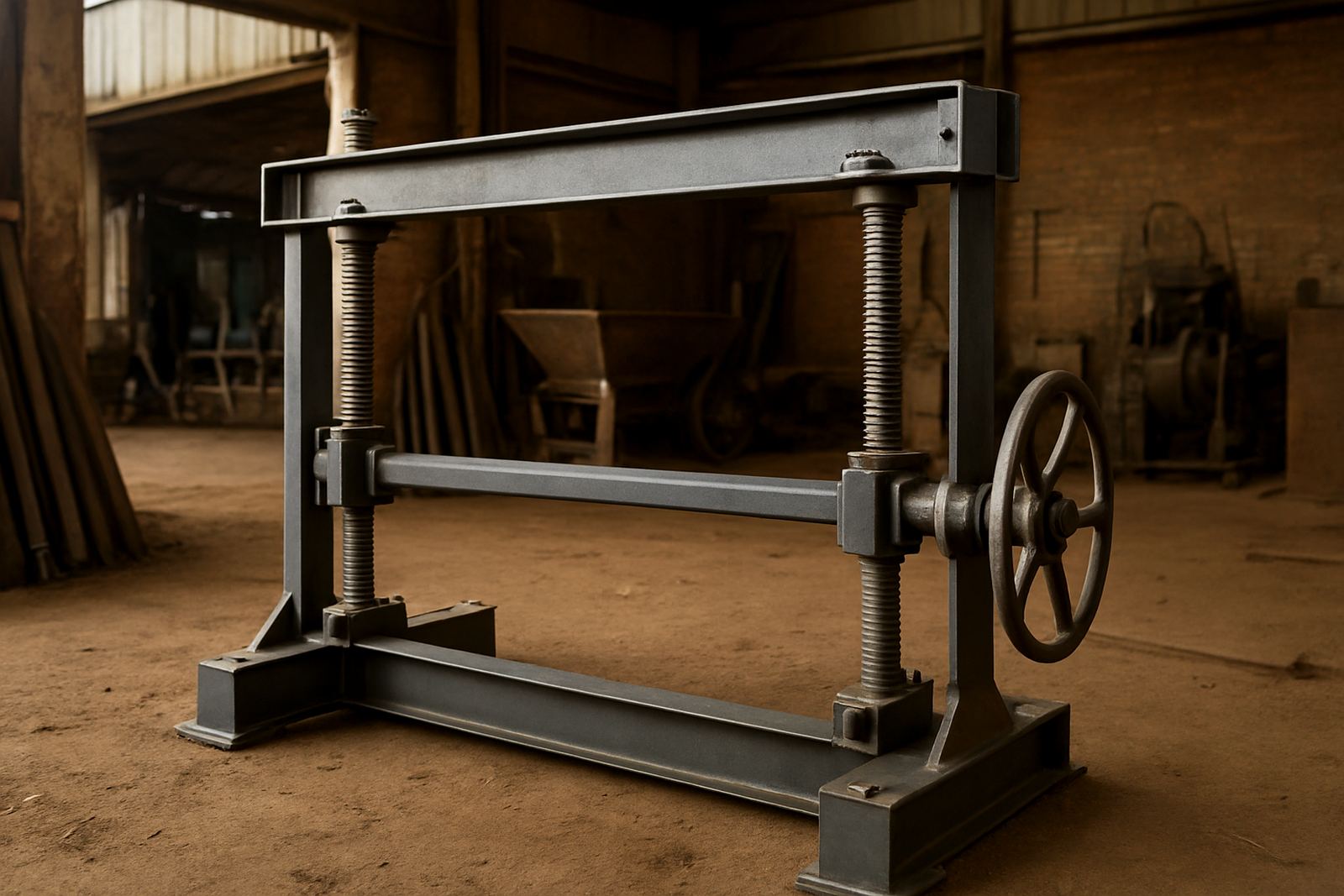
A take up frame is the structure that carries the tensioning carriage, pulley arrangement or adjustment assembly on a conveyor. In a crusher plant it plays an important part in keeping the belt tracking correctly after long shifts, dusty conditions and repeated loading at transfer points. When a frame bends, seizes or wears unevenly, the belt may start to run off line and the whole circuit can suffer extra stoppages.
We list surplus take up frames for repair work around crusher circuits, including jaw crusher feed conveyors, screen feed belts and overland systems feeding stockpiles. These are typically used in quarries, sand operations and mine plants where existing tensioning equipment needs a replacement frame that can be fitted without waiting for a full fabrication run.
Because these items are sourced from local industrial and mining environments, each one is checked for usable condition before it is offered for exchange or sale. That helps buyers make a quicker decision when the job is urgent and the shutdown window is tight.
Sizes, Adjustments And Common Build Options
Take up frames come in different lengths, hole centres and rail arrangements depending on the conveyor width and belt tensioning method. Some are designed for gravity take up systems, while others suit screw take up assemblies or manual adjustment frames. The right unit must match the pulley size, shaft centreline and available travel on the conveyor structure.
Typical options we see listed include welded steel frames, bolt-on guide sections and frames with slide rails or adjustment slots. The condition of the tensioning faces, welds and mounting points matters, especially where there has been vibration from hard rock, wet fines or overloading at the head end.
- Conveyor widths commonly matched: 450 mm, 600 mm, 750 mm, 900 mm and 1200 mm
- Frame materials: mild steel fabricated sections, with reinforced mounting brackets where required
- Adjustment types: manual screw take up, sliding carriage and gravity take up support frames
- Mounting: floor mounted, side mounted or integrated into a conveyor support structure
- Length and travel: supplied according to existing pulley movement and belt stretch allowance
If you are replacing a frame after a structural failure, check whether the old unit was altered on site. Small changes to mounting holes or rail spacing can cause fit-up delays and extra drilling at the yard or on site.
Where Take Up Frames Suit In Crusher Plants
These frames are suited to conveyor systems around crushers, screens and stockpiles where belt tension needs regular correction. They are often needed on short transfer belts, return conveyors and feed systems that are exposed to stone spillage, dust and washdown conditions. In some plants the frame works in a dry, hot environment, while in others it is exposed to coastal humidity or misting from dust suppression, which can speed up corrosion.
For quarries and mines in Middelburg, eMalahleni, Rustenburg, Polokwane, Kathu and Pietermaritzburg, the right take up frame can help keep the conveyor working through a shutdown without major structural changes. It is also useful where the original fabricator is no longer supporting the equipment and a practical replacement is needed from available surplus stock.
- Crusher feed conveyors
- Screening plant transfer belts
- Stockpile conveyors and shuttle belts
- Overland belt sections with manual tensioning
- Shutdown repairs where temporary replacement is needed fast
In mining areas where load-shedding affects maintenance schedules, having the right frame on hand can make the difference between a same-week repair and a longer stoppage. Our Middelburg base supports collections and deliveries across South Africa, so customers can move spares where they are needed without extra handling.
Installation, Power Needs And Site Practicalities
A take up frame is a mechanical part and does not need its own power or gas supply. However, the conveyor system it supports may require isolation, lock-out and safe access during installation. Depending on the layout, the job may need lifting equipment, alignment tools and a team that can set the frame square before final tightening.
Before fitting, check the base structure for cracks, rust, bent channels and broken anchor points. If the belt is badly stretched or the pulley has worn grooves, replacing the frame alone may not solve the problem. In some plants the installation is straightforward, but on older circuits there can be uneven floors, uneven supports or previous weld repairs that make alignment harder than expected.
We recommend confirming whether the frame is for a fixed position, a sliding arrangement or a pull-back assembly. A small mismatch in travel distance can leave the belt too loose or too tight, which then leads to more wear on pulleys, idlers and bearings.
Care, Servicing And Signs Of Wear
Take up frames last longer when they are kept free of build-up, checked for straightness and protected from corrosion. In dusty quarry conditions, fines can pack around the guide rails and make adjustment difficult. On sites near the coast or in damp storage yards, rust can form on the adjustment sections and mounting points if the frame is left unprotected.
Routine care is simple but important. Grease points should be serviced where applicable, moving parts kept free and locking hardware checked after every maintenance cycle. If the frame is used on a belt that sees heavy loading, inspect it after each shutdown because vibration can loosen fasteners and create movement in the support structure.
- Check for bent side plates or cracked welds
- Inspect adjustment threads for seizure or stripped sections
- Look for oval bolt holes and worn mounting faces
- Confirm the frame runs square with the conveyor centreline
- Remove fines and moisture from sliding or moving parts
If a frame is stored for future use, keep it on level bearers and off bare ground. That reduces corrosion and helps keep the unit ready for a quick fit when the site needs it.
What To Check Before You Order A Replacement
When ordering a take up frame, the most useful information is the conveyor width, pulley centre distances and the type of take up arrangement already in place. If possible, send the old frame dimensions, bolt hole spacing and clear photos of the mounting area. That reduces the chance of getting a unit that looks close but does not suit the actual structure.
It also helps to know whether the frame is needed for a complete exchange, a repair job or a shutdown source. Some customers need a unit that can be inspected, stored and delivered directly to site, while others need a short term replacement to keep production moving until a fabricated part is ready. If the site is operating under a tight shutdown window, tell us that up front so the search can be narrowed quickly.
- Conveyor width and belt type
- Required travel or adjustment range
- Mounting style and hole centres
- Whether the frame is for gravity, screw or sliding take up
- Site location and delivery access, including off-road or mine gate restrictions
- Any corrosion, wear or heat limits relevant to the application
Crusher Spare Exchange, founded in 2012 and based in Middelburg, supports quarry and mine buyers with inspection, condition reporting, storage, palletising, packing and nationwide delivery. Our team, led by Thabo Johannes Mokoena, helps match surplus parts to the work that needs to be done, with practical support from listing through to dispatch.
Key facts
| Product type | Take up frame for conveyor tensioning repairs |
|---|---|
| Typical conveyor widths | 450 mm to 1200 mm |
| Build | Welded steel frame with bolt-on or slide mounting options |
| Use area | Crusher circuits, screens, stockpiles and transfer belts |
| Power or gas requirement | None, mechanical component only |
| Supply route | Inspected, stored and delivered from Middelburg, Mpumalanga |