
What a Step Bearing Does in a Crusher
A step bearing supports the lower end of the main shaft in many gyratory and cone crushing setups, carrying heavy axial load while the machine is running. It helps the shaft stay centred and allows the crushing head to operate with the correct movement under load. When the bearing face wears unevenly, the machine can show poor running conditions, excess heat or inconsistent product size.
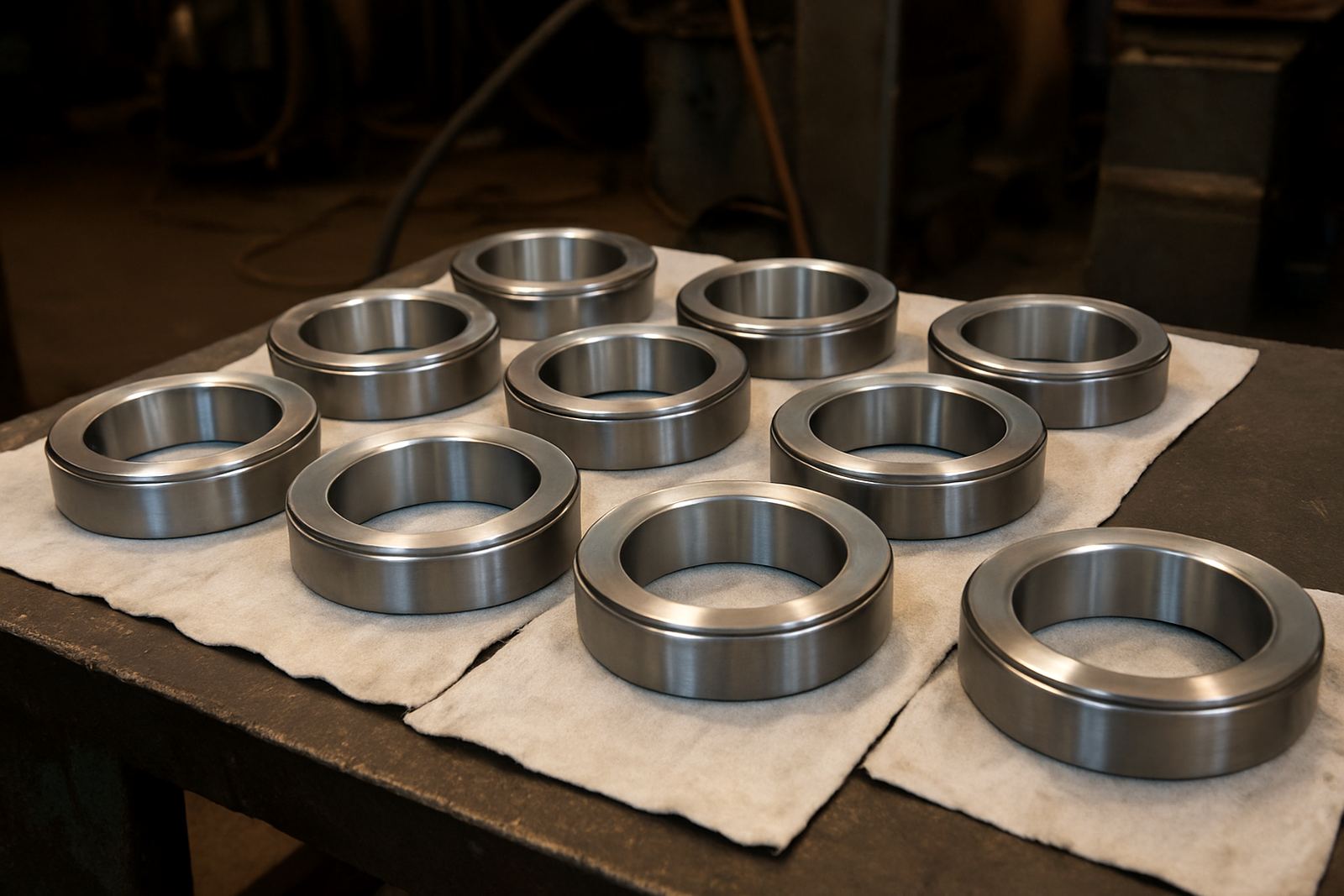
On exchange units, we look closely at the contact face, seating surfaces and general shell condition before any part is listed. A bearing with light service wear can still be suitable for a planned fitment, while parts with pitting, deep scoring or cracked edges are treated differently. That is why surface checks matter before any swap takes place.
- Supports the main shaft under axial load
- Helps maintain correct running alignment
- Protects against metal-to-metal damage where possible
- Used in many quarries, mines and crushing plants
Sizes, Fits and Common Supply Options
Step bearings are not one-size-fits-all. The right unit depends on the crusher model, shaft diameter, bearing outside diameter, thickness and the style of seating used in the machine frame. Some units are supplied as a plain bronze or alloy bearing, while others include wear face features, retaining grooves or matching shims depending on the machine build.
When you send through an enquiry, include the old part number if you have it, plus the crusher make and serial details from the machine plate. If the part number is missing, we can work from measurements. In many cases, clients in eMalahleni, Rustenburg and Kathu send photos with a tape measure across key points so we can narrow the match before collection or exchange.
- Outside diameter, inside diameter and overall thickness
- Centre bore and seating dimensions
- Plain or grooved face style
- Compatible with cone and gyratory crusher assemblies
Where Step Bearings Suit Best on Site
These parts are mainly used in fixed crushing plants at quarries and mines, where steady production and correct shaft support matter every shift. They suit primary and secondary crushing circuits, especially where the plant runs long hours and the crew needs parts that can be checked, stored and moved quickly during planned maintenance. Step bearings are often needed during shut downs when the team is replacing worn wear parts and checking alignment before startup.
For operations near Middelburg, Secunda, Polokwane and Pietermaritzburg, we often arrange part movement around maintenance windows, road access and stock location. If the plant is running in a dusty inland area or on a coastal site with humidity, the condition of the stored bearing becomes even more important before fitment.
- Primary and secondary crushing plants
- Shutdown maintenance and planned overhauls
- Sites needing exchange parts instead of new lead times
- Quarries with warehouse storage or yard holding needs
Installation Checks, Alignment and Site Readiness
Before fitting a step bearing, the seating area should be clean, dry and free of old grease, metal fragments or water contamination. The lower support and surrounding components must be checked for scoring, distortion and any uneven wear that could transfer damage to the replacement part. A bearing that looks acceptable on the bench can still fail early if the shaft, seating or lubrication route is not right.
Most installations do not need a power supply or gas connection for the bearing itself, but the crusher must be safely isolated before any work starts. If lifting gear is needed, the site should have suitable access, rigging points and a clear plan for moving the part from the yard to the crusher house. During load-shedding periods, many teams prefer to stage the part in advance so the fitment crew can work as soon as the plant is isolated.
- Confirm machine isolation and lockout procedures
- Check shaft seating and mating surfaces
- Inspect lubrication channels before startup
- Allow for correct lifting and handling equipment
Care, Storage and Service Life on the Yard
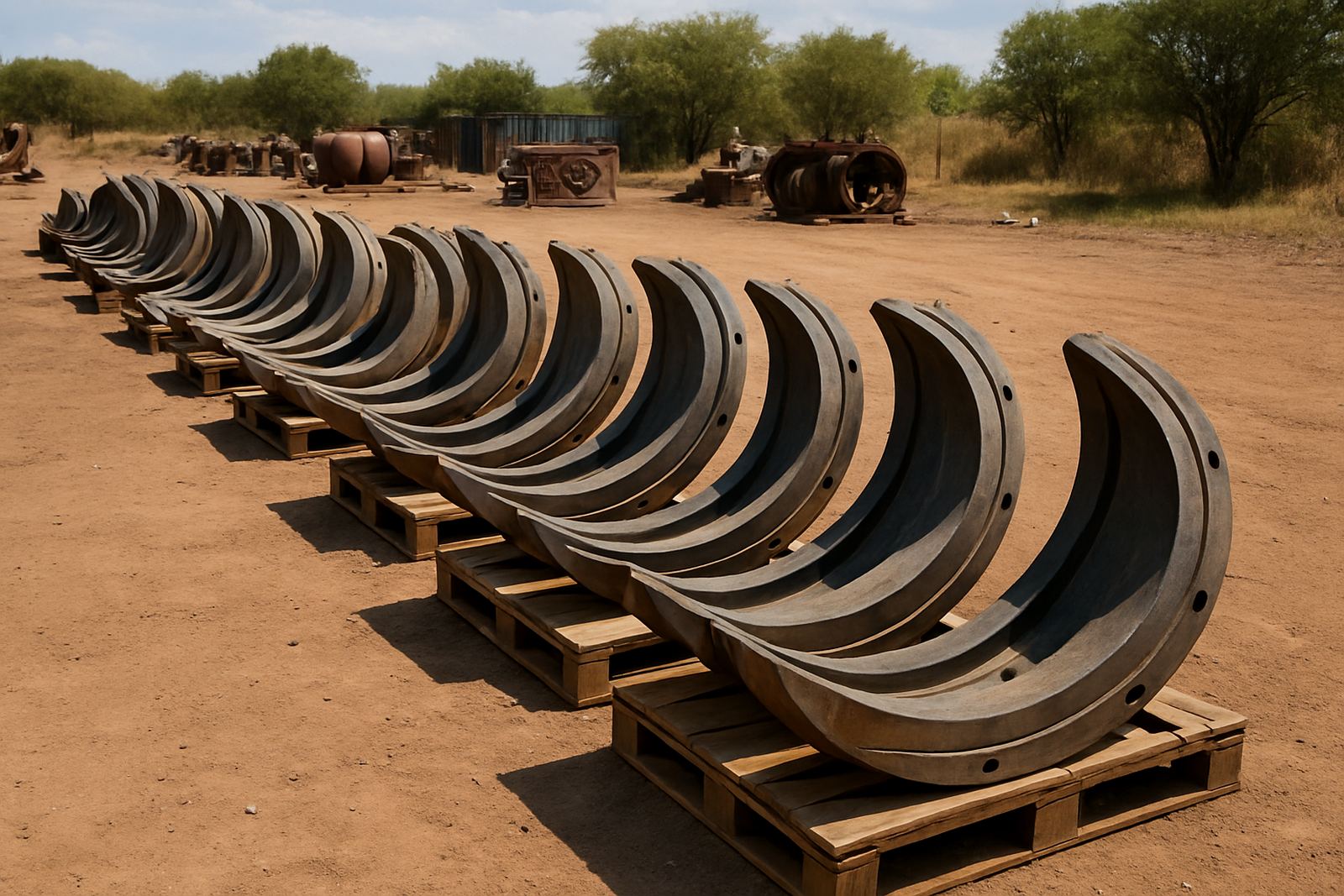
Good storage keeps exchange parts useful for longer. Step bearings should be kept under cover, off the ground and protected from dust, moisture and forklift damage. On inland yards, dust and fine ore can work into exposed surfaces. On coastal routes, humidity can bring surface staining if the part is left open. We store parts on pallets, wrap them where needed and keep them identified so the correct unit is easy to find when a quarry calls.
For service life, avoid standing water, rough stacking and dragging the bearing across concrete. If a part has been in storage for some time, inspect it again before dispatch. We also recommend checking the mating components in the crusher, because a new or exchange bearing will only perform properly if the worn parts around it are in fair condition.
- Keep parts wrapped and off the floor
- Protect from moisture, dust and impact
- Recheck the face before dispatch or fitment
- Store with clear ID tags and measurements
What to Check When Ordering an Exchange Bearing
To avoid delays, send the crusher model, part number if available, and the measurements of the old bearing. Photos help too, especially close-ups of the face, seating edge and any damage areas. If the unit is coming from a shutdown site, tell us when the plant needs it, where the part is now and whether you need collection, palletising or direct delivery to the mine.
We also ask clients to confirm whether the part is for scrap, exchange or urgent replacement. That helps us separate parts that can be reused from those that should be diverted into scrap stock. If you are comparing two options, ask for condition notes so you can decide whether the part suits a short-term fix or a longer production run. A clear order saves time and keeps the job moving.
- Crusher make, model and serial reference
- Old part number and key dimensions
- Photos of wear, scoring and cracking
- Delivery point, collection site and required date
Key facts
| Part type | Step bearing for crusher exchange and replacement |
|---|---|
| Inspection points | Surface wear, scoring, pitting, cracks and seating condition |
| Typical supply | Inspected surplus part, stored and dispatched on request |
| Fitment use | Primary and secondary crushing plants, shutdown work |
| Handling options | Collection, palletising, packing and nationwide delivery |
| Base area | Middelburg, Mpumalanga with South African delivery coverage |