
Why packing matters before a part leaves the yard
When a crusher liner, bearing housing or conveyor component changes hands, the journey can be as hard on the part as years of service. Forklift movement, road vibration, rain, dust and rough loading all create risk. A part that looked acceptable in the yard can arrive with damaged edges, cracked welds or hidden contamination if it was packed badly.
For quarries and mines moving stock between Middelburg, eMalahleni, Rustenburg, Polokwane, Kathu and Pietermaritzburg, packing is not just a nice extra. It protects the value of the exchange, keeps the inspection record honest, and helps the receiving site fit the item faster. That matters when a shutdown is coming and every hour counts. In our work, poor packing often leads to extra handling, re-inspection and avoidable claims.
The main aim is simple: keep the part stable, dry and identifiable from the point it leaves storage until it is lifted into place. If a component can shift inside a crate or sit in standing water, the packing is not doing its job.
Start with inspection, cleaning and marking
Packing starts before any timber, wrap or steel banding is used. First the part should be inspected for wear, cracks, missing fasteners and oil leaks. If grease, slurry or dust remains on the surface, it can hide damage and cause corrosion during transit. A quick clean down also helps the receiving team inspect the item at a glance.
Clear marking is just as important. Every bundle or pallet should show the item name, part number where available, weight, destination site and whether it must stay upright. On larger exchanged spares, attach a visible tag with any handling warning. That saves time when the load reaches a busy yard and reduces the chance of a loader or crane operator guessing wrong.
- Remove loose dirt, grease and old packing material before wrapping
- Check for sharp edges that can cut straps or plastic
- Mark lifting points and centre of gravity where relevant
- Photograph the item before it is sealed for transport
A clean, marked part is easier to trace if the exchange is split over more than one truck or stored for a few weeks before dispatch. It also helps when the item has to be compared against another unit for fitment checks.
Match the packing method to the size and weight of the part
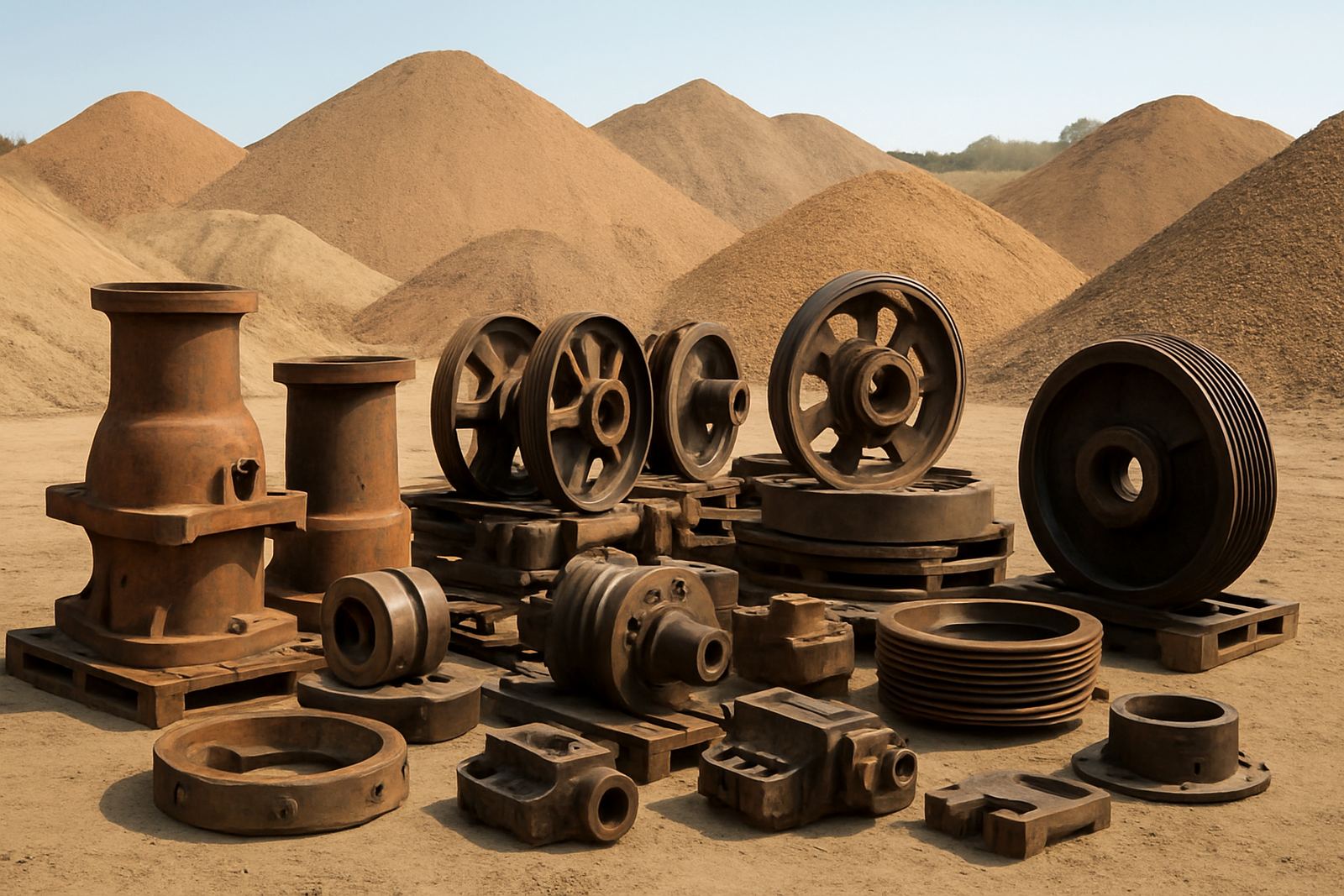
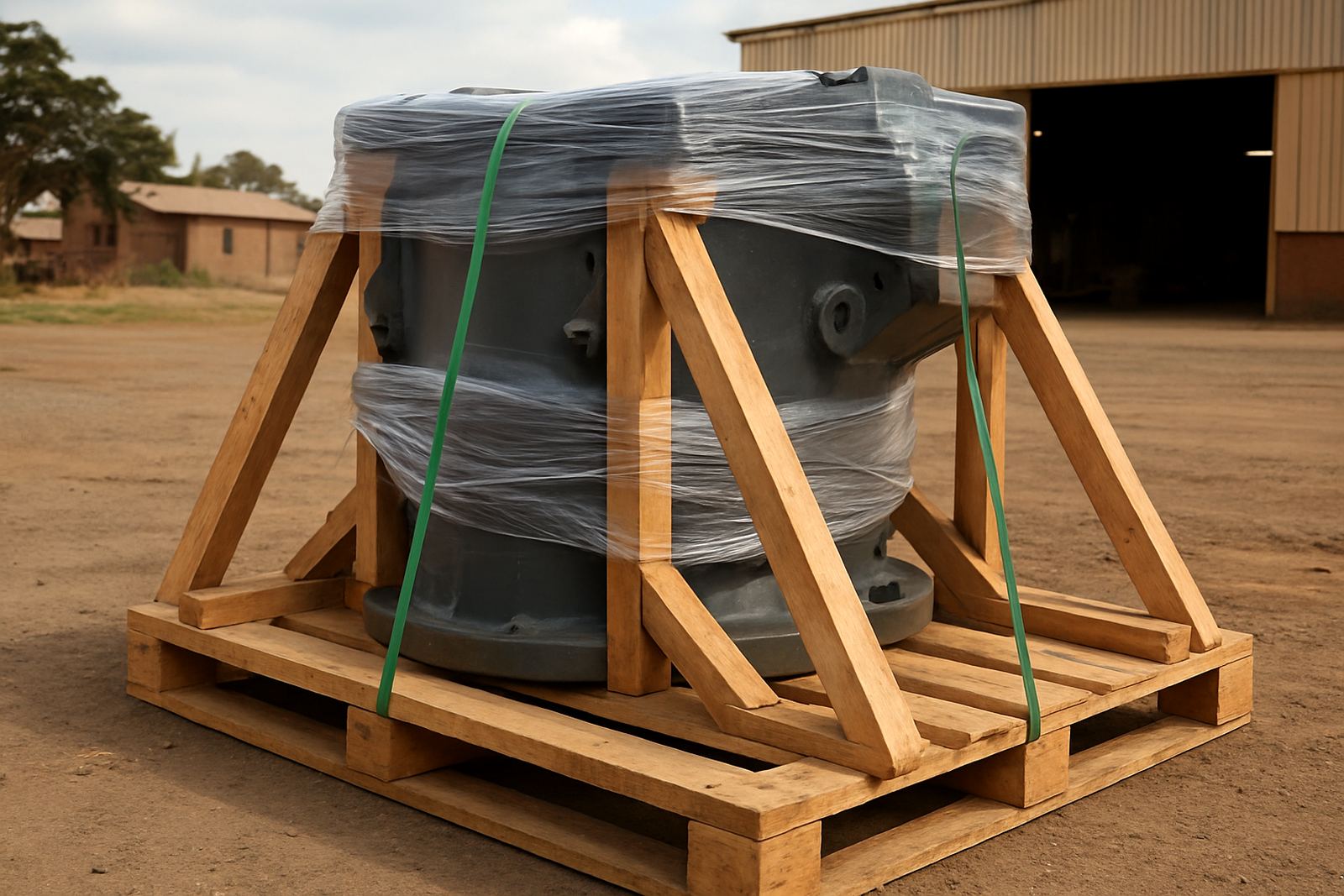
Not every component needs the same treatment. A small pulley or bracket can go on a pallet with edge protection and shrink wrap. A gearbox, crusher shaft or heavy frame section may need a steel skid, bolted chocks or a custom crate with blocking on all sides. The goal is to stop movement in every direction, not just to keep the part from falling over.
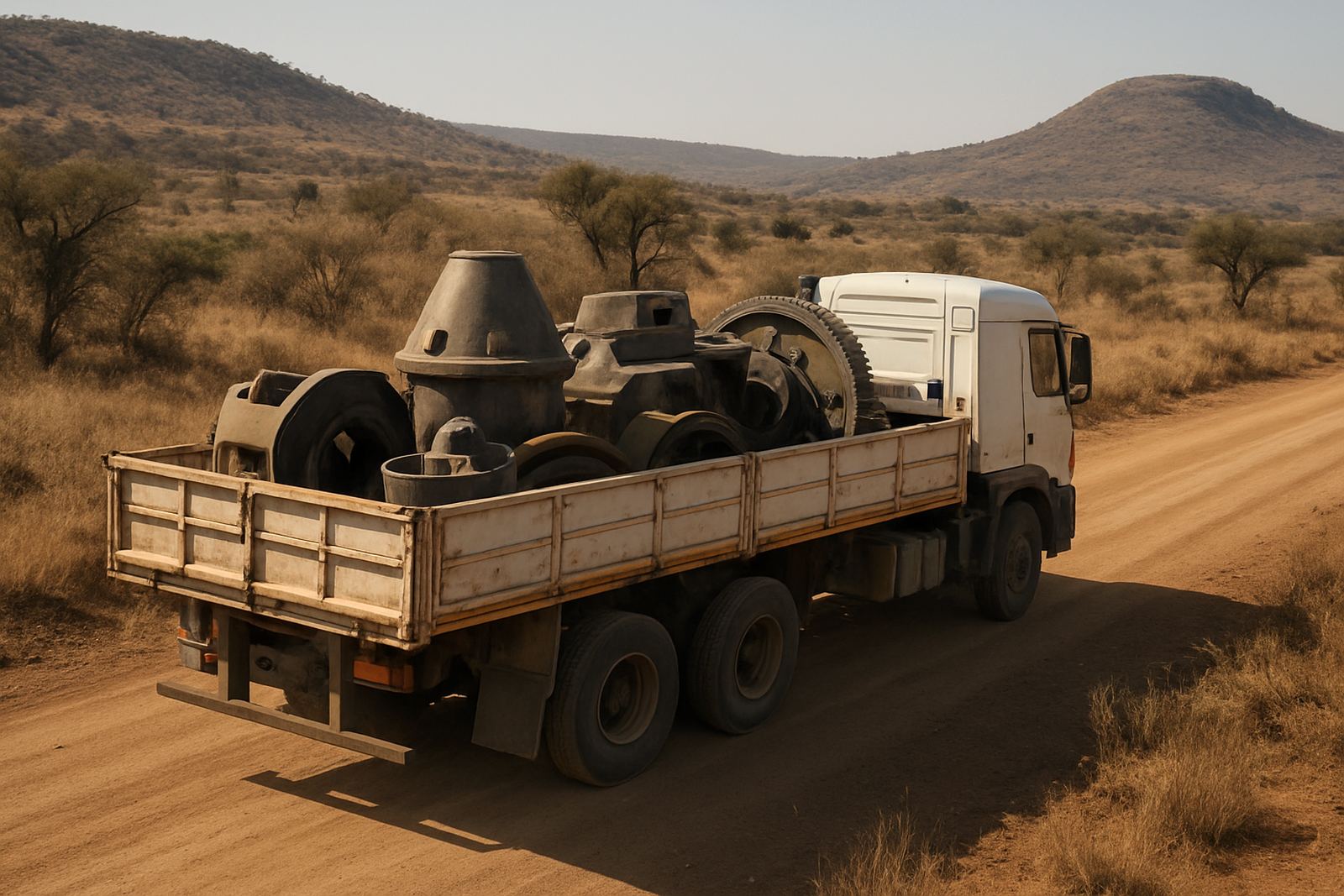
For oversized or awkward items, the pack should suit the route too. A load leaving Middelburg for Kathu will face long-distance road movement and possible transhipment, while a part going to a nearby site may only need short-haul protection. Coastal humidity near Pietermaritzburg and summer rain in parts of Mpumalanga can also affect exposed metal, so moisture barriers are worth using on uncoated surfaces.
- Use timber skids for heavy items that must be lifted by forklift
- Add bracing inside crates so the part cannot slide or tip
- Protect machined faces with board, foam or wrapped separators
- Use rust inhibitor or vapour protection on bare steel where needed
If a part is too heavy for standard pallet handling, say so up front. A crate that looks tidy but can not be safely lifted at the receiving end causes delays and unsafe handling. Good packing should make the next lift obvious.
Keep load-bearing edges and machined surfaces safe
Crusher and conveyor spares often have surfaces that must stay true. A bent flange, bruised bearing seat or damaged shaft end can turn a usable exchange into scrap. That is why edge protection matters. Timber blocks, rubber pads, corner guards and spacers should be used wherever straps or chains might press against a critical surface.
It is also worth separating metal from metal inside the pack. If two parts knock together during braking or road vibration, the damage may not be visible at first. A simple layer of separator board or foam can prevent that. For part sets, keep bolts, nuts and small fittings in labelled bags and tape them to the main item or fix them inside the crate so they do not go missing.
Another common mistake is over tightening. A strap that crushes a crate or distorts a housing can do more harm than transport movement. Packing should hold the load firm without changing the shape of the part. In practice, the load should feel solid but not strained when moved by fork or crane.
Use storage and packing methods that work with South African conditions
Local conditions make a difference. Dust from quarry yards, heat during the day, cold nights in inland areas and periods of load-shedding can all affect stored spares. If packing is weak, dust finds its way in and condensation can form on metal surfaces. That is a problem for bearings, seals and precision faces.
For longer holding periods, keep items off the ground on racking or skids and away from water paths. If the yard has to cope with summer storms, make sure the pack can shed rain and not trap water at the bottom. In areas with frequent power cuts, yard handling may happen at awkward times, so labels must stay readable in low light and the pack should be easy to identify without removing layers.
Practical packing choices for local storage include:
- Raised pallets or skids to keep items out of mud and standing water
- Moisture barrier wrap for bare steel and precision components
- Desiccant packs for closed crates during longer storage
- Weather-resistant labels and duplicate tags inside the pack
These small steps help when a part sits in the Middelburg Yard for a while before collection. They also reduce the chance of a part arriving with surface rust or hidden grime, which can slow fitment on site.
A Middelburg example: packing for a rushed shutdown exchange
Consider a shutdown package moving from the Middelburg area to a mine near Rustenburg. The exchanged items include a heavy crusher component, a conveyor section and a set of smaller fittings. The receiving team needs the main item quickly, but the smaller pieces are just as important because one missing bolt or bracket can stop the job.
In a case like this, the heavy component should be mounted on a skid with blocking on both sides, then wrapped to keep dirt out. The smaller fittings should be bagged, labelled and tied to the main crate or packed in a separate marked box. The paperwork should show what is in each package, the weight, and which item must be lifted first. If the route is split between local collection and nationwide delivery, each load needs matching labels so nothing gets separated at transfer.
That approach saves time at the receiving plant and cuts the chance of a part being sent back for re-packing. It also makes the exchange process cleaner for both sides because everyone can see what left the yard and in what condition. In our experience, a little extra packing care often saves a full day of chasing missing parts later on.
Packing rules that protect the exchange value
Good packing protects more than transport. It protects the exchange value of the component. If a part arrives damaged, the buyer may reject it or treat it as scrap instead of a usable spare. That means wasted freight, extra handling and a slower return to service. For sites that rely on exchanged spares, the packing standard should be part of the buying decision, not an afterthought.
Before dispatch, ask these practical questions: Can the item be lifted safely? Can it move inside the crate? Is it dry? Can the receiving team identify it without opening every layer? If the answer to any of these is no, the packing still needs work.
At Crusher Spare Exchange, packing forms part of the handover process for listed, inspected and stored surplus spares. When the load is prepared properly, collections go faster, the receiving yard has less to sort out, and the part has a better chance of going straight into service. That is the point of exchange in the first place.