
Why a few millimetres can stop a whole plant
On a quarry floor, a small measurement error can turn into a full day of lost production. A jaw plate, cheek plate, mantle, concave, toggle seat or frame liner may look close enough when it is still on the pallet, but once it reaches the plant the bolt pattern, seating face or clearance may be out by a few millimetres. That is often enough to make the part unusable.
When surplus crusher spares are exchanged between sites, the first job is not pricing. It is confirming that the physical size matches the crusher on site, including the machine model, chamber profile, mounting points and the condition of the wear surfaces. In South African quarries, where shutdown windows are tight and transport costs add up quickly, that check protects both the buyer and the seller.
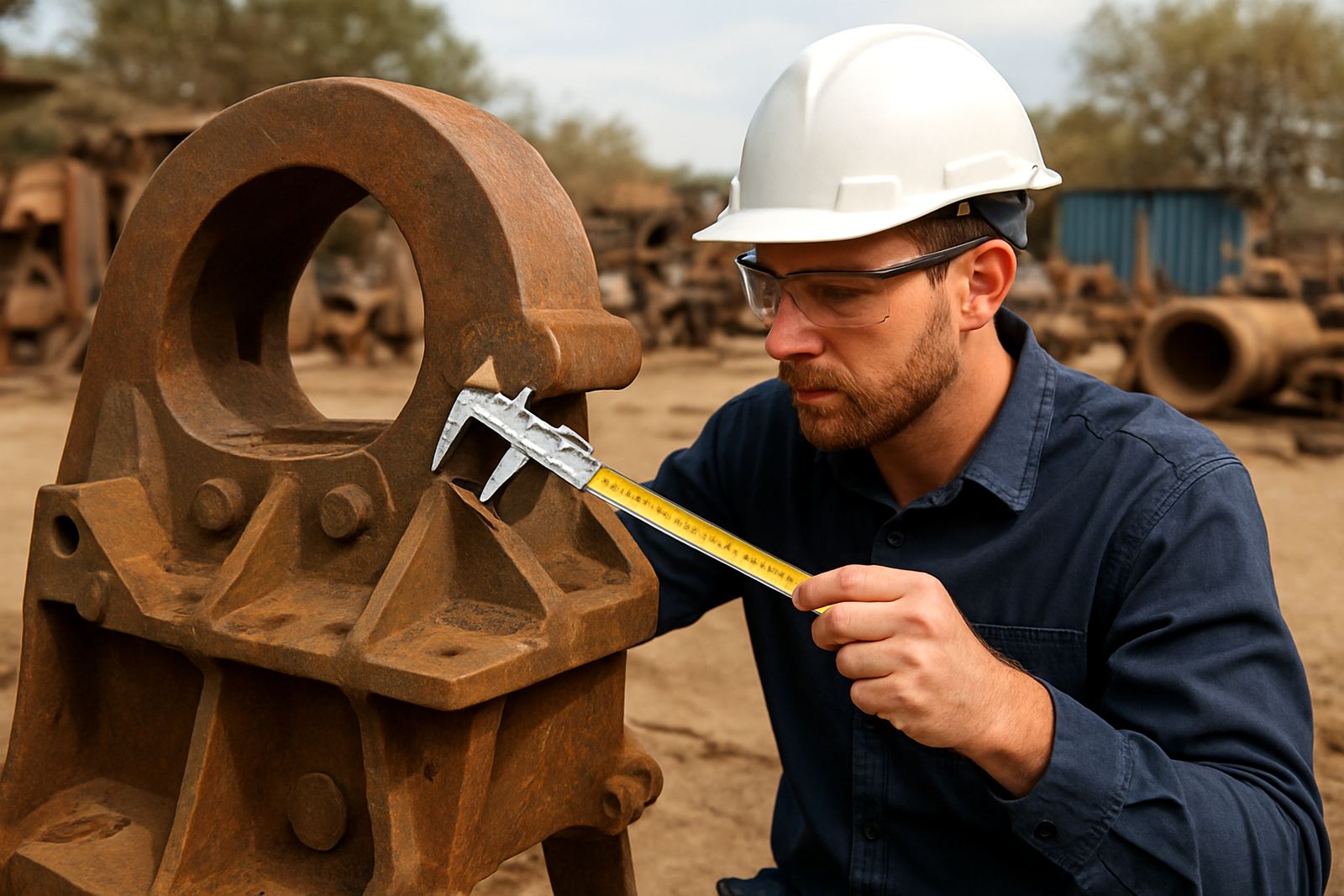
A practical exchange starts with a simple rule: if the measurement is not written down, do not rely on memory. Parts that have been stored, moved, or removed during a shutdown can be mistaken for a similar item. One plate can look almost identical to another untill you check the thickness, length, bolt centres and the edge profile.
The measurements that matter before you release a part
Most crusher components need more than one dimension confirmed. A single overall length is not enough. The part must be checked against the machine drawing, the old worn component if it is still available, or a verified inspection record. This is especially important for exchanged parts that have already seen service at another quarry or mine.
- Overall length, width and thickness
- Bolt hole spacing and hole diameter
- Bore size, keyway position or shaft fit
- Seat profile and contact face shape
- Wear allowance remaining on the working surface
- Clearance to nearby guards, bearings or housings
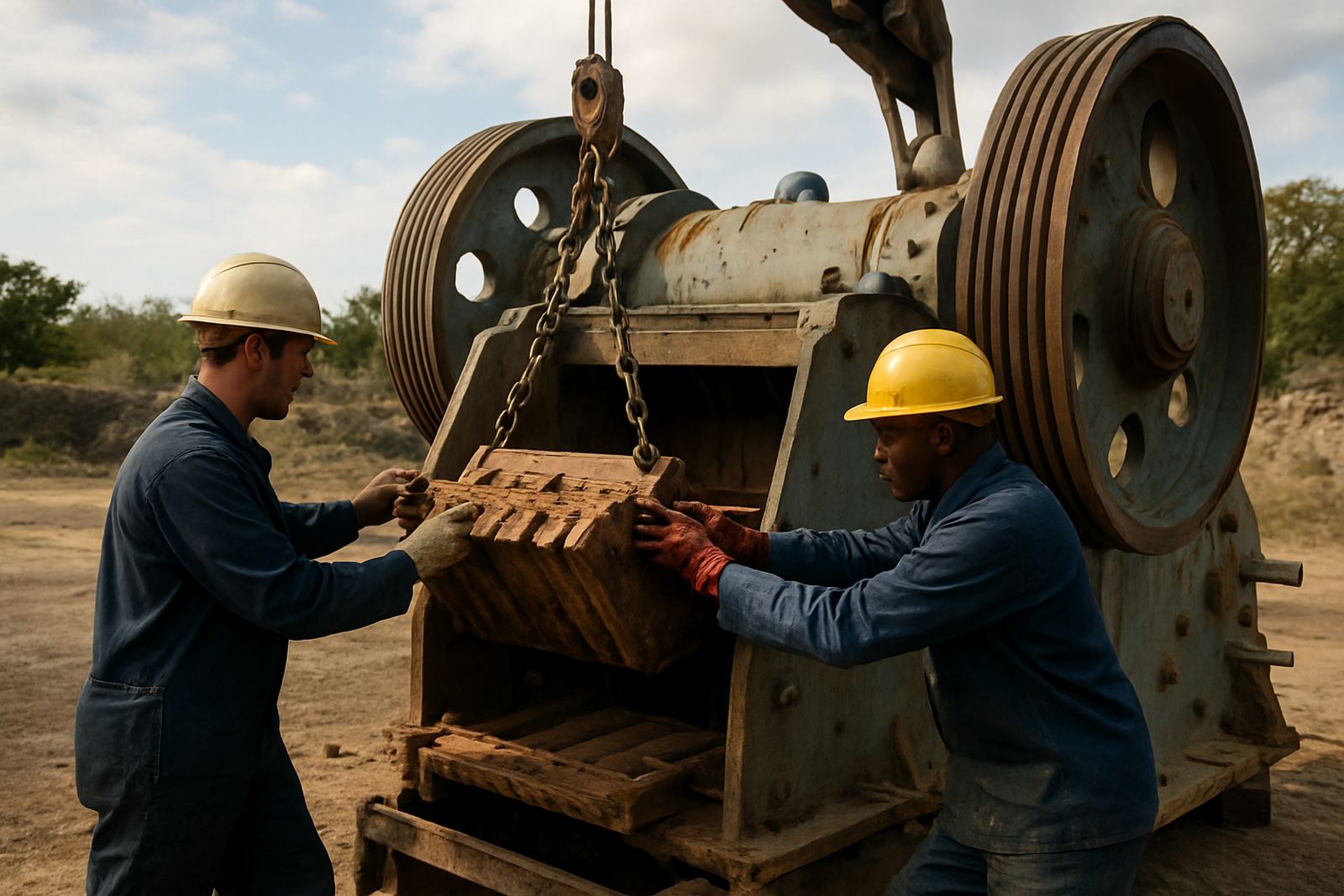
For larger items, the lifting points matter too. A component may fit the crusher but still be awkward or unsafe to handle if the sling points are damaged or the centre of gravity has changed through wear. That affects collection, palletising and yard storage as well as installation. It is worth checking whether the part can be moved by forklift, crane or telehandler before it is loaded out.
Check fitment against the machine, not just the part number
Part numbers help, but they do not replace a physical fitment check. Machines operating in Middelburg, eMalahleni, Rustenburg, Polokwane, Kathu and Pietermaritzburg may have been maintained differently over the years, and a machine can carry a mixed history of repairs, modifications and previous rebuilds. Two components with the same description may still have different mounting details.
Before exchange, confirm the crusher type and the exact application. A component designed for one chamber profile or feed opening may not suit another, even where the outside shape seems close. A little extra thickness on a liner can cause the wrong nip angle, while a smaller bore or offset mount can prevent proper alignment. That is where a fitment check saves time and avoids a return trip.
We often see the biggest mistakes on high-value items where the seller assumes the buyer will adapt the machine to suit the part. In practice, the opposite is true. The part must suit the plant as it stands now, not as it was planned five years ago.
How inspection records protect both sides of the exchange
A clear inspection record is the bridge between a surplus listing and a workable exchange. It should show what was measured, what was worn, and whether the part is still fit for direct use, reconditioning or scrap versus exchange. Without that record, the risk shifts onto the buyer, and that can slow down the whole transaction.
Good records also help when a site is under pressure from load-shedding, wet weather or a tight production target. A plant manager in Secunda or Lydenburg does not want a late surprise after a truck has already left the yard. The more detail that is captured early, the less chance there is of wasted handling and double trucking.
- Photographs of all faces and mounting points
- Measured dimensions in millimetres
- Wear limits and visible damage
- Notes on cracks, scoring, distortion or repairs
- Storage condition and last handling date
For coastal or humid storage conditions, the report should also note any surface rust, pitting or contamination. Moisture can affect both the condition of the part and the confidence of the receiving site. Even a part that is structurally sound may need cleaning, de-rusting or re-marking before it can go back into service.
Packing and transport need to match the part size too
Once a part has passed inspection, the next challenge is getting it to the next site in one piece. Large crusher spares are not all handled the same way. Some need timber dunnage, others need steel pallets, and some must be wrapped or strapped to stop face damage during transport. If the wrong packing is used, the part can arrive with chipped edges or bent lugs even though the measurements were correct.
Transport planning should match the dimensions of the load. That means checking the height for bridges, the width for route limits and the weight for the vehicle booked. A palletised jaw plate may travel easily from Middelburg to Rustenburg, but a wider or heavier item may need a different collection plan. It is also wise to confirm whether offloading equipment is available at the receiving yard.
In practice, the best exchanges are the ones where storage, packing and delivery are treated as part of the sizing process, not after it. That keeps the part secure and helps the receiving team prepare the right tools, lifting gear and labour before the truck arrives.
A Middelburg example: one plate, two sites, no margin for guesswork
Consider a surplus liner being moved between two Mpumalanga sites, one near Middelburg and another serving the eMalahleni region. The part was described as a close match, but the receiving crew checked the thickness, bolt centres and seating face before approving the exchange. The first set of measurements showed only a small variance, yet that small variance would have prevented a proper clamp on site. The seller kept the part, the buyer avoided a shutdown delay, and the exchange was redirected to a machine that matched the profile exactly.
That is the value of matching part dimensions properly. It does not only protect the machine, it protects the schedule, the yard space and the cash tied up in surplus stock. When a site is running through winter dust, summer rain or an unplanned outage, the wrong spare is not a spare at all.
For quarries and mines trading surplus crusher spares across South Africa, the safest approach is always the same: measure first, confirm fitment, record the condition and only then move the part. It sounds basic, but in a production environment basic checks are often the difference between a clean exchange and an expensive mistake.