What a worn jaw liner looks like on a busy plant
On a quarry floor, jaw liners rarely give warning in one dramatic moment. More often the change shows up slowly, with a mix of poor product shape, rising power use and a crusher that starts working harder for the same tonnage. In Middelburg and the surrounding coal and hard rock areas, that matters because every stoppage hits production, and weather or load-shedding can already tighten the schedule.
The first sign is usually output. If the crusher is still running but the size distribution shifts, with more flats, more oversize and fewer consistent products, the liner profile may be worn past its useful shape. Another sign is throughput dropping even though feed looks normal. When the chamber loses its grip, rock starts slipping instead of breaking properly.
- Product starts coming out more uneven than usual.
- The crusher needs more amps for the same feed.
- There is visible polishing on the liner face.
- Fine material increases while cube shape gets worse.
Check the wear pattern before you wait for a breakdown
A proper inspection tells you whether the liner can still be rotated, whether it needs flipping, or whether the set should come out completely. Many quarries lose value by running liners until the profile is too thin at the bottom and too sharp at the top. That creates poor nip angle and puts extra strain on the machine, bearings and toggle area.
We often see operations in eMalahleni and Secunda keep a set in service for too long because the crusher is still making product. The better question is not whether it is making product, but whether it is doing so efficiently. A liner that looks acceptable from one side may already be out of spec on the other. That is why face-to-face inspection matters, especially after a hard shift or a wet week when feed conditions change.
- Measure thickness at the top, middle and bottom of the liner.
- Look for uneven wear from blocky feed or feed segregation.
- Check for cracks around mounting points and bolt holes.
- Inspect the cheek plates and adjacent parts at the same time.
When rotation is still possible, and when it is not
Rotation can add useful life if the liner design and wear pattern allow it. The point is to preserve the crushing profile while keeping the chamber in balance. If one side has worn more evenly than the other, a flip may give you another productive run. But if the liner has cupped badly, cracked, or worn thin near the stress points, rotation can be false economy.
For quarry managers, the decision should come from condition, not habit. A liner changed too early wastes cash. A liner changed too late risks poor product, longer stoppages and damage to the jaw body. In practice, the best time to make the call is during a planned stop, before the crusher becomes the bottleneck for the whole plant.
That balance is especially important for sites that rely on scheduled haulage between Middelburg, Rustenburg and Pietermaritzburg. If collection, storage and delivery have to be lined up around a short shutdown window, there is little room for guesswork. A clear inspection and a short condition report help everyone plan better.
The operating signs supervisors should watch each shift
Foremen and supervisors usually notice the problem first. They hear the machine change tone, see the feed rate drop, or notice the product pile looking different from the previous day. In some cases the jaw starts choking more often because the chamber is no longer gripping properly. On dusty days that can be missed unless the crew is checking it carefully.
Pay attention to the simple signs that the liner set is no longer paying its way. These are the ones that usually come before a forced stop.
- Crusher amps rise but output does not improve.
- Feed needs constant adjustment to keep the chamber working.
- Oversize pieces pass through more often than before.
- The jaw starts drawing unevenly or vibrating differently.
- The liner bolts need repeated attention after shutdowns.
A change in wear pattern can also point to a feed problem rather than just liner age. If the feed is too fine, too wet, or badly distributed, one side of the chamber can wear faster. That is common on quarry sites with mixed material, and it is worth checking before ordering a replacement set.
Why planning changeouts saves money at quarry level
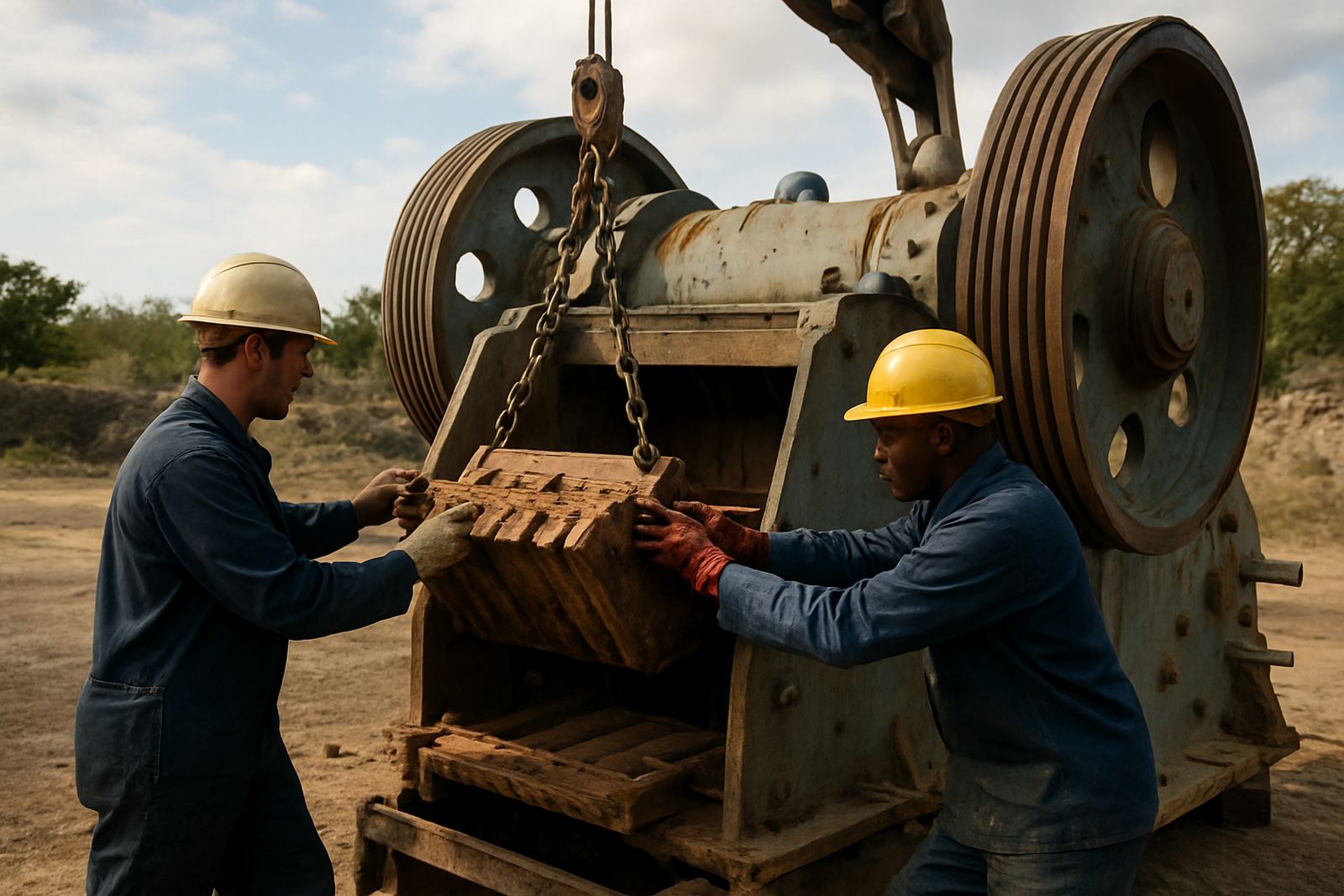
Jaw liner changeouts are easier to manage when they are planned around shutdowns, spare availability and transport. A planned swap means the crew has the right lifting gear, the right fasteners, and the replacement parts already inspected. That lowers the chance of a long plant delay when the old set finally reaches its limit.
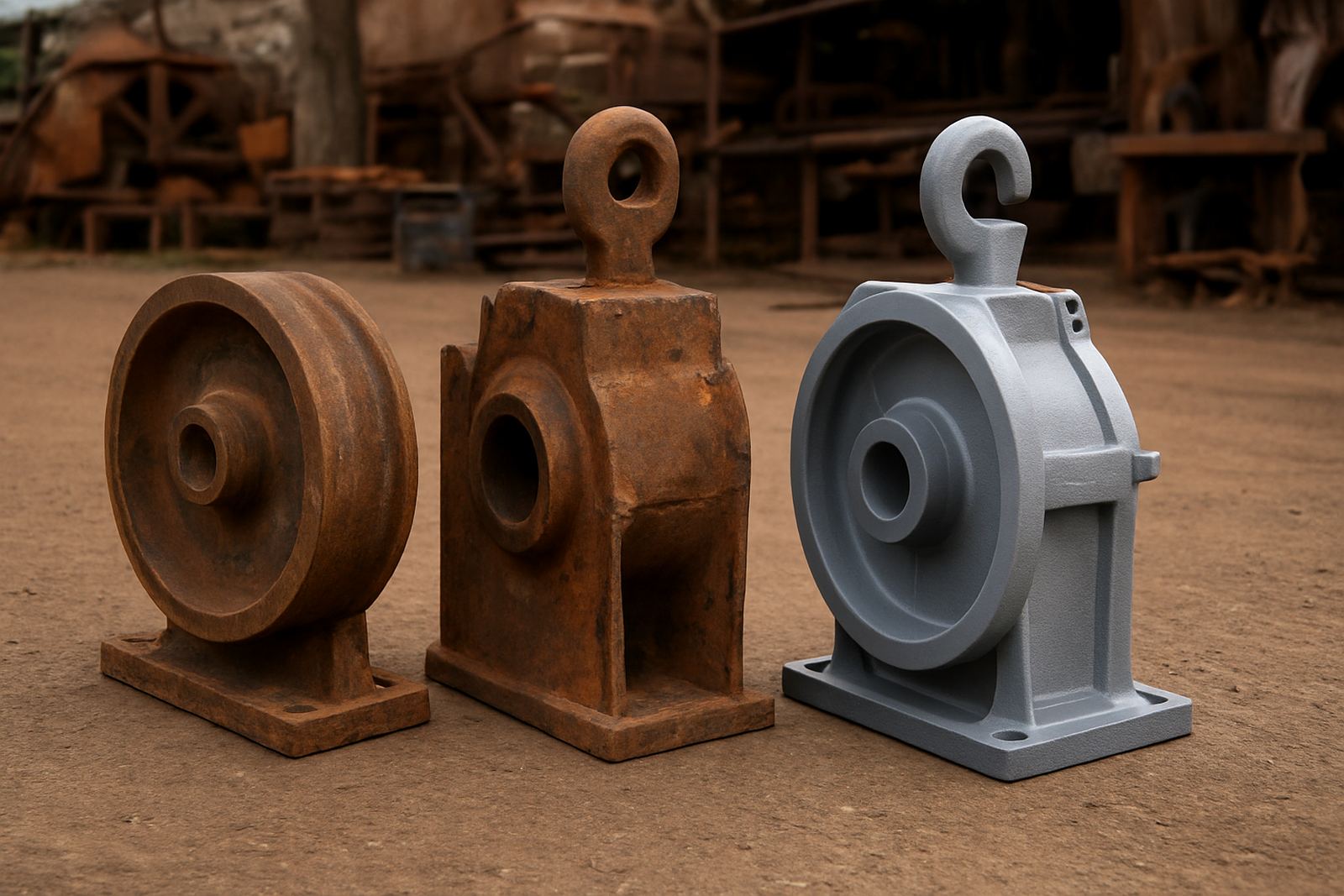
For many operations, used or surplus liners can still be useful if the condition is right and the dimensions match. That is where exchange sourcing helps. A set that no longer suits one crusher may still be a practical fit for another site, as long as the wear pattern, thickness and mounting points are checked properly. This is especially useful for quarries trying to reduce waste while keeping a supply of essential spares on hand.
- Match liner dimensions before transport is arranged.
- Confirm the remaining wear life with a proper inspection.
- Pack and palletise parts so bolts and fixings are kept together.
- Set delivery around the planned stop, not after the machine is already down.
A Middelburg example from a rushed shutdown
A quarry near Middelburg recently faced a familiar problem. The jaw was still producing, but the product was starting to run coarse and the operator was chasing a consistent feed setting every hour. The crew assumed the liners had a few weeks left. On inspection, the wear on one side was far ahead of the other, and the remaining profile was too flat to hold proper bite.
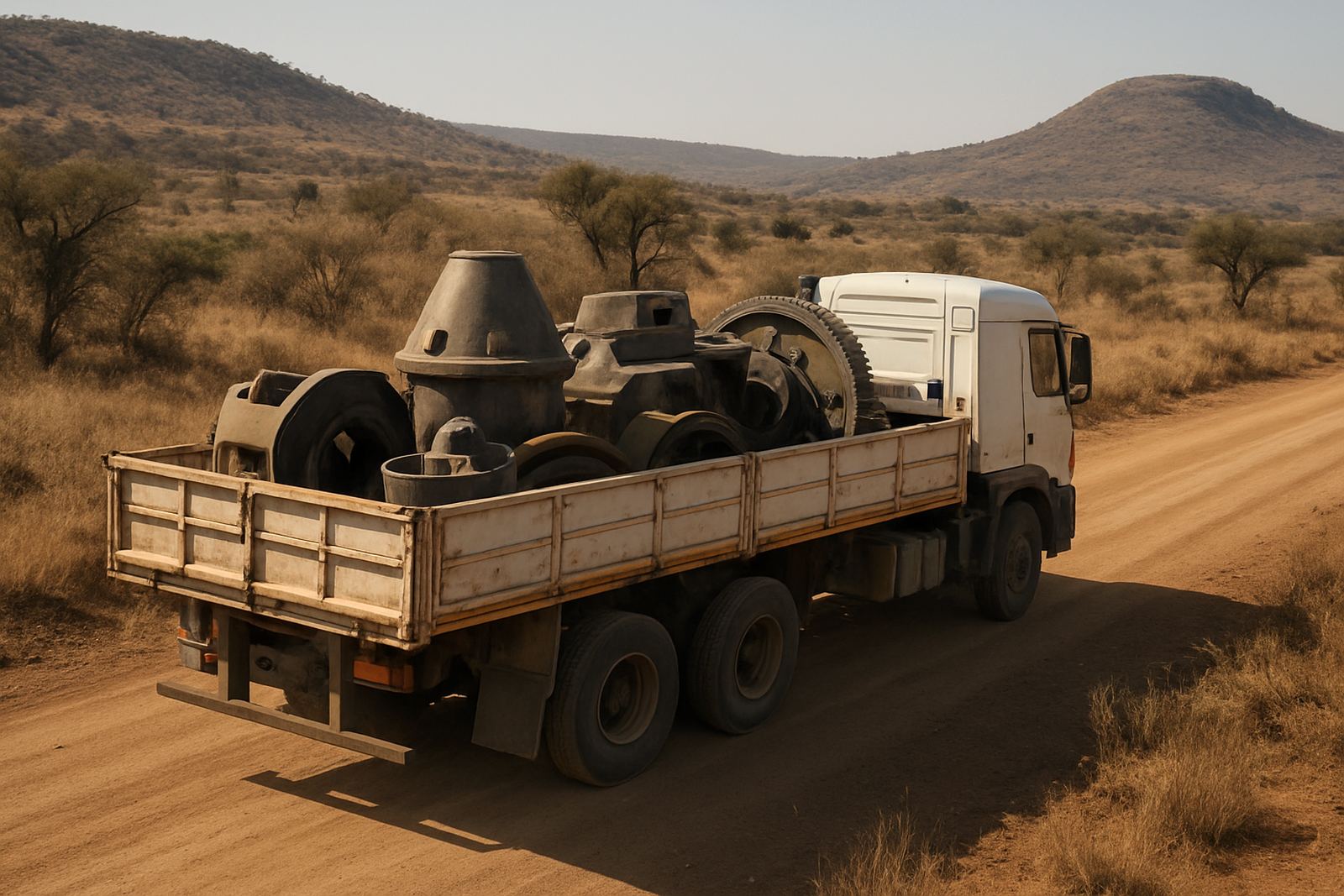
Because the changeout was identified before a full failure, the site was able to plan a collection, storage and replacement sequence without losing an entire day to an emergency stop. The worn set was removed, the replacement was checked for fit and condition, and the plant came back with steadier output. That kind of timing matters in Mpumalanga, where weather, haul delays and power interruptions can already put pressure on plant availability.
It is a small lesson, but an important one: if the liner is no longer shaping the rock properly, waiting for it to wear completely only adds cost. A simple inspection can tell you whether it is time to rotate, replace or search for a better matching set.
How Crusher Spare Exchange helps with liner decisions
Crusher Spare Exchange supports quarries and mines from Middelburg and across South Africa with surplus listing, inspections, condition reporting, storage, palletising, packing and delivery. That makes it easier to move jaw liners between sites where they still have usable life left. It also helps teams compare scrap value against exchange value, which can make a real difference on maintenance budgets.
Our team works with operations in eMalahleni, Rustenburg, Polokwane, Kathu and Pietermaritzburg, as well as Secunda and Lydenburg. Whether you need a fitment check, a shutdown source or an urgent spares search, the aim is the same: keep the plant running with parts that are properly checked and ready for service. For changeouts, that means less guesswork and fewer surprises once the crusher is opened.
If your jaw liners are showing the signs, the right time to act is before the chamber starts costing you more than the parts are worth.