1. Start With a Surplus Listing or a Buyer Search
The process begins when a quarry, mine or plant manager sends an enquiry through the contact page. If you are selling, share what you have on hand, the part type, machine model if known, and whether the item is new, used or removed from service. If you are buying, tell us what you need, the urgency, and where the spare must go, whether that is Middelburg, eMalahleni, Rustenburg, Polokwane, Kathu or Pietermaritzburg.
We then match supply and demand within the exchange network. Some spares move quickly because a shutdown is waiting, while others stay in storage until the right buyer comes along. This keeps usable parts in circulation instead of sitting idle in a yard.
- Seller enquiry with part details and photos if available
- Buyer request with machine type and delivery location
- Initial check for suitability, availability and urgency
2. Inspection, Identification and Condition Reporting
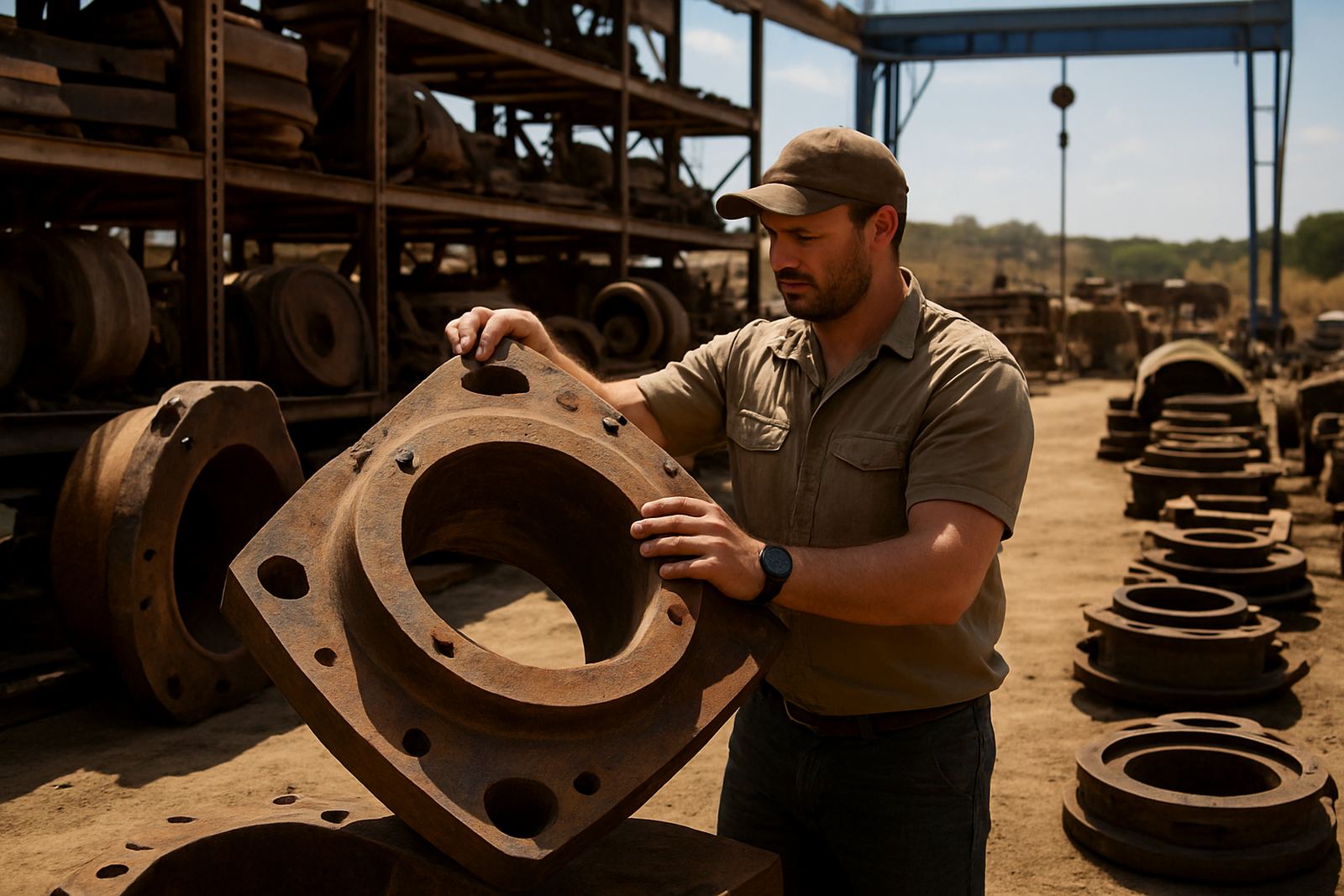
Once a part is received or viewed on site, our inspection team checks what can be confirmed visually and mechanically. Sibusiso Ndlovu and the inspection process focus on obvious wear, damage, missing components, grease condition, cracked housings and any signs that the item may need testing before exchange. If a part is still mounted, we also note access issues and lifting requirements.
A condition report is then prepared in plain language so both sides know what they are dealing with. That report helps buyers decide whether the item suits a planned fitment, an emergency shutdown, or a lower-risk standby requirement. It also helps sellers price surplus stock fairly, rather than sending it off at scrap value when it still has service left.
- Visual inspection and basic condition notes
- Identification of part type, size and fitment clues
- Clear report for exchange, resale or scrap decision
3. Yard Storage, Palletising and Stock Control in Middelburg
Usable spares can be stored at the Middelburg yard while a buyer is confirmed. Johan Steenkamp manages storage so items are kept off the ground where possible, labelled clearly and grouped for easy access. This matters during rain, dust and winter cold, and it matters even more when load-shedding interrupts normal yard routines. Good storage prevents extra corrosion and avoids parts going missing in busy stock areas.
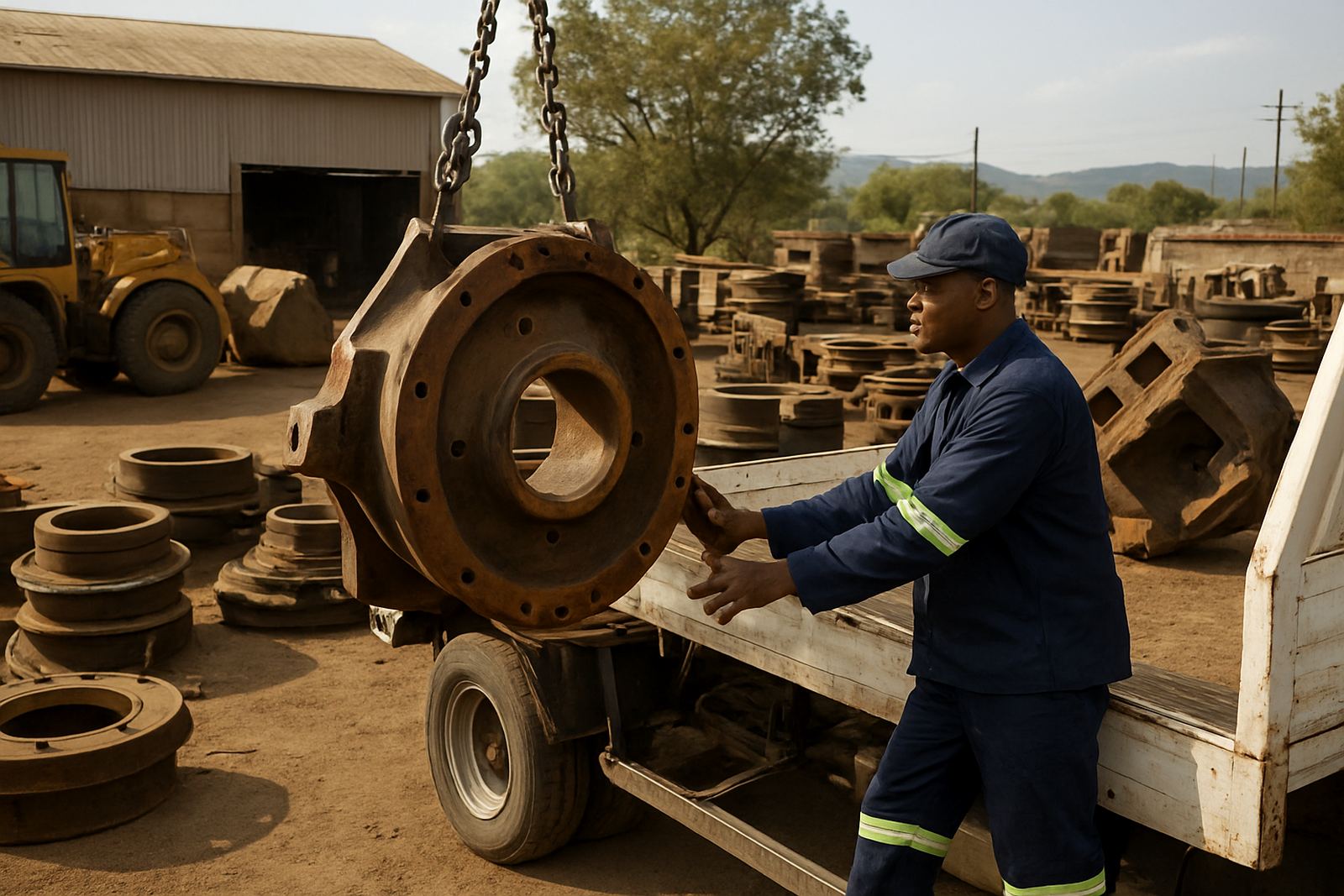
Where needed, items are palletised and packed for collection or road transport. Heavy or awkward parts are secured with the right handling in mind, because a crusher spare is not the kind of load that should be shifted carelessly. The aim is simple: keep the part safe, traceable and ready for the next move.
- Short term and longer term yard storage
- Palletising for transport and handling
- Labelling and stock control for fast retrieval
4. Matching Buyers and Sellers Across South Africa
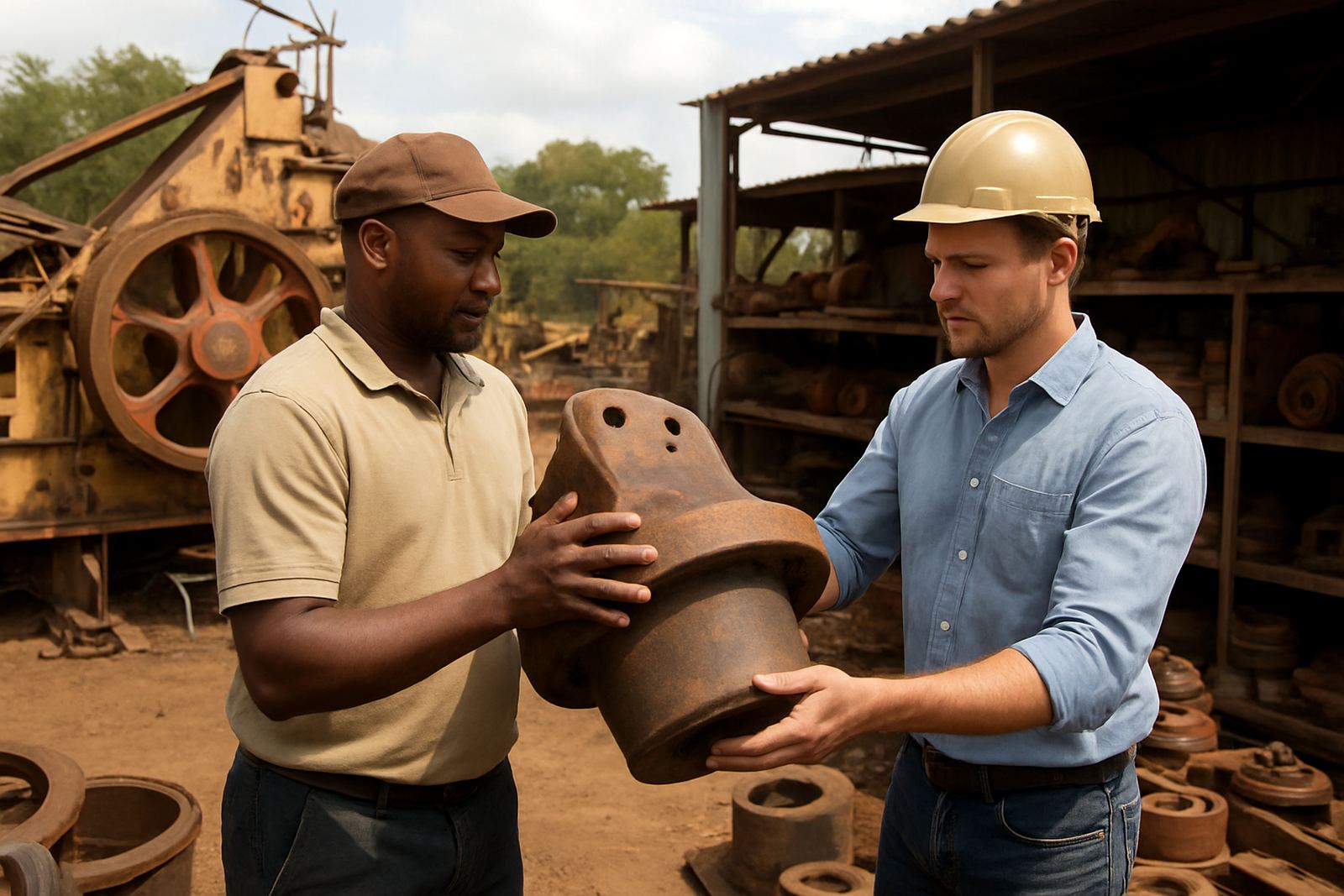
When a buyer is ready, Anika van Zyl and the sales and exchange process connect the right party to the right spare. We work across quarrying and mining areas such as Secunda, Lydenburg, eMalahleni and Rustenburg, and we also support wider routes to Polokwane, Kathu and Pietermaritzburg. The point is not only to move stock, but to move the correct stock at the right time.
In many cases, a buyer wants a specific item for a shutdown and cannot wait for new lead times. In other cases, a seller has a useable spare that no longer fits current plant plans. The exchange model handles both sides and reduces waste at the same time.
- Direct match for confirmed spares
- Alternative options if the exact part is not available
- Support for shutdowns and urgent replacement needs
5. Collections, Packing and Nationwide Delivery
Once the deal is agreed, Mpho Rakoma coordinates collection or delivery. Local collections can be arranged from quarries, mines and yards, while nationwide delivery is planned according to load size, route and site access. Some plants need delivery to a workshop first, others need direct site drop-off, especially when a shutdown has a tight window and there is little room for delay.
Our packing team makes sure the part is prepared for the road and for the realities of South African transport, including long distances, rough access roads and coastal humidity on certain routes. Buyers are asked to confirm offloading arrangements in advance so that the handover goes smoothly at the receiving end. That keeps delays down and helps avoid damage at the gate or on site.
- Local collections from yard or site
- Nationwide delivery with route planning
- Packing to suit transport, storage and offloading
6. Consignment, Scrap Versus Exchange and Final Handover
Not every spare should move straight into scrap. Some items are better kept for exchange, some are suitable for consignment sales, and some are only worth scrapping after inspection. Lerato Maseko and Nokuthula Dlamini help clients choose the most practical route based on condition, age and likely demand. That saves money and avoids treating a usable component like waste.
Before final handover, we can also assist with fitment checks where the buyer wants to confirm the item will suit the intended machine or installation point. If something does not match, we flag it early rather than forcing a bad fit. That last check is often what protects both sides from costly downtime and unnecessary transport.
- Consignment for parts that can still earn value
- Scrap decision only after proper review
- Final fitment check before release or delivery