
What grizzly bars do at the feed station
Grizzly bars sit at the front of the material flow, usually above a hopper or feed opening, and separate large rock from smaller, crusher-ready material. In simple terms, they stop oversized stone, timber and mixed waste from going where it should not, which helps protect the plant and keeps bottlenecks down. For sites running in dusty summer heat, or in wet coastal conditions, this first screening point is often the difference between steady feed and repeated stoppages.
On hard rock quarries and mine stockpiles, grizzly bars are commonly used ahead of jaw crushers, feeder bins and surge hoppers. They are not complicated equipment, but the spacing, angle and bar profile need to suit the stone size and the throughput. If the opening is too narrow, you lose feed. Too wide, and oversized rock can slip through and cause damage or unnecessary wear.
Sizes, spacing and build options we see most often
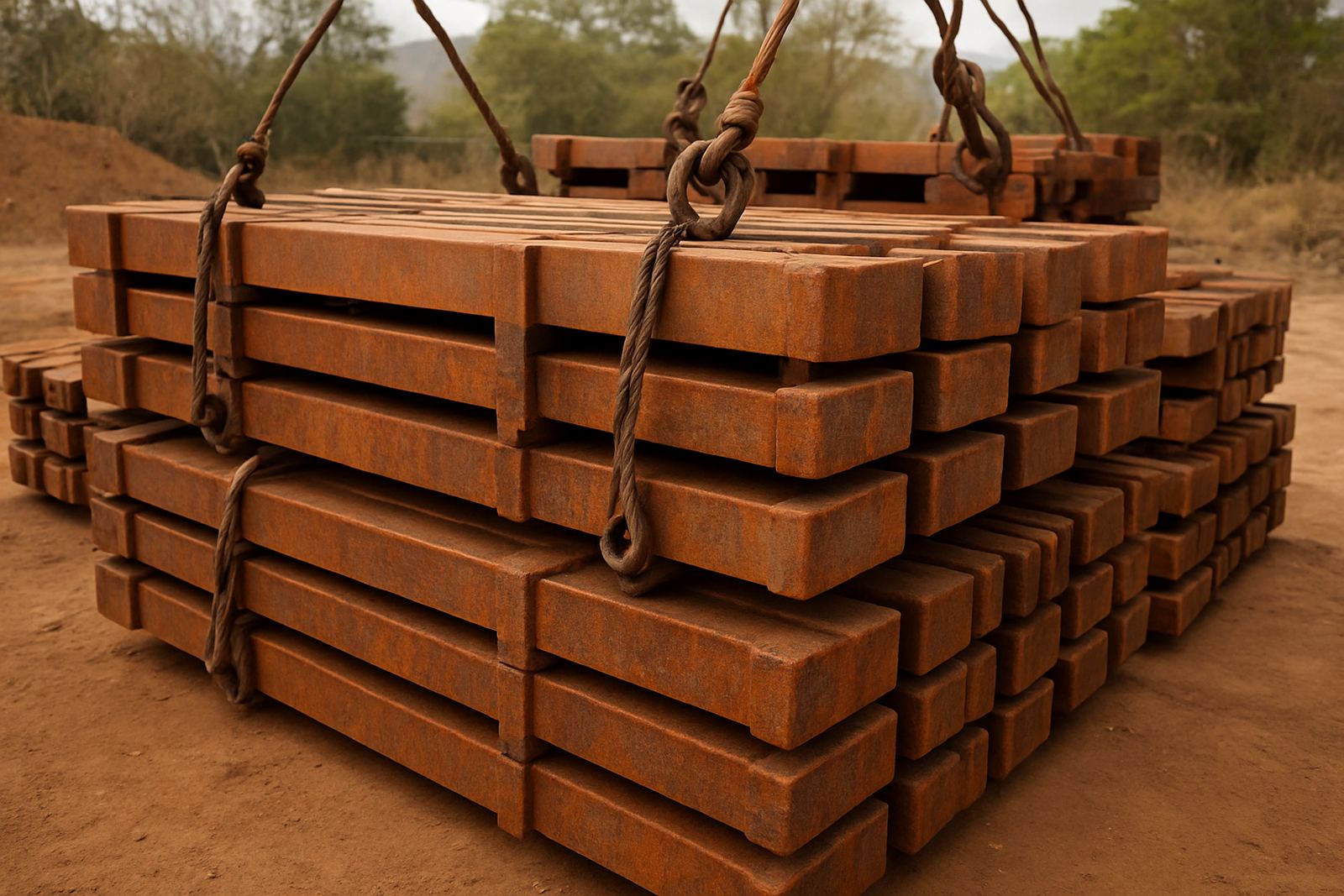
Grizzly bars are supplied in a range of lengths, widths and thicknesses, depending on the bin opening and the duty required. Some sites use fixed bars, others use replaceable sections, and a few prefer bolted assemblies for faster changeout during shutdowns. The right choice depends on the feed rate, rock size, loading method and whether the plant runs single shift or around the clock.
- Bar length: commonly 600 mm to 3 000 mm per section
- Bar width: typically 50 mm to 200 mm per bar
- Bar spacing: often 40 mm to 150 mm, based on oversize control
- Material: hard-wearing steel sections, sometimes with wear-treated surfaces
- Mounting: welded, bolted or drop-in frame arrangements
- Duty: light, medium or heavy feed station screening
For surplus exchange stock, we inspect the usable length, straightness, visible wear and hole condition where bolt fixing is used. A set of bars may still serve well if the working face remains sound and the profile has not been worn unevenly. That is where a proper condition report matters, especially when the item is being moved between quarries in different provinces.
Where grizzly bars suit best on South African sites
These bars are suited to quarries, opencast mines, sand and aggregate plants, and any operation that needs oversize control before the crusher. They are especially useful where run-of-mine material comes in unevenly, or where front-end loaders dump mixed product that includes shale, boulders and fines together. In places like eMalahleni, Rustenburg, Polokwane, Kathu and Pietermaritzburg, conditions vary a lot, so the feed station has to cope with dust, rain, vibration and continuous impact.
They also suit shutdown work when a plant needs a quick replacement for worn or bent bars without waiting for a new fabrication run. Some buyers look for exchange stock because the lead time is shorter and the cost is easier to justify. That can make a real diffrence when production is already under pressure and the mine cannot afford long downtime.
- Primary feed hoppers and tipping bays
- Pre-screening before jaw or impact crushers
- Oversize rejection points on stockpile reclaim systems
- Mobile plant feed stations used on contract crushing work
- Sites needing fast changeout during planned shutdowns
Installation needs, clearances and power requirements
Grizzly bars themselves do not require power or gas, but the feed system around them often does. They are usually installed on a fixed frame, with vibration, incline or feeder equipment above or below depending on the plant layout. The important part is clearance: there must be enough access to remove sections, clean out trapped rock and inspect the support structure without forcing maintenance crews into awkward positions.
Before ordering, check the hopper opening, support beam centres and whether lifting access is available on site. If the bars are to be fitted above a vibrating feeder or under a surge bin, the mounting points should be checked for movement, cracked welds and bolt elongation. On some mines, lockout rules and access permits apply, so a straightforward installation plan can save time during a shutdown.
We also recommend checking the way material is loaded onto the bars. A direct drop from height can shorten service life, while controlled feed with a spreader or guided chute often gives a better wear pattern. If your site runs during load-shedding, the screening section may still be fine but the upstream feeder or conveyor arrangement must be planned so the plant can restart without blockage.
Care, cleaning and servicing to keep the set working
Grizzly bars need regular visual checks, especially after hard feed or when a new blast is introduced. Look for bent sections, cracked mounting points, uneven wear and build-up that narrows the spacing. If fines pack in between the bars, the screening area can choke and force larger rock to ride over the top. A quick clean-out during planned maintenance is far cheaper than a forced stop on a busy shift.
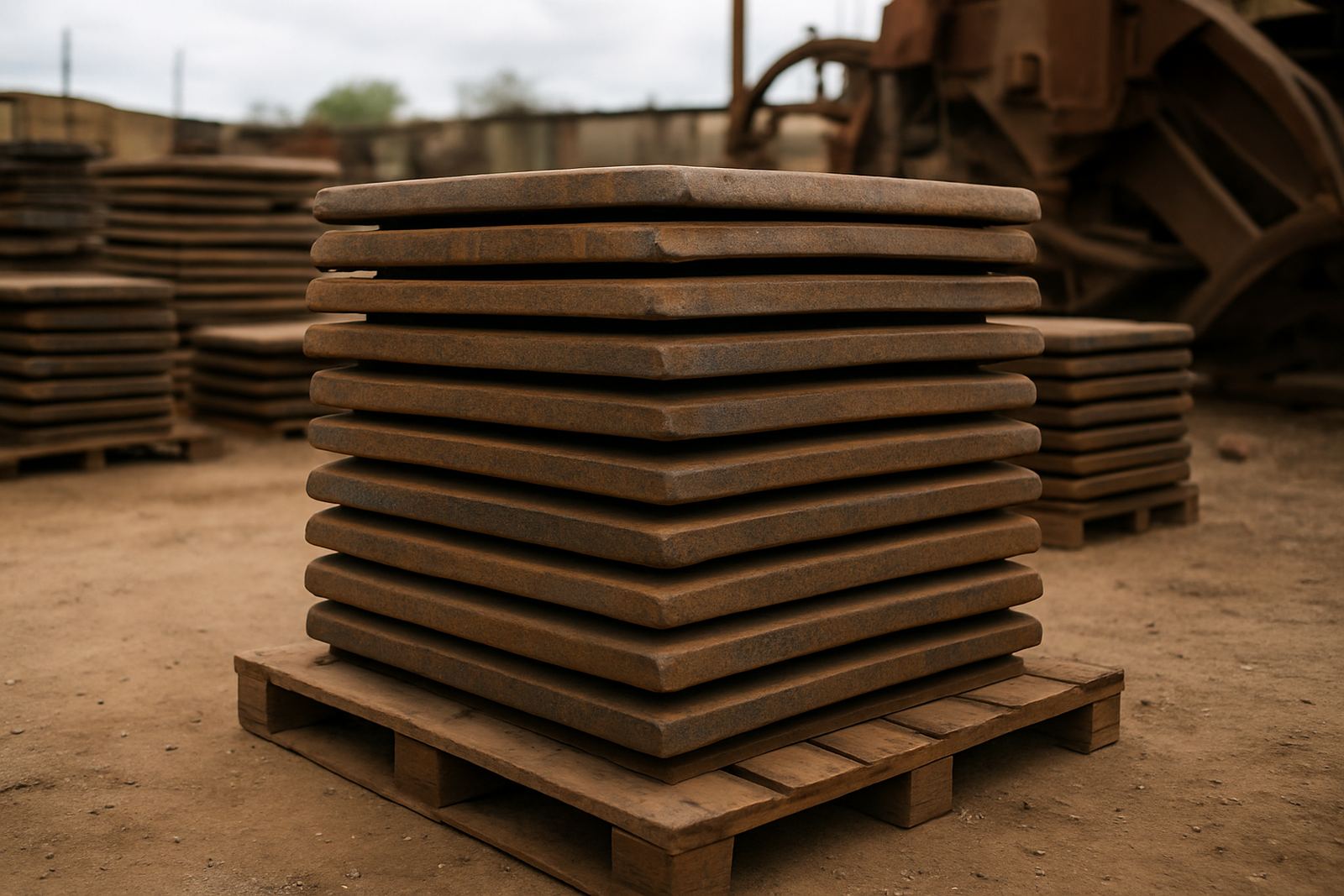
For used or exchanged bars, inspect the wear face, ends, fixing holes and any previous repair work. Surface rust is not always a problem, but deep pitting near load-bearing points should be treated carefully. On coastal or high-humidity sites, storage matters too. Bars should be kept off bare ground, stacked with spacing blocks and protected from standing water where possible.
- Check spacing after heavy impact events
- Inspect welds and bolt holes for cracking
- Remove trapped stone and clay build-up
- Track wear against the feed direction
- Store under cover where practical
What to check before you place an order
When ordering grizzly bars, the first thing to confirm is the opening size and the section length needed for your frame. After that, check the duty, bar profile and fixing method. A bar set that fits the frame but does not match the material size can still cause trouble, so it is worth confirming the feed size in millimetres rather than estimating by eye.
It helps to send the following details with your enquiry form so our team can match stock properly and arrange inspection, storage and delivery from Middelburg or the nearest region. Where possible, include photographs and any old part numbers or drawing references, even if the drawing is incomplete. That makes exchange sourcing quicker and reduces the risk of sending the wrong section size.
- Crusher or feeder opening dimensions
- Required bar length, width and spacing
- Material handled, including max lump size
- Mounting style and hole centres, if applicable
- Site location and whether collection or delivery is needed
- Any deadline linked to a shutdown or urgent repair
Crusher Spare Exchange can inspect, store, palletise and deliver surplus grizzly bars between quarry and mine sites across South Africa. From our Middelburg base, we support listings and exchanges for operations in Secunda, Lydenburg, eMalahleni, Rustenburg, Polokwane, Kathu and Pietermaritzburg, with practical handling that suits busy plants and tight shutdown windows.
Key facts
| Product type | Grizzly bars for feed station screening and oversize control |
|---|---|
| Common section length | 600 mm to 3 000 mm per section |
| Typical bar spacing | 40 mm to 150 mm depending on feed size |
| Mounting options | Welded, bolted or drop-in frame fitment |
| Service areas | Middelburg, eMalahleni, Rustenburg, Polokwane, Kathu, Pietermaritzburg |
| Supply method | Surplus listing, inspection, storage and nationwide delivery |