What a Pitman Assembly Does in a Crusher
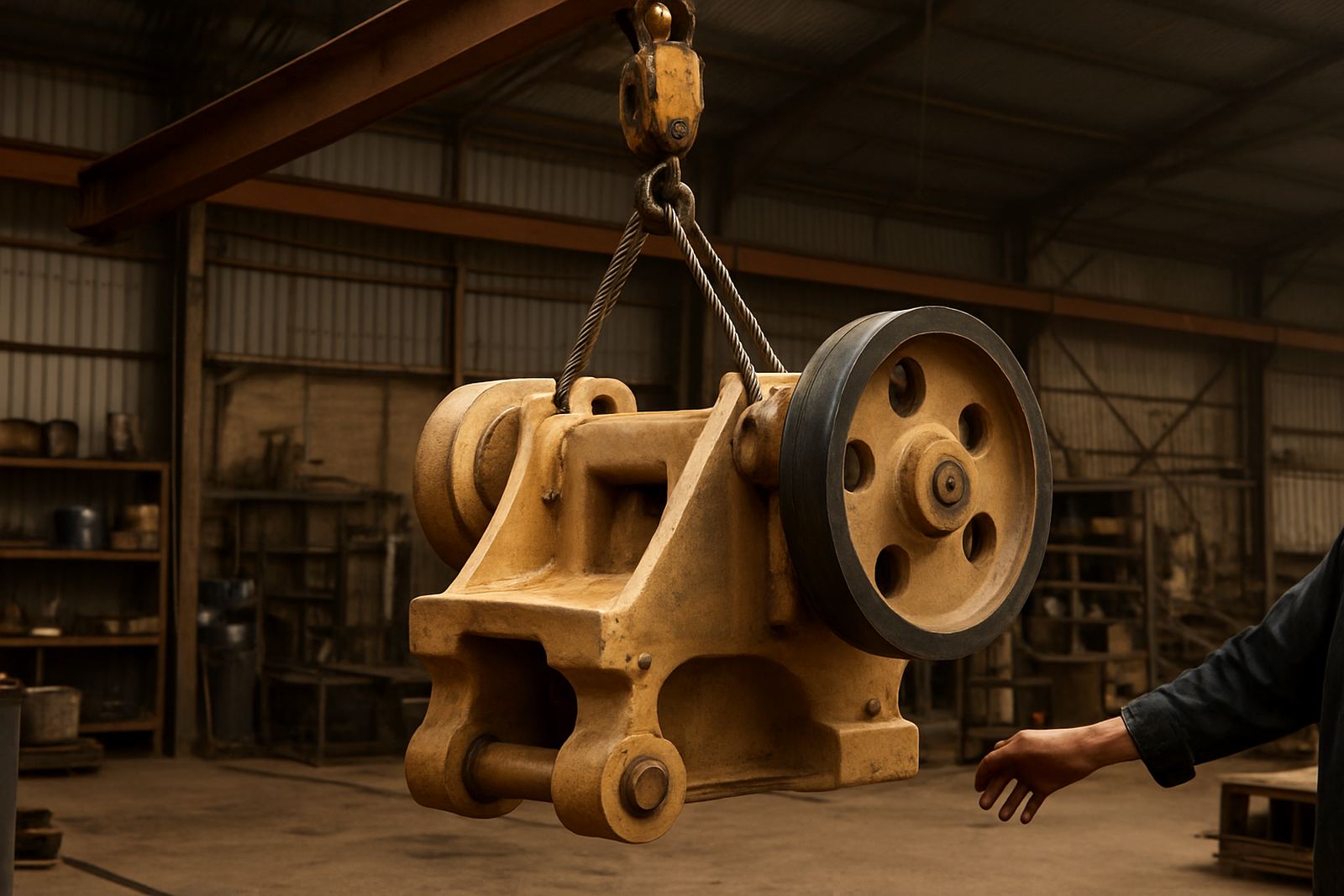
A pitman assembly is the moving main member that transfers force through the jaw mechanism on many crusher models. It carries the stress from the drive and the toggle area, so the condition of the casting, bore faces, seating points and wear areas matters a lot. When a quarry is rebuilding a unit, a good used pitman can shorten downtime and reduce the cost of sourcing new castings.
These assemblies are suited to hard rock operations where the machine sees regular shock load and dusty working conditions. In the Mpumalanga coal belt, the North West platinum region and the Northern Cape, we often see them requested for shutdown work where a replacement must fit properly the first time and keep the plant moving.
Because these are surplus items from retired units, each one is treated as a project component rather than a quick grab and fit part. That means checking for cracks, previous repairs, wear on the bearing seat and whether the assembly still matches the crusher frame and toggle setup. It saves trouble later, especially on sites running long shifts and tight maintenance windows.
Typical Sizes and Build Options
Pitman assemblies are supplied to suit specific crusher sizes and frame patterns, so matching is critical. We list assemblies by the crusher model they came off, the opening size, the shaft and bearing dimensions, and the mounting geometry. For some rebuilds, the customer needs only the bare body. For others, the request includes the shaft, bushings, clamping faces or associated support parts.
- Crusher opening class: small, medium, or large jaw units
- Mounting pattern: single or twin support arrangements
- Condition level: serviceable, rebuildable, or parts only
- Supply format: bare assembly, inspected assembly, or storage held until collection
For mines and quarries in Rustenburg, Kathu and Pietermaritzburg, the most common need is a direct fit part that can go straight into a shutdown plan. We assist with the matching process so the size, weight and fitment points line up with the plant’s requirements, not just the general crusher type.
Where Pitman Assemblies Suit Best
These assemblies suit primary crushing circuits where the machine handles blasted stone, ore or recycled feed before it moves to the next stage. They are commonly used in quarry plants, mine crushing sections, contract crushing fleets and holding yards where spare units are kept for emergency swaps. A solid used pitman can be ideal where the frame and swing jaw are still in good order but the moving assembly needs replacement.
We also see demand from sites that need a spare on hand for seasonal production spikes or shutdown cover. In eMalahleni and Secunda, where dust and vibration are part of daily operations, customers often want a spare that has been inspected and stored properly so it can be called up quickly. On coastal jobs further south, corrosion risk is higher, so storage condition and surface treatment become more important.
These parts are not for casual fitting or trial use. They need to match the crusher design, loading direction and support points. If a site is unsure, we can check the part details against the machine data before it leaves the yard, which avoids costly delays once the machine is stripped down.
Installation, Power Needs and Fitment Checks
Pitman assembly replacement is a mechanical job that usually takes lifting gear, competent rigging and a proper strip plan. The assembly is heavy, so the plant needs an overhead crane, gantry or mobile lifting equipment with enough safe working capacity for the job. Some sites can manage with a small crew and a telehandler, but for larger units a crane and lifting plan are standard.
These units do not need gas or fuel of their own, but the crusher they support must be isolated correctly before work starts. Lock out the drive, secure the flywheel and confirm that any stored energy is released before the old part comes out. On load-shedding affected sites, make sure standby lighting and lifting support are arranged if the shutdown stretches into the evening, because rushing this job is asking for trouble.
- Confirm crusher model and serial details before ordering
- Measure bearing seats, shaft diameter and support faces
- Check for cracks around lugs, bores and high-stress points
- Confirm lifting access, crane reach and transport route
- Make sure the toggle and seating parts are also serviceable
A fitment check should include the surrounding wear parts too, not just the pitman itself. If the toggle plate, bearings or side plates are tired, the new assembly may not perform as expected. That is why our inspection notes are important before dispatch.
Care, Storage and Servicing Between Shutdowns
Used pitman assemblies need careful storage to remain useful. At our Middelburg yard, the parts are kept off the ground, identified clearly and protected from dirt build-up. If they are stored in a humid or coastal area, extra attention should be paid to rust prevention, especially on machined faces and bore areas. A bit of surface rust can be cleaned, but deep pitting or corrosion around load points is another matter.
Before installation, inspect the assembly for signs of movement damage, old weld repairs, broken edges and uneven wear. Clean all seating areas and check that fasteners, shims and mating parts are ready. After installation, keep to the planned service intervals on grease, inspections and vibration checks, because a well-fitted assembly can still fail early if the surrounding machine is neglected.
Our inspection and condition reporting service helps buyers understand what they are actually getting, rather than guessing from a few photos. For quarries in Lydenburg, Polokwane and further afield, that makes it easier to decide whether the item is for immediate fitment or best kept as a rebuild candidate. A spare that is stored correctly and handled with care can wait months, sometimes years, before it is needed.
What to Check Before You Order
When ordering a pitman assembly, the first step is confirming the exact crusher make, model and opening size. Then check whether you need the full assembly or only the main body for a rebuild. If the machine has been modified in the past, tell us about that early, because even a small change in support points can affect fitment.
- Crusher model and serial number
- Jaw opening size and frame series
- Required condition: serviceable, rebuildable or for stripping
- Need for shaft, bushings or mounting hardware
- Collection point or delivery destination
Tell us if the part is needed for a planned shutdown or an urgent breakdown. That helps us line up inspection, packing and transport through our Middelburg base or one of the regional yard channels. If you are comparing exchange options, we can also help assess whether your old unit should be listed for scrap, repair or exchange.
For many sites, the right pitman assembly is the difference between a short stoppage and days of lost production. Getting the details right from the start saves time and keeps the rebuild moving.
Key facts
| Product type | Used pitman assembly from retired crusher units |
|---|---|
| Typical use | Heavy rebuild projects and primary crusher repairs |
| Supply condition | Inspected, stored and listed by model and size |
| Fitment areas | Quarries, mines and crushing plants |
| Main checks | Cracks, bore wear, seating faces, shaft alignment |
| Logistics | Local collections, nationwide delivery, shutdown supply |