
Kimberley Brief From A Mine Service Crew
The client was a mine maintenance team working outside Kimberley in the Northern Cape, with a tight window to get a hydraulic power pack back into service during a shutdown. Their brief was simple: confirm what was on hand, inspect it properly, keep it safe in storage until dispatch, and make sure it reached the crew ready for fitment checks.
They were dealing with hot daytime conditions, dust, and a schedule that could not slip because lost time on plant maintenance quickly becomes lost production. The unit needed to be handled carefully as it had been out of circulation for a while and the crew wanted clear facts before they signed off on use.
- Project location: Kimberley supply route, Northern Cape
- Client type: mine service crew supporting a shutdown
- Job type: inspection, storage and shipment of surplus hydraulic equipment
- Timing: 2 weeks from intake to release
What Had To Be Checked Before Release
The first step was a practical inspection at our Middelburg yard. Sibusiso Ndlovu checked the exterior condition, fittings, hoses, reservoir, motor mountings and the visible seals. We also checked for fluid leakage, corrosion, damaged wiring and any signs that the unit had been stored poorly before it reached us. For hydraulic equipment, small faults can become expensive failures once pressure is applied.
The power pack was recorded with a condition report so the client had a clear paper trail before deciding whether to exchange, reuse or move it on. The report covered wear points, cleaning status, obvious missing items and any issues that would affect commissioning. That helped the crew decide quickly without second guessing.
- Visual inspection of the tank, motor, pump assembly and hose points
- Condition notes on rust, oil residue, broken brackets and loose fittings
- Identification and tagging for yard control
- Photographic record for the client file
Safe Storage In Middelburg Before Dispatch
Once inspected, the power pack was moved into yard storage under cover. That matters in Mpumalanga, especially when there is afternoon rain, dust from traffic, and humidity that can affect metal parts if they are left exposed. Johan Steenkamp managed the storage position so the unit stayed off the ground, easy to access and protected from knocks during loading.
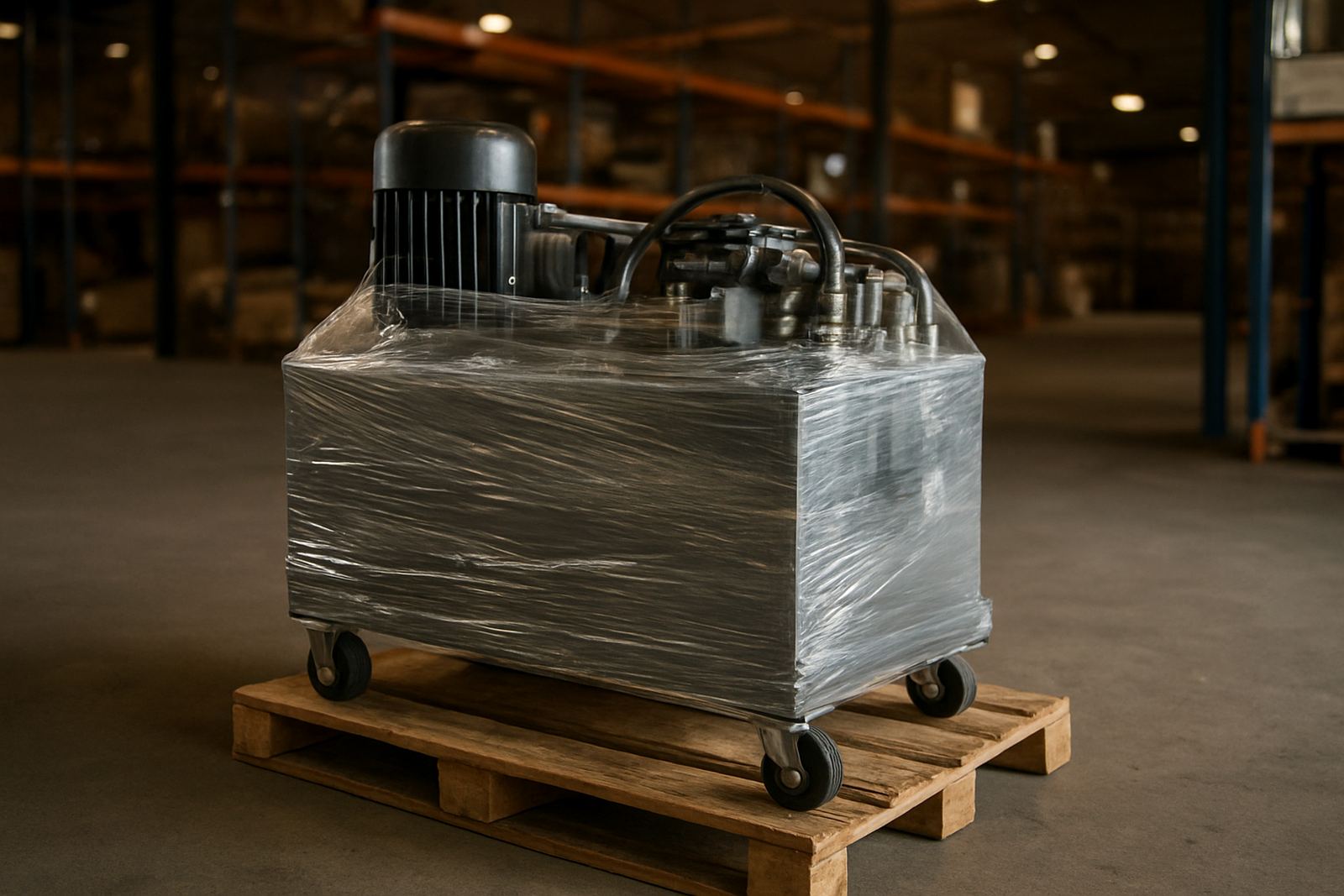
We kept the unit in a dry bay and used pallet support to reduce movement. This is the sort of detail that sounds small but helps when equipment is being held for more than a few days. The client needed the pack later in the week, so we kept it ready for quick release rather than buried behind other stock.
- Covered yard storage in Middelburg
- Pallet support for stability and easier lifting
- Protected from dust, standing water and forklift damage
- Released only after client approval
Packing And Transport For A Rough Route
Before loading, the unit was cleaned down and prepared for transport. Mpho Rakoma arranged palletising and packing so the hydraulic pack could move safely over a long route without shifting or taking damage. The job called for strap restraint, corner protection and a tidy load plan because the unit had to travel through changing road conditions and arrive in the same state it left in.
We also checked the weight and lifting points before dispatch. The power pack measured roughly 1.2 m by 0.8 m by 1.1 m, with an estimated mass of 280 kg. That meant careful handling at both ends and the right lifting gear on site. The packing plan allowed the receiving crew to unload quickly and get straight into their fitment checks.
- Palletised for forklift handling at both ends
- Strapped and braced to limit movement in transit
- Suitable for local collection or nationwide delivery
- Kept clear of loose parts and contamination
Timeline And Communication Across 2 Weeks
The full job ran over 2 weeks. Week one covered intake, inspection and storage. Week two covered client confirmation, packing and dispatch planning. Nokuthula Dlamini kept the client updated on status, while Anika van Zyl handled the exchange side so the crew knew exactly what was available and what condition it was in.
That pace worked because the client was not waiting for guesswork, only for verified information. Once the inspection notes were shared, they could make a decision quickly and keep their maintenance plan moving. In shutdown work, that speed matters as much as the part itself.
- Week 1: intake, inspection and condition report
- Week 2: approval, packing and dispatch preparation
- Direct client updates through the enquiry process
Result For The Kimberley Crew
The power pack left our yard in usable condition, properly recorded and secured for delivery. The mine service crew received a unit that had been checked, stored and moved with care, which reduced the risk of surprise problems at fitment stage. For them, that meant less time sorting out handling issues and more time getting the equipment back into service.
From our side, the result showed why surplus spares exchange works well for mines and quarries. Instead of scrapping a useful unit or leaving it exposed in storage, the equipment stayed in circulation and found a practical next use. That saves money, cuts waste and keeps service teams supplied with parts they can trust.
- Reduced waste by keeping a serviceable unit in circulation
- Lower handling risk through controlled storage and packing
- Faster decision making thanks to clear condition reporting
What We Would Do Again On The Next Similar Job
If the same kind of project came in again, we would follow the same sequence: inspect early, store under cover, record the condition properly and pack for the route before release. That approach suits hydraulic equipment, electrical drive units and other heavy spares that need a proper check before they move between sites.
It also works well across South Africa, whether the delivery is heading to Kimberley, eMalahleni, Rustenburg, Polokwane or further afield. Our Middelburg base gives us a practical staging point for collections, storage and dispatch, and it lets quarry and mine teams use one process instead of juggling several contacts. For a shutdown or urgent spares request, that is usually the difference between a tidy job and a messy one.
- Inspect first, then store and release only after sign-off
- Use proper palletising for heavy hydraulic equipment
- Keep communication clear so the receiving crew can plan fitment
Key facts
| Project | Hydraulic power pack for a mine service crew near Kimberley |
|---|---|
| Service mix | Inspection, condition reporting, yard storage, palletising and delivery |
| Timeline | 2 weeks from intake to release |
| Approx. unit size | 1.2 m x 0.8 m x 1.1 m |
| Approx. mass | 280 kg |
| Base | Middelburg, Mpumalanga |