Why crack checks matter before the part goes back into service
A used crusher part can look serviceable at a glance and still be close to failure. This is common on structural items, rotating components, mounting points and wear parts that have taken shock loads, vibration, dust and repeated starts and stops.
In quarries and mines across Mpumalanga, the Free State and Limpopo, a small crack can open quickly when a machine is put under full feed again. That is why inspection is not only about rust, dents or missing bolts. It is about reading the story the part is telling you before it goes back into a crusher, screen or conveyor support.
At Crusher Spare Exchange in Middelburg, we see spares move between sites where one pit has a surplus and another has an urgent need. The value is there, but only if the part is checked properly. A good exchange starts with honest condition reporting, not guesswork.
Visible signs that need a closer look
Some signs are obvious, others are easy to miss if the part is dirty or has old paint on it. Before any fitment, clean the area and check under good light. In winter mornings or during load shedding when work is rushed, this step gets skipped more than it should.
- Hairline lines that run across a surface, especially near holes, edges, corners or welds
- Flaking paint that follows a straight path rather than random chips
- Rust streaks coming from one fixed line or joint
- Fresh dust packed into a narrow split, even if the part is still oily
- Chipped corners around bolt holes, keyways or seating faces
- Any bend that should not be there on a part meant to stay straight
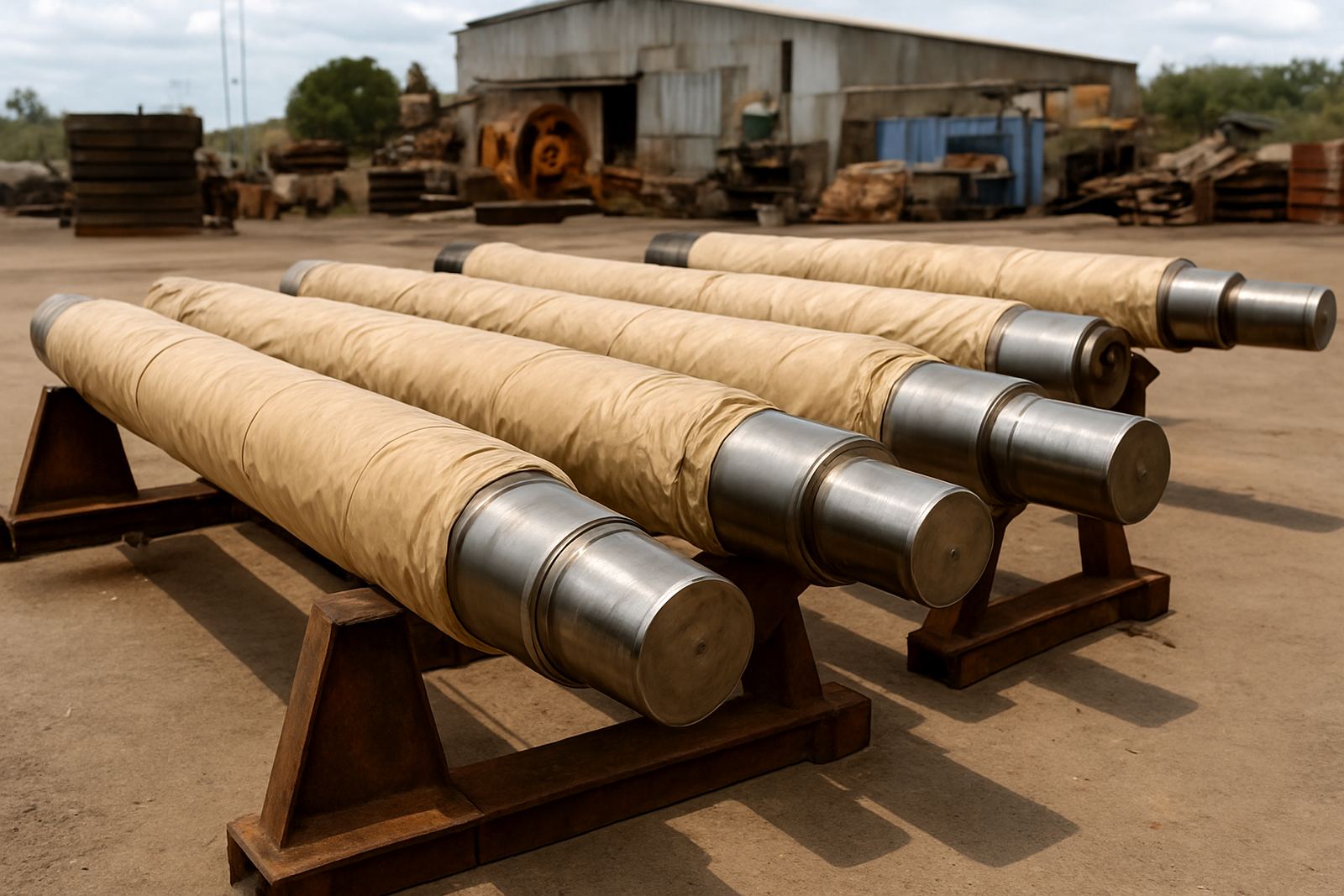
If the part is a rotating item, also check for scoring, heat marks, uneven wear and pitting. If a structural item is involved, look for distortion where it carries load, not just where it is visible from one side. A crack often starts where stress is concentrated, and that point may be hidden from a quick walk around.
The high-risk spots on crusher spares
Not every part fails in the same way. Some areas carry more risk because of vibration, impact or repeated clamping. On used crusher spares, focus first on welded joints, mounting lugs, shaft shoulders, corners around openings, and any area that has been repaired before.
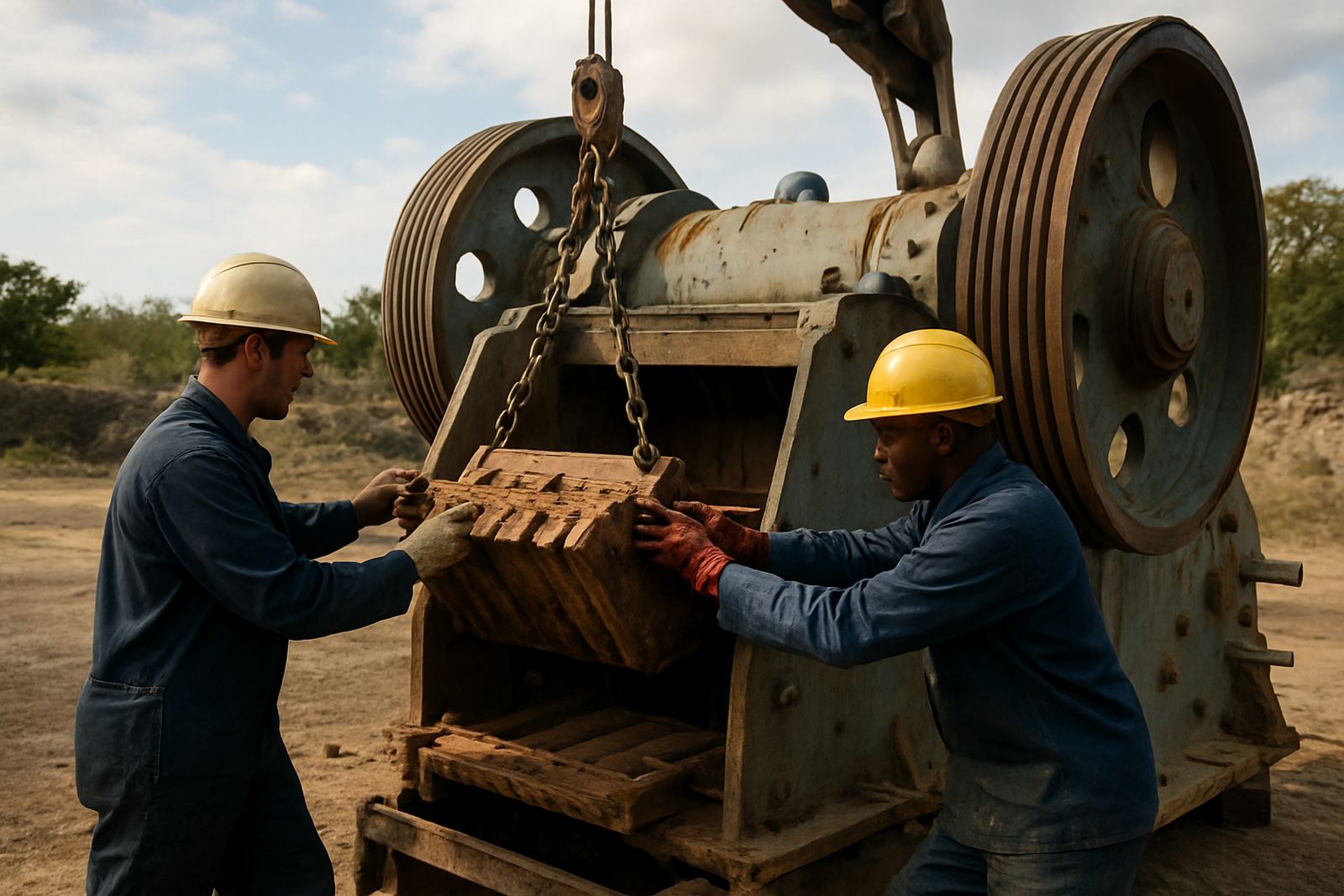
Rotating parts need extra care because a minor defect can worsen once the machine reaches full speed. Structural items can crack around support points where the load is not even. If a part has been lifted, dropped, or stored badly in a yard, the damage may show at the lifting points even though the working face still looks clean.
- Weld toes and heat affected zones
- Bolt holes and slot edges
- Transition points where thickness changes
- Seating faces that have been hammered to fit
- Previous repair areas with new weld over old damage
On parts moved through the Middelburg yard, we often advise clients to check for both old and new marks. A part may have passed through another site’s shutdown and been stored for months. That history matters more than the date stamped on the paperwork.
How to inspect a part without missing the warning signs
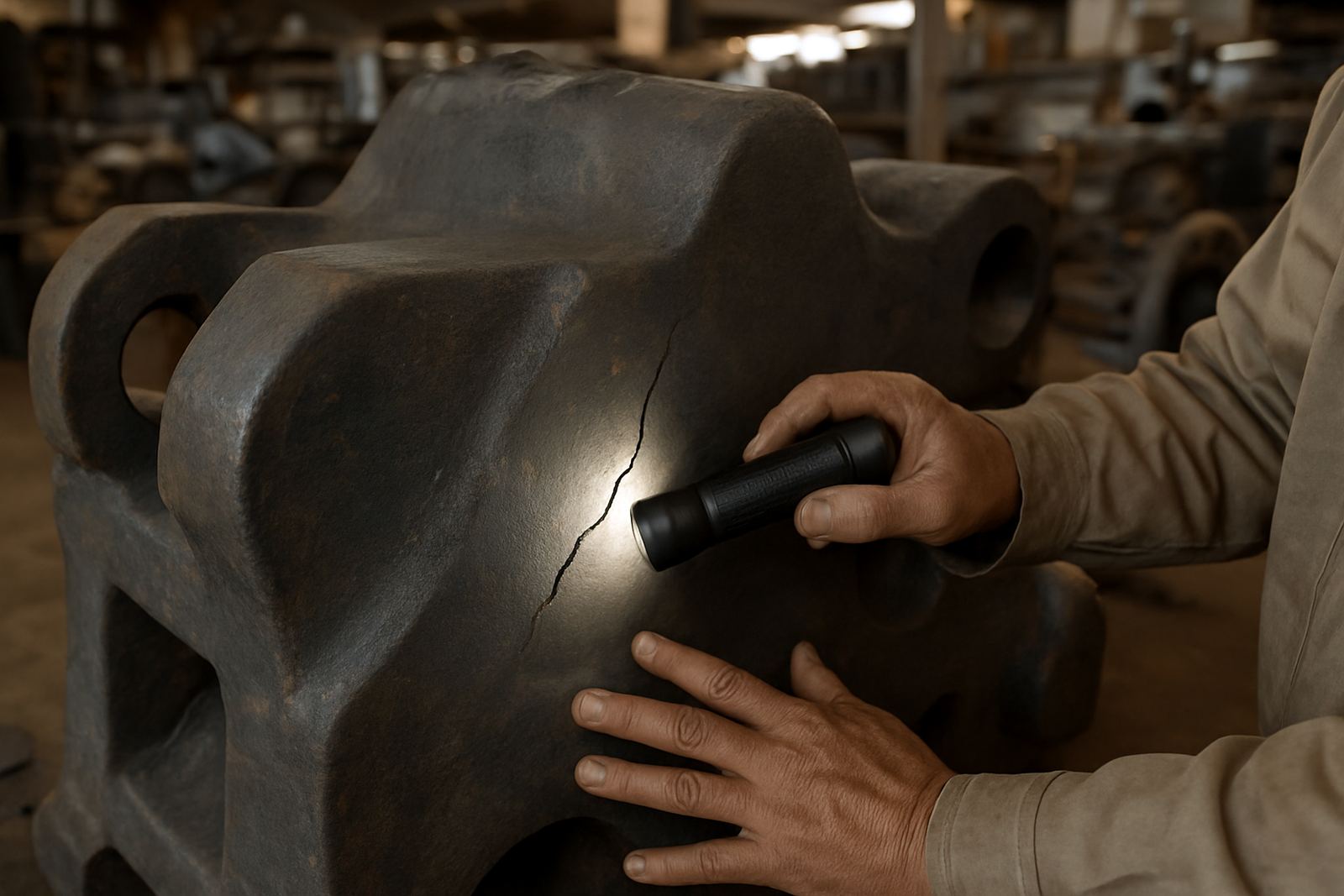
A practical inspection does not need fancy equipment for every job, but it does need routine. Start with cleaning. Dust, grease and scale can hide a split. Wipe or brush the surface, then inspect it under natural light first and then with a torch at a low angle. A low angle helps shadows show up along a crack line.
Use a straight edge where a part should be flat or true. Check for movement in joints, loose inserts and gaps that should not be there. Tap lightly with a hammer where suitable and listen for changes in sound. Hollow or dull areas can point to separation, though that alone is never proof. If needed, move to a more detailed condition report with the inspection team before release.
- Clean first, inspect second
- Check both sides of the part, not only the visible face
- Mark suspect areas with chalk for follow up
- Record the size, location and direction of the crack
- Separate fit for exchange items from scrap items early
Good reporting saves time for the sales and exchange team as well. When the condition is clear, a buyer in Rustenburg or Pietermaritzburg can make a quicker decision and avoid a wasted collection.
Climate, storage and handling can create crack risks
South African conditions are hard on stored spares. Coastal humidity, dust in the Northern Cape, sudden temperature changes and rough handling all affect used parts. Even in a dry inland yard, a part left on uneven ground or stacked badly can take a knock that starts a fracture line.
Storage matters. A part left sitting on bare soil can corrode at the contact points. A part tied down too tightly can deform slightly over time. A unit moved without proper palletising may suffer an impact at one corner, then fail later after installation. That is why yard storage, packing and local collections are part of the same risk picture.
For quarries working through shutdown periods, the danger is often time pressure. Teams want the part on site fast, so inspection gets shortened. That is when a crack risk is most likely to be missed. A few extra minutes at the yard is cheaper than stopping a plant after the first trial run, ja, by a long way.
A Middelburg example from a shutdown search
A quarry near eMalahleni needed a used structural component for a planned shutdown. On first sight it looked ready for fitment, but a closer check showed a fine crack starting from a bolt hole near a stressed edge. The part had likely been handled hard during removal and then stored with one side under pressure.
Because the issue was picked up before dispatch, the item was set aside for scrap versus exchange review and the client was pointed to a safer alternative from another site in the region. That saved the crew from fitting a part that would probably have failed under vibration during start-up. The real benefit was not just the saved cost, but avoiding another shutdown window and overtime for the maintenance team.
This is the kind of practical exchange work that helps mines and quarries across Middelburg, Secunda, Lydenburg and beyond. The part may still have value, but only if it is matched to the right use and condition.
What to do when a crack is suspected
If you suspect a crack, do not rush the part back into service. Tag it clearly and remove it from the fitment queue. Then compare the finding against the original request, the machine duty, and the likely cost of failure. Some parts can be repaired under controlled conditions, while others should be treated as scrap.
Use a clear internal rule set so the decision is not left to memory or pressure on the day. If the part is for urgent spares search, make sure the replacement is checked just as carefully. An urgent need should not mean a weak part goes straight into the machine.
- Isolate the part from usable stock
- Record the location and type of defect
- Confirm whether the part is structural or rotating
- Decide on repair, exchange or scrap
- Update the yard and client record so the same part is not offered again by mistake
At Crusher Spare Exchange, the aim is simple: keep surplus crusher spares moving, but keep cracked or unsafe items out of the wrong application. That protects people, equipment and budgets.