
Why a Small Screen Part Can Stop a Big Plant
Screening gear works under constant vibration, impact and dust. When a side plate, tension rail, support bar or fastening set starts to fail, operators may keep running for a shift or two and then suddenly lose product quality, throughput and safety at the same time.
That is why screen spares matter. A machine can look serviceable from a distance, but one cracked component can cause poor screening, uneven wear on the deck and damage to adjacent parts. In practical terms, a R2 500 part can help avoid a R250 000 interruption if it keeps the circuit running through a weekend or during load-shedding.
Common Screen Spares Worth Watching Closely
Operators often focus on the larger wear items first, yet the smaller screen components are the ones that disappear during shutdowns. They are easy to overlook during a busy month, especially when production targets are tight and the yard is short on stock.
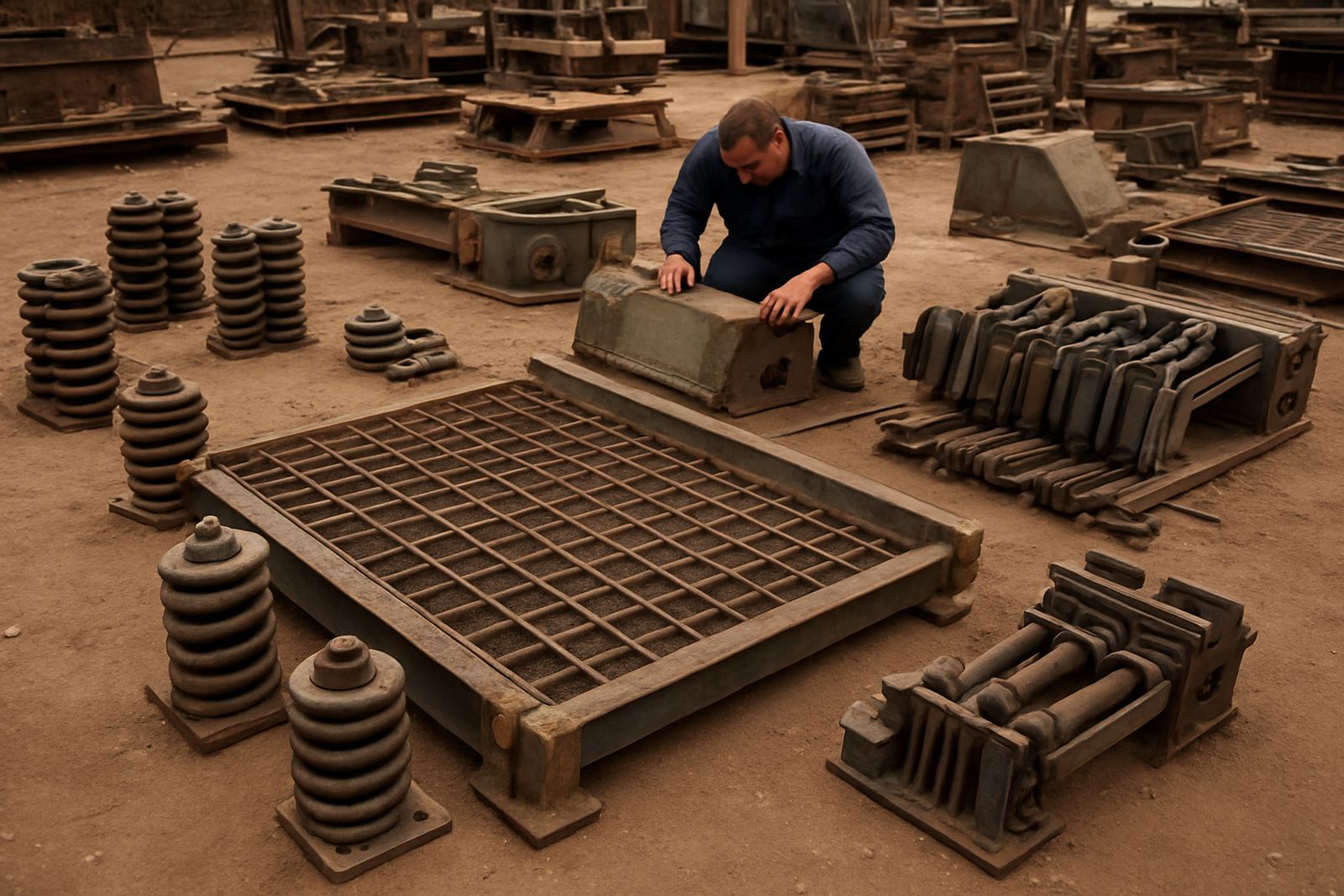
- Screen panels and side liners
- Clamp bars, wedges and tensioning parts
- Springs, bolts, nuts and fastening sets
- Support beams, cross members and brackets
- Rubber seals, skirts and dust control pieces
If these parts are not checked before a planned stoppage, the repair team may open the machine only to find the wrong size on hand, or a part that looks usable but no longer holds tension properly. That is when a short service window becomes a missed production day.
What We Check Before a Screen Spare Changes Hands
At Crusher Spare Exchange in Middelburg, we inspect and list surplus crusher spares so quarries and mines can make informed decisions before a part is moved or exchanged. That matters because a used screen component can still have real value if it is measured correctly, checked for wear and matched to the right machine.
Our process includes condition reporting, fitment checks where needed, and practical storage before collection or delivery. We also look at whether a part belongs in the exchange stream or should be classed as scrap, because not every item has a second life. That saves time for maintenance teams and keeps stock records cleaner.
- Visual inspection for cracks, bends and worn edges
- Measurement against the required size and fit
- Assessment of fastening points and contact surfaces
- Clear notes on whether the item suits exchange, resale or scrap
A Middelburg Example: When the Spare Arrives Before the Damage Spreads
A quarry outside Middelburg once called after a screen deck started throwing fines where it should not have. The operators had already ruled out the feeder and crusher, but a worn clamp set on the screen had allowed movement that was slowly damaging the deck frame. The issue did not look serious at first, yet every hour of running made the repair larger.
Because the spare was identified early, checked and collected from our yard, the team was able to swap it during a planned break instead of waiting for a failure. That is the value of exchange stock between quarries and mines across eMalahleni, Rustenburg, Polokwane, Kathu and Pietermaritzburg. The right part in the right place can protect the whole plant from avoidable wear.
How Exchange Helps Quarries Cut Waste and Save Rand
New parts are not always the quickest or most practical option. Surplus spares sitting in a yard can still serve another operation, especially where the dimensions, bolt pattern and duty match the machine in service. That is useful for quarries working on tight budgets, and for sites that need a fast solution during shutdown work.
Exchange also helps reduce waste. Instead of scrapping a usable screen component, the part can be listed, inspected and moved to a site that needs it. That keeps storage under control and supports a more efficient supply cycle between operations across South Africa.
- Lower spend on urgent replacement parts
- Less waste from usable surplus stock
- Shorter delays during shutdown sourcing
- Better use of stored spares already on site
What Quarry Teams Should Do Before the Next Shutdown
A good shutdown plan starts with a proper spares list, not a last-minute search through the yard. Screen components should be counted, measured and marked well before the maintenance team arrives, especially on sites dealing with dust, coastal humidity or heavy rain that can affect stored metal parts.
We recommend checking for the following before the next stoppage: whether the spare still matches the machine, whether the fasteners are complete, whether the item has been stored dry and whether it is worth exchanging or repairing. If the answer is unclear, bring it through for inspection before the shutdown begins. That gives the team time to plan collections, packing and delivery without rushing.
Crusher Spare Exchange supports quarry and mine teams from our Middelburg base, with yard storage, palletising and packing, local collections and nationwide delivery available through the enquiry form on our contact page. For screen spares especially, small checks now can mean fewer surprises later.